Alice in Wonderland
12.0998°N 68.2853°W · reef
Alice in Wonderland
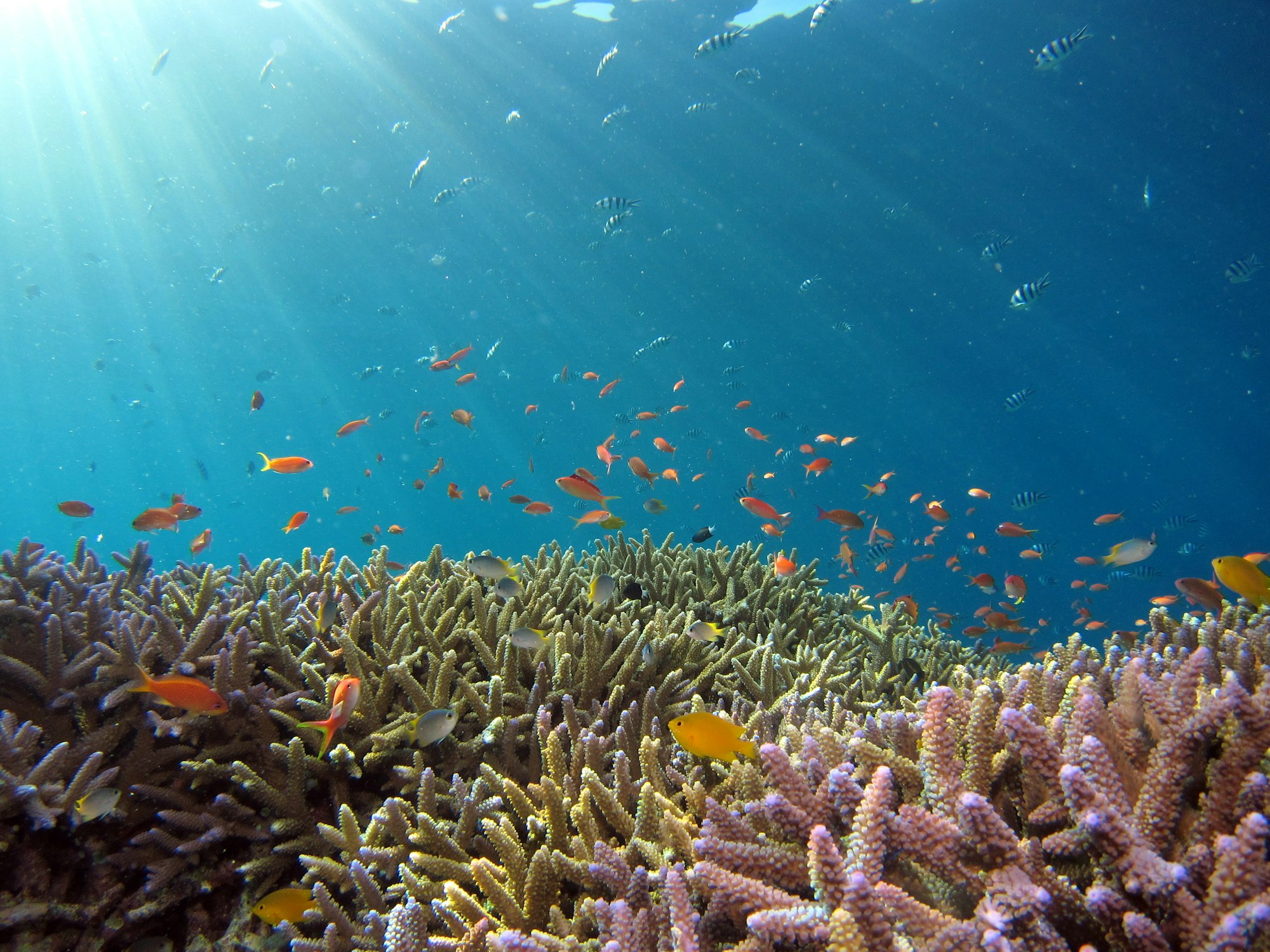
Southern Bonaire’s showcase double-reef dive (BNMP #45) — an inner reef at 7–22 metres, a sandy channel, and a second outer reef dropping to 30 metres, with huge tube sponges, fan corals, and plate corals on the outer wall.
Overview
Alice in Wonderland (BNMP #45) is one of southern Bonaire’s most celebrated dive sites, known for its rare double-reef structure. The first reef starts at 7 metres and descends gradually to around 22 metres, where it meets a sandy bottom studded with isolated coral bommies. The sand channel at 24–30 metres connects to a second, outer reef system that drops away into deeper water and is home to impressive large corals: huge tube sponges, fan coral, plate coral, leaf coral, and brain coral all appear here in sizes not found on the shallower inner reef. Crossing from the inner to the outer reef requires careful depth monitoring — this is the aspect that moves the site into Intermediate territory rather than Beginner. The site is located near the southern salt flats, close to Pink Beach and English Garden.
Site Information
- Location: South Bonaire near the salt flats, BNMP Site #45
- Entry Type: Shore entry
- Site Type: Reef
- Difficulty Level: Intermediate
- Maximum Depth: 30 meters
- Typical Visibility: 20–30 metres
- Current: Usually light
- Best Time: Morning to early afternoon
Marine Life
The inner reef supports a wide range of typical Caribbean reef fish: horse-eye jacks, triggerfish, barracuda, parrotfish, and angelfishes. Sea turtles are seen along both reef zones. Eagle ray sightings are reported on the outer reef and over the sandy channel. Garden eels inhabit the sandy channel between the two reefs. The outer reef’s larger coral structures provide shelter for bigger groupers, snappers, and the site’s distinctive large sponge colonies.
Dive Profile
Enter at the marked shore point and follow the painted rocks or mooring line out to the reef. The inner reef begins at 7 metres and the slope runs to about 22 metres; this section alone makes a full dive with plenty to see. To visit the outer reef, cross the sandy channel (24–30 m) carefully and ascend back onto the second reef structure. Gas management is important: plan the outer-reef crossing with enough reserve for a return to the shallows and safety stop. The sandy bommies in the channel between the reefs are worth investigating.
Entry and Exit
Shore entry over a sandy and rocky beach. Follow the marked path to the water. Exit at the same point. The mooring buoy offshore marks the site and gives a bearing for the return.
Tips
- The inner reef alone is excellent for a beginner-level dive; leave the outer reef crossing to when buoyancy is solid
- The sandy channel between reefs is the best place to watch for eagle rays and garden eels
- Look closely at the large tube sponges on the outer reef for resident fish
- Morning light illuminates the inner reef most effectively
Safety
The outer reef dive requires disciplined depth management — the channel bottom is 30 metres and it is easy to miss the ascent point onto the second reef. Always know your gas reserve before committing to the outer reef section. Current is usually light but check conditions before crossing the sand channel.
Photography
Wide-angle works well for the large sponge formations and fan corals on the outer reef, particularly with a diver for scale. The inner reef is good for reef-fish portraits. The sandy channel with garden eels in the background is an unusual composition.
Nearby Sites
Pink Beach lies a short distance south along the same coast. English Garden and Tori’s Reef are nearby. Hilma Hooker and Angel City are accessible by driving a short distance north.
Sources: InfoBonaire – Alice in Wonderland, Divers-Guide – Alice in Wonderland, Beyond the Corals Bonaire. Last updated 2026-05-24.
Sea-surface temperature and wave height from Open-Meteo Marine (ERA5 reanalysis, monthly averages).
1647 verified species observations (193 species) logged within ~11 km of this site between 1930 and 2019, from the Ocean Biodiversity Information System.
- Eretmochelys imbricata · Hawksbill sea turtle
- Chelonia mydas · Green sea turtle
- Caretta caretta · Loggerhead sea turtle
- Pterois · lionfish
- Gobiidae
- Scarus taeniopterus
- Scarus vetula
- Hemanthias leptus
- Paroncheilus affinis
- Varicus decorum
- Coryphopterus curasub
- Palatogobius incendius
Scientific survey records skew toward sampled taxa (molluscs, corals) and do not reflect what you are guaranteed to see on a dive.
Source: OBIS (obis.org), aggregated Darwin Core occurrence records.
Conditions change with the tide and the season. If you have dived this site, share what it was actually like — date, visibility, current, and what you saw. Real, recent reports from divers are exactly what this guide is built to collect.
Send a conditions report ›