Angel's Window
1.4633°N 125.2200°E · pinnacle
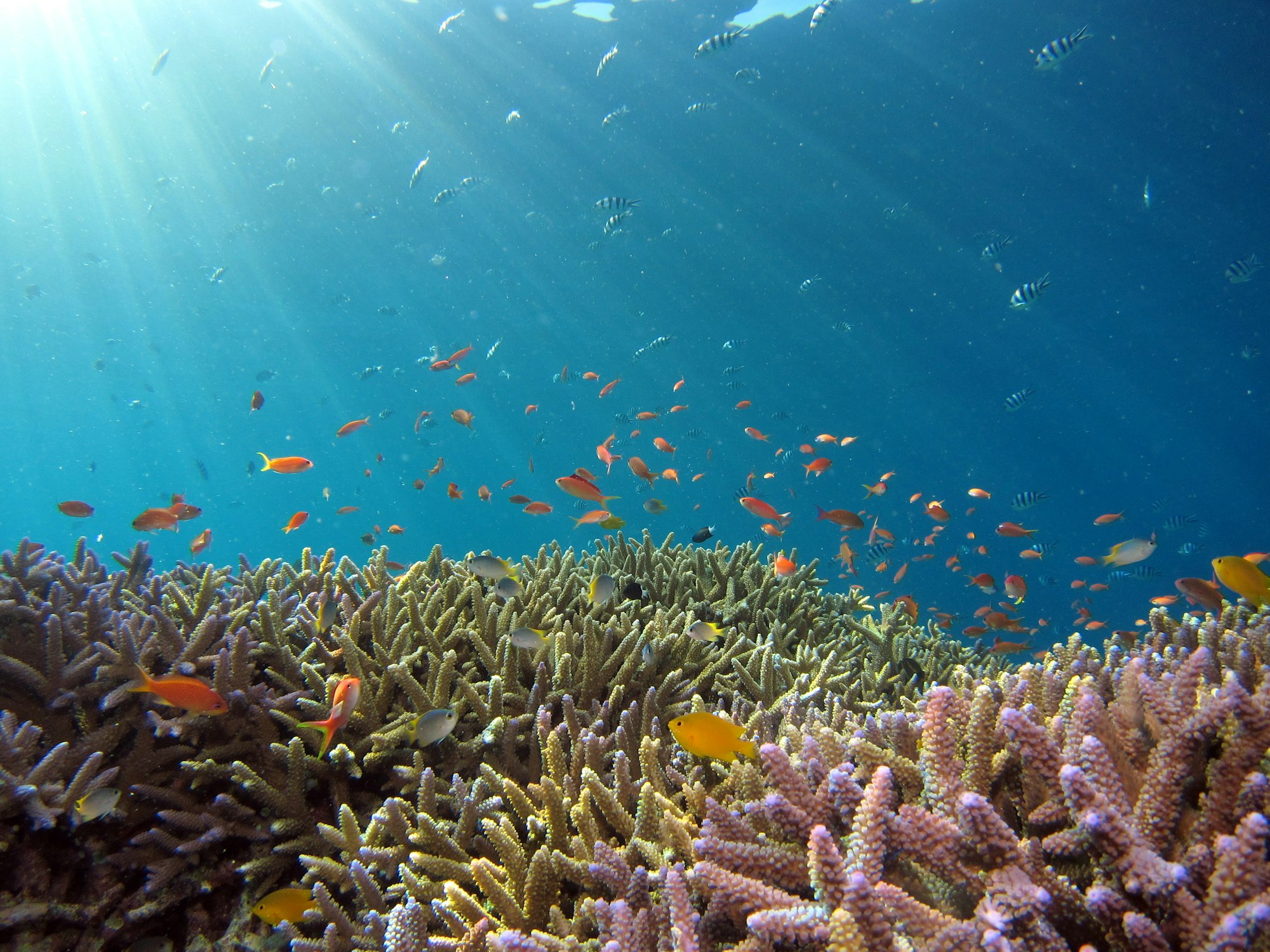
Angel’s Window is a twin-peaked coral pinnacle off the north coast of Lembeh Island in the Lembeh Strait, North Sulawesi, Indonesia. The two peaks rise to within a metre of the surface, and a large cave at depth creates the “window” that gives the site its name — early morning sunlight shining through the cave opening inspired the description. This makes it one of the very few hard-structure sites in Lembeh and a sharp contrast to the black sand muck diving that characterises the rest of the strait.
Overview
The pinnacle’s two peaks create complex topography: one side presents a coral slope that levels out onto a sand flat at about 15 metres; the other side drops as a wall to a shelf at 8 metres, then a plateau, then another drop-off reaching 20–32 metres. The cave swim-through runs through the deep end of the pinnacle at roughly 24–25 metres, exiting at up to 32 metres. The cave walls are heavily colonised by crinoids and featherstars, and the swim-through is suitable only for divers with excellent buoyancy control who can guarantee contact-free penetration. Visibility runs 8–15 metres; currents are light to moderate. Water temperature averages 26–29°C year-round.
Site Information
- Location: Lembeh Strait, North Sulawesi, Indonesia (north coast of Lembeh Island)
- Entry Type: Boat dive
- Site Type: Pinnacle/seamount
- Difficulty Level: Intermediate
- Maximum Depth: 32 meters
- Typical Visibility: 8–15 metres (25–50 feet)
- Current: Light to moderate
- Best Time: Year-round; October to May for calmest conditions
Marine Life
Angel’s Window is one of the more reliable sites in the northern Lembeh Strait for pygmy seahorses — four species have been documented here: Hippocampus bargibanti, H. denise, H. pontohi, and H. severnsi on the gorgonian sea fans. Leaf scorpionfish are found on the pinnacle structure. Schooling fish use the pinnacle as a reference point. Various nudibranchs colonise the encrusted surfaces. The surrounding sand and rubble areas at the pinnacle base produce muck-diving critters including octopus, cuttlefish, and frogfish, giving the site a genuinely hybrid character. No site-specific marine life data was available beyond these confirmed sightings.
Dive Profile
Descend directly to the cave at depth (24–32 metres) to work the gorgonian fans for pygmy seahorses and explore the cave mouth (swim-through is optional and requires solid buoyancy). Ascend to the wall on the deeper side, then transition to the coral slope, working back up through decreasing depth. Finish the dive on the pinnacle’s shallower side and the surrounding sand flat for muck critters. Monitor no-decompression limits carefully — the 32-metre maximum means NDL limits will restrict bottom time at depth.
Entry and Exit
Access by banca boat; the resort describes a 20-minute boat ride. The pinnacle peaks are close to the surface, so entry is straightforward and the site is easy to locate. The guide descends first to find the cave and the gorgonian fans. Surface with SMB deployed — particularly important given the deeper profile and mandatory 3–5 minute safety stop.
Tips and Recommendations
- Brief your guide for pygmy seahorses on the gorgonians before descending; without a guide finding the specific fan corals that host resident animals, they are effectively invisible
- The cave swim-through should only be attempted by divers confident they can pass through without touching the crinoid-covered walls; a flooded-out diver will damage the structure
- Angel’s Window is unusual for Lembeh in being primarily a structural/pinnacle dive — a wide-angle lens is justified here alongside macro
- At 32 metres maximum depth with a cave at 24–25 metres, plan the dive deep-first and ascend slowly; do not spend time on the sand flat before the cave or you will use NDL budget at the least interesting part of the dive
- The site is 20 minutes by boat — combine with a nearby muck site rather than treating it as a day-trip destination on its own
Safety Considerations
The cave swim-through requires confirmed buoyancy competence; crinoids and featherstars on the walls are fragile and provide no handhold. Do not enter the cave unless you are certain of contact-free passage. Monitor no-decompression limits at depth. Lionfish and scorpionfish shelter in structural crevices — do not reach into cracks. Carry an SMB and complete a mandatory safety stop; the deeper exit profile makes this non-negotiable. Currents can be moderate on the wall side.
Photography
Angel’s Window offers the widest photographic range of any site described here. The cave mouth, with ambient light filtering through from the far end, is one of the few opportunities for wide-angle architectural photography in the Lembeh Strait. Pygmy seahorses demand supermacro technique with dioptre attachments — Pontohi pygmy seahorses in particular are tiny (under 1.5 cm) and require extreme patience. The pinnacle silhouette against the open water column can be framed from below for dramatic structural shots. Leaf scorpionfish against encrusted rock are classic macro subjects.
Sources: Lembeh Resort – Angel’s Window, NAD-Lembeh – Angel’s Window, Starfish – Lembeh Dive Sites, Original Diving – Angel’s Window, Infinite Blue Dive Travel – 15 Best Lembeh Sites. Last updated 2026-06-14.
Sea-surface temperature and wave height from Open-Meteo Marine (ERA5 reanalysis, monthly averages).
5477 verified species observations (286 species) logged within ~11 km of this site between 1929 and 2026, from the Ocean Biodiversity Information System.
- Halichoeres melanurus · カザリキュウセン
- Pseudochromis fuscus · セダカニセメギス
- Trimma · ベニハゼ属sp.
- Gymnothorax castlei
- Euthynnus affinis
- Asterropteryx bipunctata · フタホシホシハゼ
- Siphamia tubifer · ヒカリイシモチ
- Trimma striatum
- Oplopomus oplopomus · ケショウハゼ
- Periophthalmus argentilineatus · ミナミトビハゼ
- Doryrhamphus janssi
- Canthigaster valentini · シマキンチャクフグ
Scientific survey records skew toward sampled taxa (molluscs, corals) and do not reflect what you are guaranteed to see on a dive.
Source: OBIS (obis.org), aggregated Darwin Core occurrence records.
Conditions change with the tide and the season. If you have dived this site, share what it was actually like — date, visibility, current, and what you saw. Real, recent reports from divers are exactly what this guide is built to collect.
Send a conditions report ›