Blue Channel
16.3100°N 86.5900°W · drift
Blue Channel
A tidal channel cutting through Roatán’s north reef, creating a natural drift dive through rich coral corridors with strong current-adapted marine life.
Overview
Blue Channel is a tidal cut through the northern reef system of Roatán that creates excellent drift diving conditions when the tidal flow is running. The channel connects the reef’s outer slope to the back-reef lagoon, and water movement concentrates marine life at the edges of the cut. The maximum depth is 14 meters, and the dive profile is primarily a horizontal drift rather than a descent. The current does the work, carrying divers through a passage lined with sea fans, sponges, and schooling fish. Visibility in the channel is typically 20–25 meters. Water temperature averages 27–29°C.
Site Information
- Location: North coast of Roatán, Bay Islands, Honduras
- Entry Type: Boat dive
- Site Type: Drift dive
- Difficulty Level: Intermediate
- Maximum Depth: 14 meters
- Typical Visibility: 20–25 meters (65–80 feet)
- Current: Moderate to strong when tidal flow is running; this is the defining feature of the site
- Best Time: Year-round; time dives to coincide with incoming or outgoing tidal flow
Marine Life
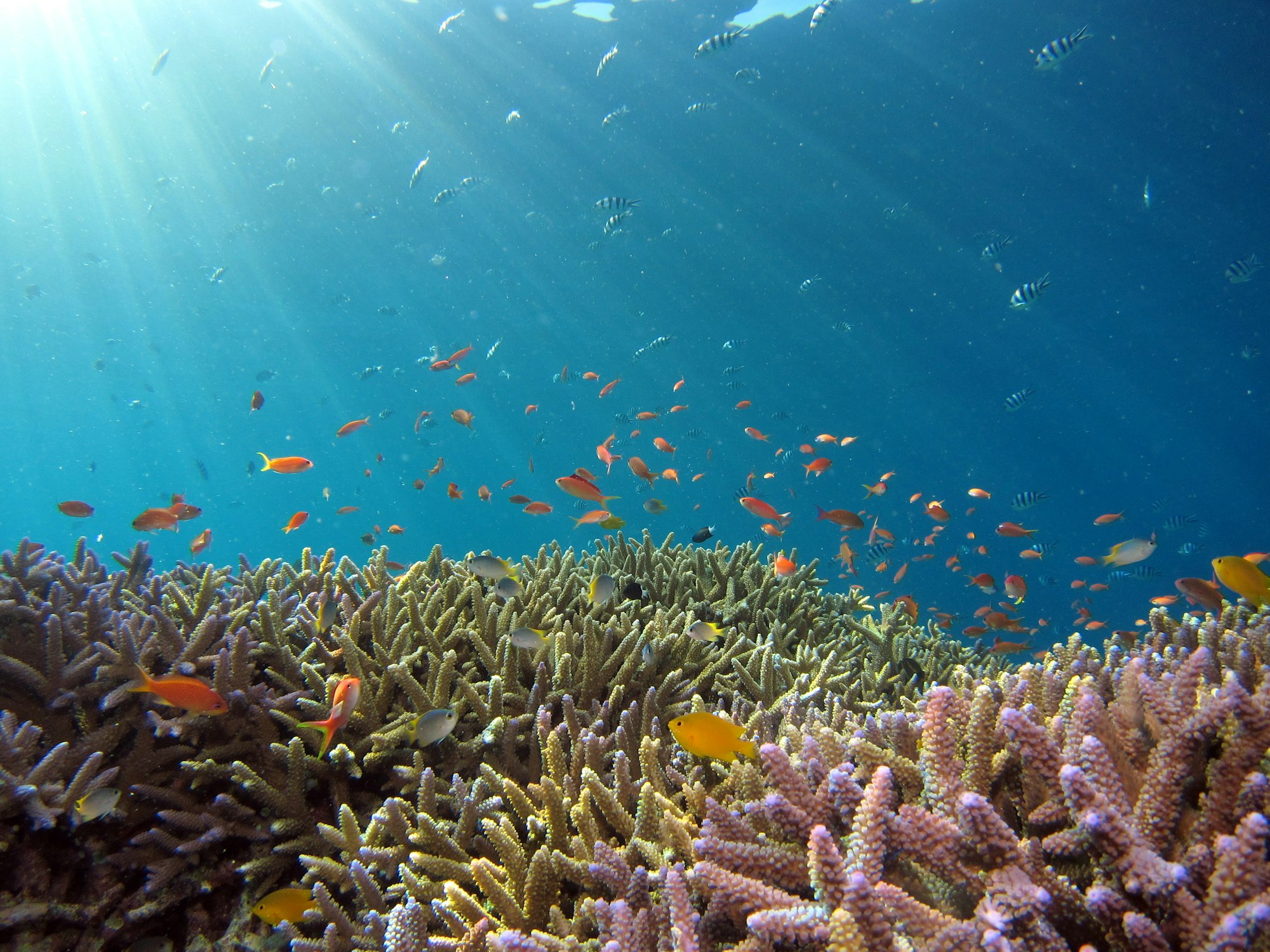
The tidal current through Blue Channel concentrates filter feeders — sea fans and sea whips are dense along the channel walls, fully extended to catch food particles in the flow. Schools of creole wrasse and Bermuda chub station themselves in the current, facing into the flow. Spotted eagle rays glide through the passage using the tidal flow. Southern stingrays rest on sandy sections between patches of reef. Nurse sharks shelter in the calmer areas flanking the main channel current. Reef sharks are occasionally spotted passing through. The current brings nutrient-rich water that supports a vibrant invertebrate community on the channel walls.
Dive Profile
Enter up-current from the channel and allow the drift to carry you through the passage. Maintain neutral buoyancy and let the current do the work — no finning required in the channel’s main flow. Focus on observing the wildlife and examining the channel walls as they pass. Exit the channel at the down-current end and signal the chase boat for pickup. Dive time is typically 30–45 minutes depending on the strength of the current. Drift dives require a surface marker buoy for the boat to track diver position.
Entry and Exit
Coordinate with your dive operator on the tidal schedule — the dive is best when current is flowing. The chase boat drops divers at the up-current entry point and follows the bubble trail to pick up divers at the exit end. Carry an SMB and deploy on ascent.
Tips
- Time your dive to coincide with tidal flow — check local tidal tables with your operator
- Relax and drift rather than fighting the current; drift diving is a passive, meditative experience
- Keep close to the channel walls where the most life concentrates at the current shadow edges
- The channel can be dived in both directions on incoming vs. outgoing tides — each direction reveals different aspects of the site
- Drift dives require good buddy communication — stay close and maintain visual contact
Safety
The current in Blue Channel is the primary safety consideration. Drift diving requires maintaining control of your position — if you feel swept out of control, angle toward the channel edge where current is weaker. Deploy your SMB early for the boat to track your position. Practice with lighter current drift dives before attempting this site. Never fight a strong current — if pulled in an unexpected direction, surface and signal for pickup.
Photography
Drift dive photography is dynamic — compositions come to you rather than you positioning for them. Keep your camera ready and shoot continuously as subjects pass. Sea fans fully extended in the current make vivid wide-angle subjects. Fish schools stationing in the flow photograph well from a slight downstream angle. The challenge is stabilizing your camera in the flow — brace lightly against the channel wall edge.
Sources: Coconut Tree Divers – Roatan Dive Sites, CoCo View Resort – Dive Sites, Splash Inn Dive Resort – Roatan Diving Sites, Roatan-Diving.com – Dive Sites, Octopus Dive School – Roatan Dive Sites. Last updated 2026-06-27.
Sea-surface temperature and wave height from Open-Meteo Marine (ERA5 reanalysis, monthly averages).
514 verified species observations (257 species) logged within ~11 km of this site between 1911 and 2023, from the Ocean Biodiversity Information System.
- Pterois · lionfish
- Gambusia nicaraguensis
- Palatogobius grandoculus
- Poecilia orri
- Epigonidae
- Lipogramma evides · banded basslet
- Gnatholepis thompsoni · goldspot goby
- Malacoctenus macropus · rosy blenny
- Phaeoptyx
- Lutjanus apodus
- Malacoctenus erdmani · imitator blenny
- Gillellus uranidea · warteye stargazer
Scientific survey records skew toward sampled taxa (molluscs, corals) and do not reflect what you are guaranteed to see on a dive.
Source: OBIS (obis.org), aggregated Darwin Core occurrence records.
Conditions change with the tide and the season. If you have dived this site, share what it was actually like — date, visibility, current, and what you saw. Real, recent reports from divers are exactly what this guide is built to collect.
Send a conditions report ›