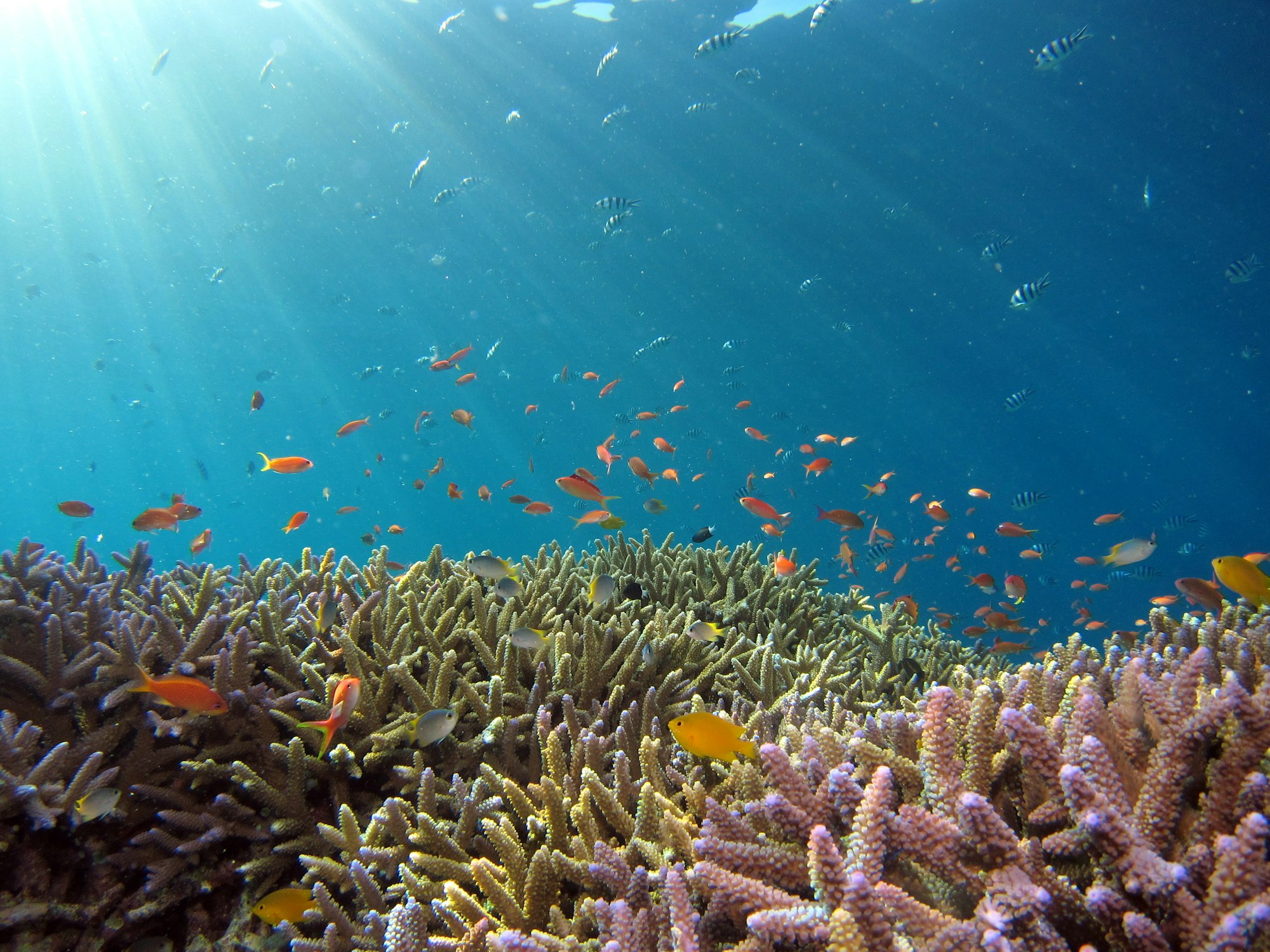
Mary's Place
16.2850°N 86.5550°W · wall
Mary’s Place
Roatán’s most iconic dive site — a dramatic vertical fissure splitting the wall into cathedral-like tunnels and swim-throughs draped with black coral and sea fans.
Overview
Mary’s Place is widely considered Roatán’s signature dive and one of the most celebrated wall sites in the entire Caribbean. Located on the southwest side of Roatán near French Harbour, the site features a massive crack in the reef wall that splits into two parallel fissures, creating a system of vertical canyons, tunnels, and swim-throughs that descend from 6 meters down to 36 meters and beyond. The walls of these fissures are draped with black coral trees, sea fans, wire corals, and dense sponge growth. The combination of dramatic topography and exceptional marine life density has made Mary’s Place a must-dive site for visiting divers. Visibility is consistently 25–35 meters.
Site Information
- Location: Southwest Roatán, near French Harbour, Honduras
- Entry Type: Boat dive
- Site Type: Wall dive
- Difficulty Level: Advanced
- Maximum Depth: 36 meters
- Typical Visibility: 25–35 meters (80–115 feet)
- Current: Light to moderate; can funnel through the fissures
- Best Time: Year-round; Roatán’s visibility and conditions are excellent throughout the year
Marine Life
Mary’s Place is exceptional for the density and variety of its marine life. Black coral trees — normally associated with depths beyond 30 meters — grow prolifically throughout the fissure system at recreational depths. Giant sea fans provide habitat for flamingo tongues and arrow crabs. Eagle rays are frequently seen in the open water adjacent to the main fissure. Caribbean reef sharks patrol the wall below the canyon entrance. Spotted moray eels, goldentail moray eels, and green morays inhabit every crevice. Nurse sharks rest in the deeper sections of the fissure. Dense schools of creole wrasse swarm through the canyon passages. Spotted drums are reliably present near larger coral heads within the system.
Dive Profile
Enter the water and navigate to the main fissure entrance at approximately 6–8 meters. Descend through the primary canyon, pausing to examine the black coral and sponge growth along the walls. The canyon system can be dived at multiple depth levels — the upper sections sit at 10–15 meters while the deepest portions reach 36 meters. Work your way down through swim-throughs and passages. At 25–30 meters, the fissure opens to the main wall face. Ascend back through the canyon to the reef top for your safety stop. The dive is complex — follow your guide closely on the first visit.
Entry and Exit
Operated by dive shops throughout Roatán, with French Harbour and West End operators offering the shortest crossings. The site has a permanent mooring. Entry via giant stride. The boat picks up divers at the surface after the safety stop.
Tips
- Take a guided dive on your first visit — the fissure system is complex and easy to get turned around in
- Bring a torch to illuminate the black coral and sponge-draped walls inside the deepest passages
- The upper sections of the fissure at 10–15 meters are beautiful and rewarding without needing to push deep
- Schedule Mary’s Place as the first dive of the day when bottom time and alertness are greatest
- The site is on the southwest wall — afternoon dives benefit from lower sun angle illuminating the fissure entrances
Safety
This is an Advanced dive rating due to depth and the complex, enclosed fissure system. Divers must have solid buoyancy control to navigate narrow passages without touching the fragile black coral. Current can funnel through the fissures. Never block the exit in a narrow section. Keep your buddy close and use hand signals clearly within the canyon. Monitor depth carefully — it is easy to exceed 30 meters while absorbed in the scenery. Always carry an SMB.
Photography
Mary’s Place is one of the premier wide-angle photography sites in the Caribbean. The black coral-draped fissure walls create an otherworldly tunnel environment. Shoot upward through the fissure toward the blue surface for classic wide-angle compositions. Divers in the fissure provide essential scale. A strobe is useful for illuminating the sponges and sea fans in the darker interior passages. Eagle rays in the open water adjacent to the site are outstanding subjects.
Sources: Coconut Tree Divers – Roatan Dive Sites, CoCo View Resort – Dive Sites, Splash Inn Dive Resort – Roatan Diving Sites, Roatan-Diving.com – Dive Sites, Octopus Dive School – Roatan Dive Sites. Last updated 2026-06-27.
Sea-surface temperature and wave height from Open-Meteo Marine (ERA5 reanalysis, monthly averages).
531 verified species observations (254 species) logged within ~11 km of this site between 1911 and 2023, from the Ocean Biodiversity Information System.
- Pterois · lionfish
- Gambusia nicaraguensis
- Palatogobius grandoculus
- Poecilia orri
- Lipogramma evides · banded basslet
- Gnatholepis thompsoni · goldspot goby
- Epigonidae
- Gobiomorus dormitor
- Phaeoptyx
- Gerres cinereus
- Mugil curema
- Lutjanus apodus
Scientific survey records skew toward sampled taxa (molluscs, corals) and do not reflect what you are guaranteed to see on a dive.
Source: OBIS (obis.org), aggregated Darwin Core occurrence records.
Conditions change with the tide and the season. If you have dived this site, share what it was actually like — date, visibility, current, and what you saw. Real, recent reports from divers are exactly what this guide is built to collect.
Send a conditions report ›