Lighthouse Point
12.1140°N 68.2952°W · wall
Lighthouse Point
A steep south-coast wall north of Willemstoren Lighthouse — variable currents make this a natural drift dive for experienced divers; shore entry is discouraged and the dive is preferred from a boat in calm conditions only.
Overview
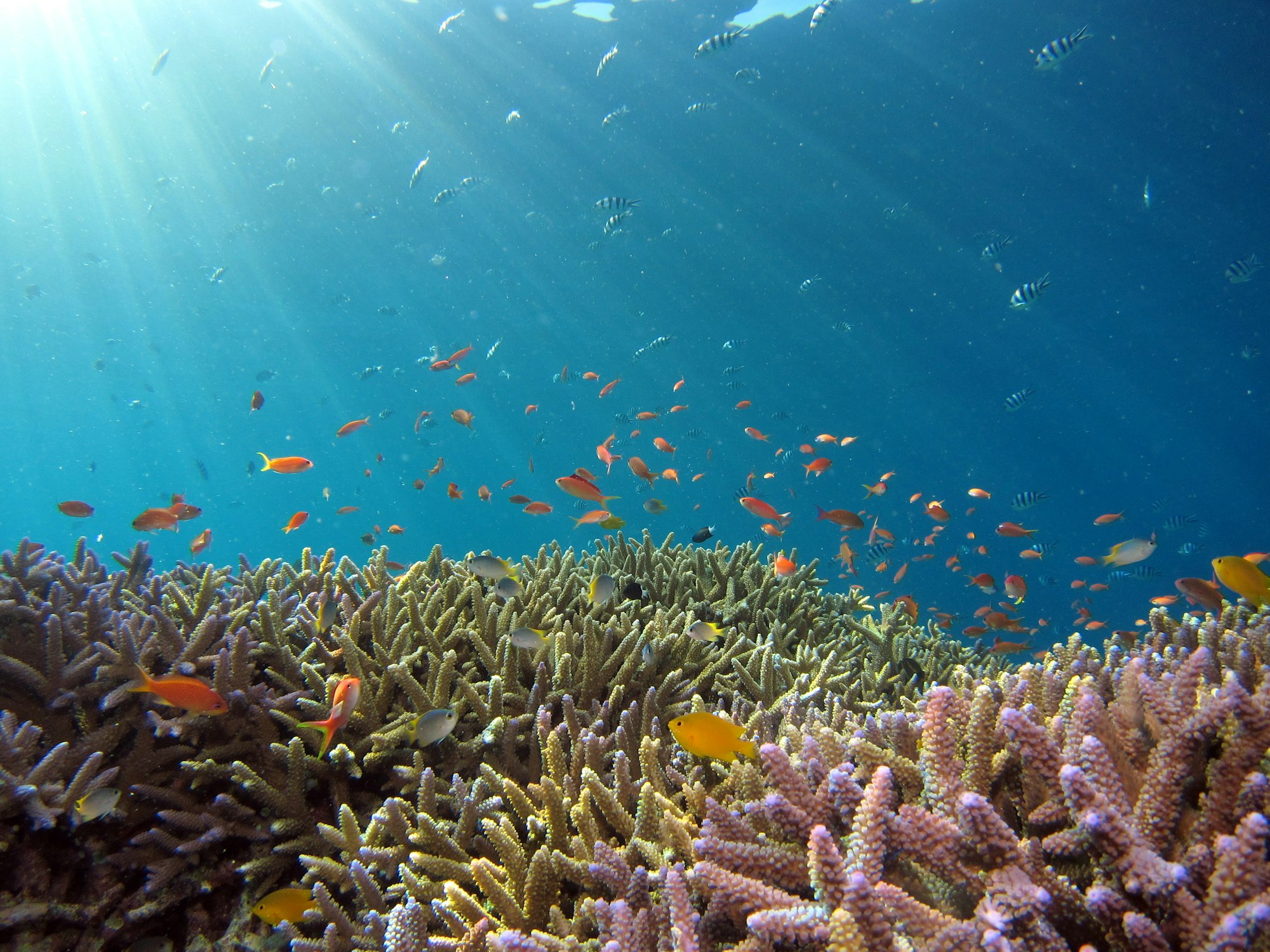
Lighthouse Point is on Bonaire’s south coast, several hundred meters north of the historic Willemstoren Lighthouse (built 1837). The reef wall starts close to the surface — as little as 2 meters in places — and drops in a series of steps and slopes through the 12–14 meter range before sloping more gradually to 30+ meters. The site is exposed near the island’s southern tip, where unpredictable currents make this a de-facto drift dive. It is rarely dived precisely because of those conditions, with the upside that the soft coral cover remains in excellent shape.
Site Information
- Location: South coast Bonaire, north of Willemstoren Lighthouse
- Entry Type: Shore entry
- Site Type: Wall dive
- Difficulty Level: Advanced
- Maximum Depth: 35 meters
- Typical Visibility: 20–30 meters
- Current: Variable and often strong — drift-dive conditions are typical
- Best Time: Calm-conditions days only
Marine Life
The combination of steep wall, current, and proximity to open water draws larger species. Expect pelagic visitors — barracuda, tarpon, and jacks pass along the wall. Healthy soft corals, sponges, and gorgonians cover the reef face. Resident species include groupers, snappers, parrotfish, and the usual Caribbean reef fish. Turtles are seen periodically.
Dive Profile
The shallow shelf starts at 2 meters and drops to roughly 12–14 meters before the slope continues to 30 meters and beyond. Plan a drift along the wall in the direction of the prevailing current — fighting current here is futile and burns gas quickly. Stay close to the wall and use it as a current break where possible.
Entry and Exit
Shore entry is officially possible but heavily discouraged because of current, surge, and exit logistics. Boat dives from a local operator are the standard approach. From a boat, descent on the line in current is straightforward; pickup at the end of a drift is the operator’s responsibility.
Tips
- Treat as a drift dive: plan exit point with the boat, not the entry point
- Check current and surface conditions before committing
- This site rewards advanced buoyancy and gas management — the shallow shelf rewards a slow ascent and safety stop with extra colour and life
- Carry an SMB and reel
Safety
Currents at the south end are unpredictable in both direction and strength. This is not a site to learn drift technique on. Boat operators sometimes call the day at the surface, before descent — trust that judgement. Avoid in any meaningful swell.
Photography
The shallow shelf at 2–5 meters has excellent ambient light and dense soft coral, ideal for wide-angle compositions. The wall face is photogenic but requires steady positioning in the current.
Nearby Sites
Willemstoren Lighthouse lies just south. Sweet Dreams and the unmarked southern sites are further north along the same coastline.
Sources: Bonaire.com – Lighthouse Point, Divers-Guide – Lighthouse Point, Reef Smart Guides – Lighthouse Point. Last updated 2026-05-16.
Sea-surface temperature and wave height from Open-Meteo Marine (ERA5 reanalysis, monthly averages).
1989 verified species observations (196 species) logged within ~11 km of this site between 1930 and 2019, from the Ocean Biodiversity Information System.
- Eretmochelys imbricata · Hawksbill sea turtle
- Chelonia mydas · Green sea turtle
- Caretta caretta · Loggerhead sea turtle
- Pterois · lionfish
- Scarus vetula
- Scarus taeniopterus
- Acanthurus coeruleus
- Cephalopholis cruentata
- Lutjanus apodus
- Hemanthias leptus
- Chaetodon capistratus
- Gobiidae
Scientific survey records skew toward sampled taxa (molluscs, corals) and do not reflect what you are guaranteed to see on a dive.
Source: OBIS (obis.org), aggregated Darwin Core occurrence records.
Conditions change with the tide and the season. If you have dived this site, share what it was actually like — date, visibility, current, and what you saw. Real, recent reports from divers are exactly what this guide is built to collect.
Send a conditions report ›