Red Slave
12.0261°N 68.2515°W · wall
Red Slave
Bonaire’s southernmost reasonable dive site — a current-swept drop-off named for the historic red slave huts onshore, with soft coral gardens, sponges, and pelagic visitors for experienced divers only.
Overview
Red Slave takes its name from the small red-painted slave huts that still stand on the shoreline — 19th-century shelters where enslaved workers from the southern salt pans slept. There is no shipwreck at this site. What lies beneath the surface is a steep, sponge-covered reef slope that drops past 60 meters (200 feet), so abrupt in places that it dives like a wall. Located near the southern tip of the island, roughly 3.3 km west of Willemstoren Lighthouse, Red Slave sits exposed to swell and current sweeping around the point. It is widely rated as Bonaire’s most challenging shore dive and is recommended for experienced divers only.
Site Information
- Location: Southern Bonaire, adjacent to the southern set of slave huts (south of White Slave, west of Willemstoren)
- Entry Type: Shore entry
- Site Type: Wall dive
- Difficulty Level: Advanced
- Maximum Depth: 40 meters
- Typical Visibility: 20–30 meters
- Current: Often strong and unpredictable — can switch direction or strength quickly
- Best Time: Early morning, when wind and seas are typically calmer
Marine Life
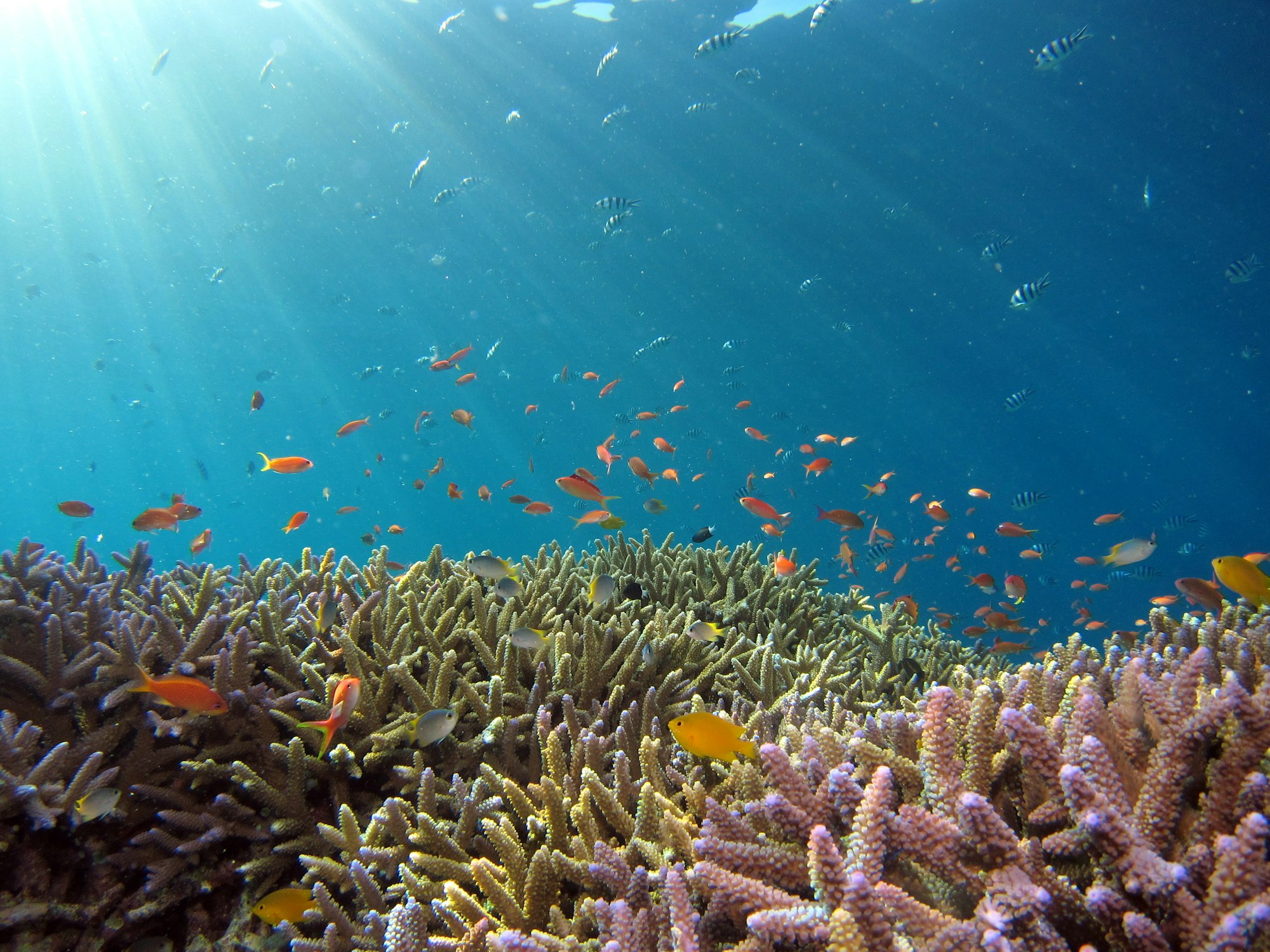
The reef face is covered in soft corals and sponges, making it one of the more colorful slopes on the south end. Horse-eye jacks, barracuda, tuna, and large grouper are reported here, drawn by the proximity to deeper water and the point. Turtles are seen along the slope. In the shallows over the sandbar, divers in the early morning sometimes encounter stingrays and eagle rays. Offshore schools of baitfish pass through, occasionally trailed by larger predators.
Dive Profile
The standard approach is to descend over a rocky/sandy entry zone and then turn north along the reef. Local guidance is consistent on this point: always turn north when you reach the reef, so that if a strong current sets in, you can drift north toward calmer water and exit at a more sheltered site rather than getting pushed south around the point. The drop-off is steep — most of the interesting structure and life lies between 12 and 30 meters along the wall-like slope, with the bottom continuing well beyond recreational limits.
Entry and Exit
Turn off the coast road at the yellow BNMP marker rock near the slave huts and park close to the huts. The entry is over rocky shoreline, so get underwater fairly quickly after entering. Always assess surf and surface current from shore before committing — Red Slave’s conditions can change between one visit and the next. If the surface is rough or current is visibly strong, do not dive this site.
Tips
- Treat current assessment as the first step of every dive here — observe a surface buoy or floating debris from shore before gearing up
- Turn north on the reef and stay alert to current direction throughout the dive
- If the current is too strong to swim against, abort and surface — you may end up doing a drift exit further north
- Bring an SMB and consider a reel; a surface drift is a real possibility here
- This is not a site for newly certified divers or for divers unfamiliar with current conditions
Safety
Red Slave’s current can be both strong and unpredictable — it can switch on or off within a single dive. Divers have been pushed south around the point in unfavorable conditions, where exiting is difficult. Plan turn-around well within gas limits, use the surface to evaluate current before descent, and always carry an SMB. The rocky entry can be slippery and is best crossed with appropriate footwear and timing between sets.
Photography
The dense sponge and soft coral cover photographs well on wide-angle, particularly when the slope drops away into blue. Schooling jacks and barracuda against the wall make strong silhouette shots. Macro subjects shelter throughout the sponge-encrusted slope. A strobe is essential below 15 meters to restore color in the sponges.
Nearby Sites
White Slave lies a short drive north along the same southern coast, near the second set of slave huts. Willemstoren Lighthouse marks the southern tip of the island east of the site.
Sources: InfoBonaire – Red Slave, Bonaire Digital – Dive Site 60: Red Slave, Divers-Guide – Red Slave, Bonaire Island – Red Slave, PADI – Red Slave. Last updated 2026-05-16.
Sea-surface temperature and wave height from Open-Meteo Marine (ERA5 reanalysis, monthly averages).
520 verified species observations (152 species) logged within ~11 km of this site between 1937 and 2019, from the Ocean Biodiversity Information System.
- Chelonia mydas · Green sea turtle
- Eretmochelys imbricata · Hawksbill sea turtle
- Pterois · lionfish
- Gobiidae
- Varicus decorum
- Palatogobius incendius
- Choranthias tenuis
- Coryphopterus curasub
- Caretta caretta · Loggerhead sea turtle
- Hemanthias leptus
- Baldwinella
- Chrionema squamentum
Scientific survey records skew toward sampled taxa (molluscs, corals) and do not reflect what you are guaranteed to see on a dive.
Source: OBIS (obis.org), aggregated Darwin Core occurrence records.
Conditions change with the tide and the season. If you have dived this site, share what it was actually like — date, visibility, current, and what you saw. Real, recent reports from divers are exactly what this guide is built to collect.
Send a conditions report ›