Bonsai dive site
8.6035°S 119.6545°E · wall
Bonsai — also known as One Tree or Lonely Tree for the single fragile mangrove tree perched on its surface boulder — is an advanced Komodo dive featuring dramatic overhangs, caves, valleys, and swim-throughs along the south and west sides, descending to 40 metres with giant fan corals in the deep passages.
Overview
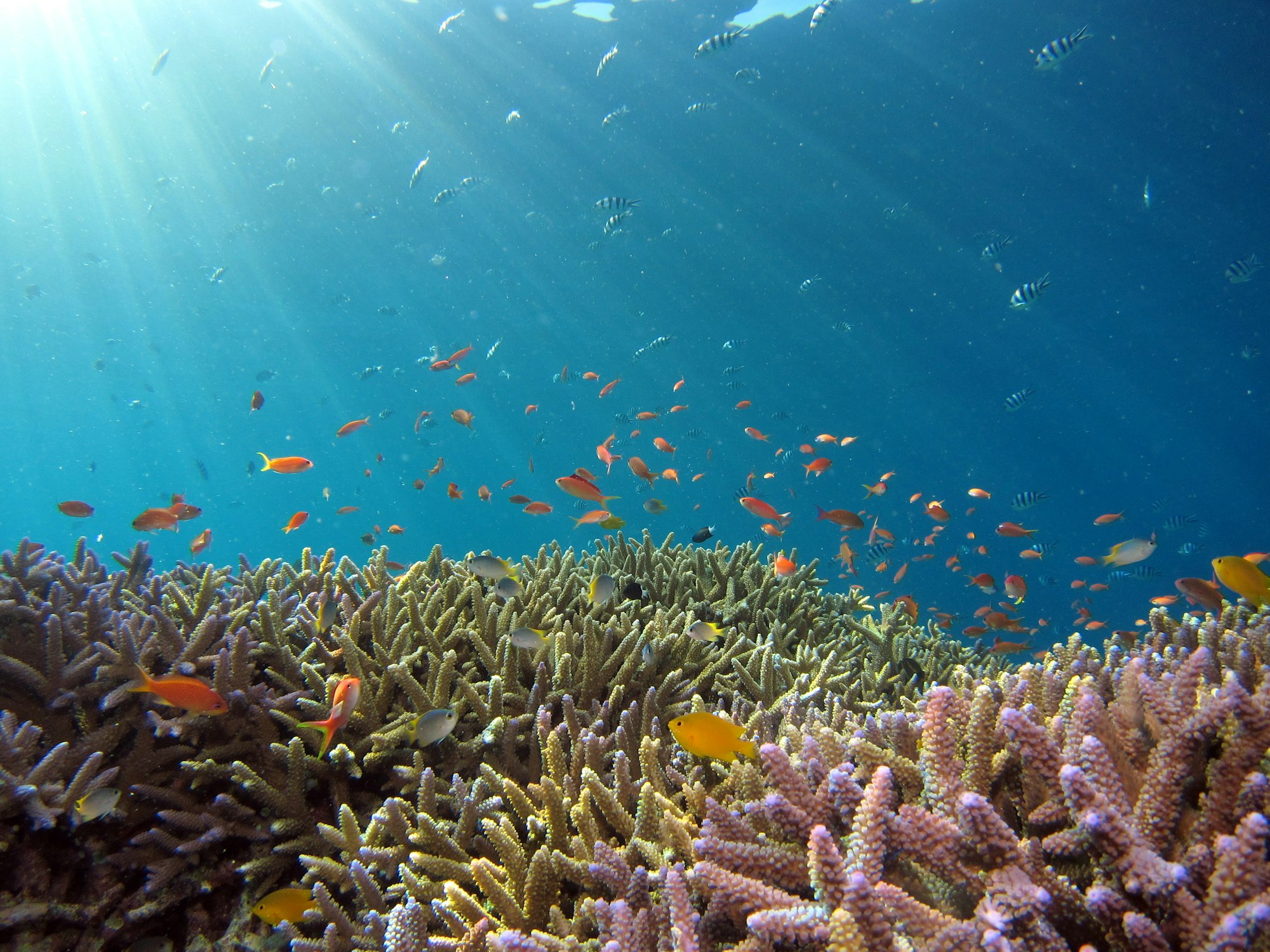
Bonsai sits in central Komodo and is marked on the surface by a solitary tree growing from a boulder. Below water, the site transforms into a complex landscape of overhangs, caves, valleys, and swim-throughs that extends across the southern and western faces of the reef from 20 to 40 metres. Emperor sweetlips, Napoleon wrasse, hawksbill turtles, and large grouper use the overhead environments as shelter. The south side has swim-throughs to 40 metres with giant red and white fan corals clinging to the rocky outcroppings. The surrounding coral garden on the island’s perimeter is well-preserved, with pristine staghorn and table corals.
Currents can be extremely dangerous at Bonsai and are highly variable; the site is classified as Advanced for this reason. Certain areas become inaccessible without technical qualifications when the current runs strong.
Site Information
- Location: Komodo National Park, East Nusa Tenggara, Indonesia (central park)
- Entry Type: Boat dive
- Site Type: Wall dive
- Difficulty Level: Advanced
- Maximum Depth: 40 meters
- Typical Visibility: Variable; bring an underwater torch
- Current: Mild to extremely dangerous; highly variable
- Best Time: April to November; dive conditions require on-the-day assessment
Marine Life
Confirmed species in the overhead environments: emperor sweetlips, Napoleon wrasse, hawksbill turtles, and large grouper sheltering under overhangs at 20–30 metres. Giant red and white fan corals at 30–40 metres in the south-side swim-throughs. The surrounding coral garden hosts a typical Komodo reef community. No site-specific pelagic species confirmed; generic claims about schooling fish removed.
Dive Profile
Enter at the reef perimeter and work toward the southern face to locate the overhead entry points. Use the overhangs and valleys as an exploratory route, navigating with careful buoyancy to avoid disturbing silt in the overhead sections. The 40-metre swim-throughs are for divers specifically trained and equipped for overhead penetration. The surrounding coral garden provides a relaxed exploration zone when the overhangs are skipped or conditions are unsuitable.
Entry and Exit
Boat access. Giant stride entry. The variable currents mean entry timing is critical — follow the guide’s assessment.
Tips and Recommendations
- Bring an underwater torch; the caves and overhangs require artificial light
- Do not enter the overhead environments without appropriate overhead environment training
- The coral garden surrounding the island is excellent wide-angle diving for non-overhead divers
- Current assessment must be made on the day; abort if the guide indicates dangerous conditions
- Combine with nearby muck or reef sites if Bonsai’s conditions are unsuitable
Safety Considerations
Bonsai carries significant hazard for divers without overhead environment training. Attempting the caves and swim-throughs without proper preparation risks entanglement, disorientation, and air emergencies. Extremely strong currents that develop with little warning are a documented feature. Only attempt with a guide who dives this site regularly. Advanced Open Water minimum; overhead training strongly recommended for swim-through sections.
Sources: Komodo Dive Center – Dive Sites, Komodo National Park Official – Dive Sites, Komodo Dive Sites Guide Blog. Last updated 2026-06-10.
Sea-surface temperature and wave height from Open-Meteo Marine (ERA5 reanalysis, monthly averages).
519 verified species observations (204 species) logged within ~11 km of this site between 1984 and 2023, from the Ocean Biodiversity Information System.
- Ctenochaetus striatus
- Acanthurus lineatus
- Amphiprion perideraion
- Pseudochromis flavopunctatus
- Pseudochromis
- Eviota shimadai
- Mobula alfredi · Reef manta ray
- Ecsenius bicolor · Bicolor Blenny
- Helcogramma kranos
- Pandaka
- Eviota hoesei · Doug's Eviota
- Eviota queenslandica · Queensland Eviota
Scientific survey records skew toward sampled taxa (molluscs, corals) and do not reflect what you are guaranteed to see on a dive.
Source: OBIS (obis.org), aggregated Darwin Core occurrence records.
Conditions change with the tide and the season. If you have dived this site, share what it was actually like — date, visibility, current, and what you saw. Real, recent reports from divers are exactly what this guide is built to collect.
Send a conditions report ›