Bodu Gaa
5.1834°N 73.1246°E · reef
Overview
Bodu Gaa — meaning “big shallow reef” or “big sandbank” in Dhivehi — is a reef site in Baa Atoll, a UNESCO Biosphere Reserve renowned for its extraordinary marine biodiversity. Baa Atoll is home to Hanifaru Bay, one of the world’s most famous manta ray aggregation sites, and the broader atoll’s reefs reflect this exceptional ecological richness.
Diving
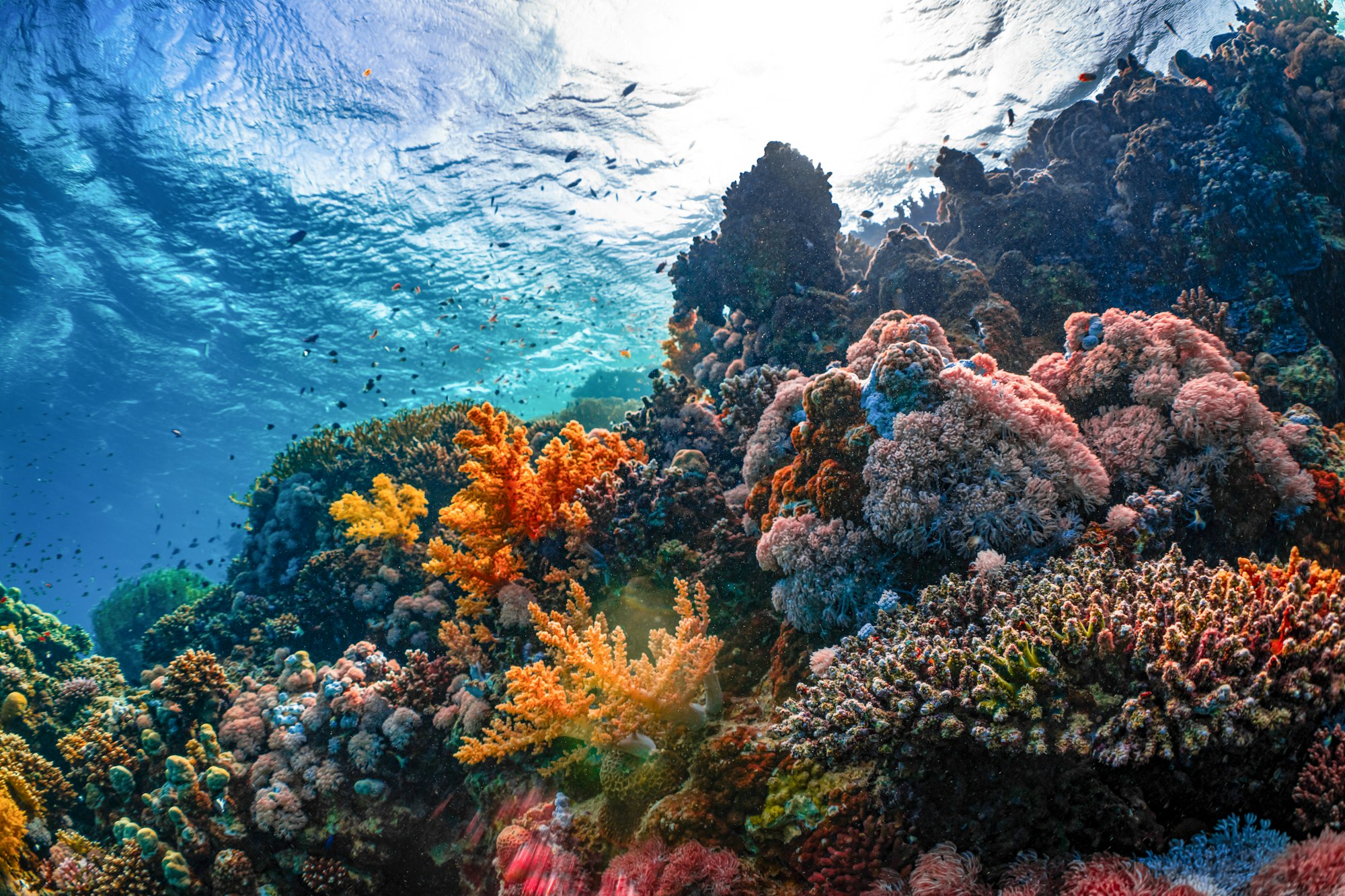
The reef structure features a mix of coral gardens in shallow water and a more pronounced outer slope descending to 25 m. Hard corals dominate the upper reef, with table corals, staghorn, and brain corals providing habitat for a rich community of reef fish. The outer slope has bommies — coral heads standing proud of the reef face — that attract grouper, sweetlips, and moray eels.
Given the atoll’s fame for manta rays, chance encounters are not uncommon on dives across Baa Atoll’s reefs, particularly during the southwest monsoon season (May–November) when plankton blooms bring mantas to feed in large numbers in the atoll’s channels and bays.
Practical Notes
Baa Atoll requires a domestic flight or speedboat connection from Malé. Best accessed via Baa Atoll liveaboards or island resorts. Manta season peaks May–November. Visibility typically 15–25 m.
Sea-surface temperature and wave height from Open-Meteo Marine (ERA5 reanalysis, monthly averages).
1 verified species observations (1 species) logged within ~11 km of this site between 1991 and 1991, from the Ocean Biodiversity Information System.
- Tambja
Scientific survey records skew toward sampled taxa (molluscs, corals) and do not reflect what you are guaranteed to see on a dive.
Source: OBIS (obis.org), aggregated Darwin Core occurrence records.
Baa Atoll's Hanifaru Bay hosts one of the world's largest known reef manta feeding aggregations; the Manta Trust's ID database has logged thousands of individuals feeding here during the southwest monsoon plankton blooms.
Conditions change with the tide and the season. If you have dived this site, share what it was actually like — date, visibility, current, and what you saw. Real, recent reports from divers are exactly what this guide is built to collect.
Send a conditions report ›