Dhonfanu thila
5.1721°N 73.1157°E · pinnacle
Overview
Dhonfanu Thila is a submerged pinnacle in Baa Atoll, situated near Dhonfanu Island. Part of the UNESCO Biosphere Reserve system, Baa Atoll’s thilas are among the most richly populated dive sites in the Maldives. The proximity to Hanifaru Bay — the world-famous manta ray aggregation site — means that the broader ecosystem supports an exceptional density of marine life, and that influence is felt on individual sites like this thila.
Diving
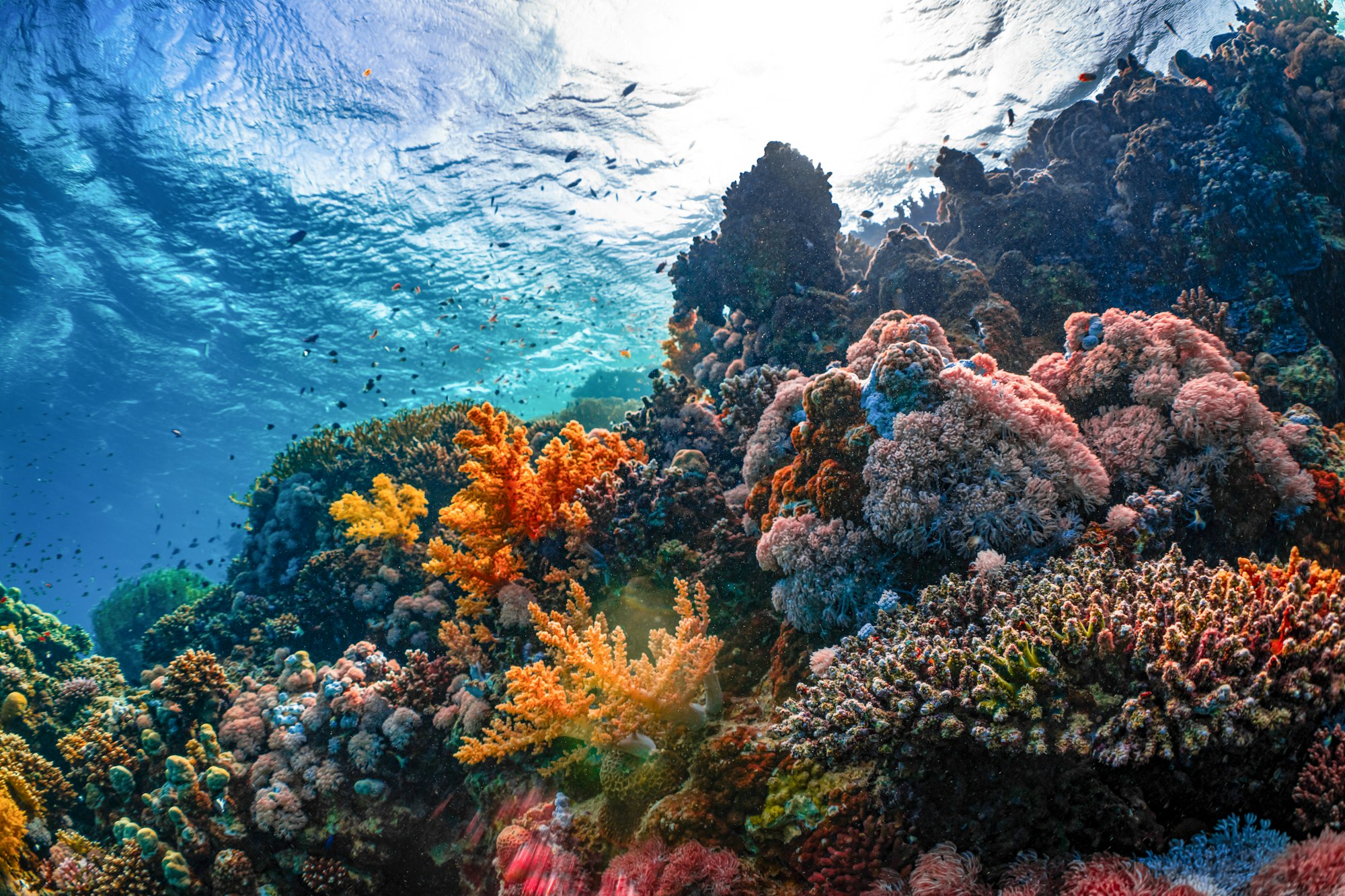
The pinnacle ascends from 28 m to approximately 8 m depth, with a structured profile that includes vertical walls, sloping sections, and pronounced overhangs. The deeper sections support gorgonian sea fans, soft corals, and barrel sponges. Nurse sharks and whitetip reef sharks use the overhangs as daytime resting spots, and can be observed at close range without disturbance.
The upper sections of the thila swarm with anthias and chromis, with trevally and dogtooth tuna hunting through the schools periodically. During southwest monsoon season, manta rays may pass through the area on feeding circuits around the atoll.
Practical Notes
Baa Atoll access requires domestic flight or speedboat from Malé. Best dived from Baa Atoll resorts or liveaboards. Depth to 28 m recommended for divers with open-water certification or above. Visibility typically 15–25 m.
Sea-surface temperature and wave height from Open-Meteo Marine (ERA5 reanalysis, monthly averages).
1 verified species observations (1 species) logged within ~11 km of this site between 1991 and 1991, from the Ocean Biodiversity Information System.
- Tambja
Scientific survey records skew toward sampled taxa (molluscs, corals) and do not reflect what you are guaranteed to see on a dive.
Source: OBIS (obis.org), aggregated Darwin Core occurrence records.
Baa Atoll's Hanifaru Bay hosts one of the world's largest known reef manta feeding aggregations; the Manta Trust's ID database has logged thousands of individuals feeding here during the southwest monsoon plankton blooms.
Conditions change with the tide and the season. If you have dived this site, share what it was actually like — date, visibility, current, and what you saw. Real, recent reports from divers are exactly what this guide is built to collect.
Send a conditions report ›