Miyaru Kandu
3.5996°N 73.5042°E · channel
Miyaru Kandu — 'shark channel' in Dhivehi — is a classic Vaavu Atoll drift dive where divers hook in at the channel mouth around 30 m to watch grey reef sharks hold in the current. A strong-current advanced dive for experienced divers.
Overview
Miyaru means “shark” in Dhivehi and kandu means “channel,” and Miyaru Kandu on the northeast side of Vaavu (Felidhoo) Atoll lives up to the name. It is a channel drift dive: a steep outer wall with ledges, small caves and overhangs, and a drop-off at the channel mouth around 30 m. The current that funnels through the kandu carries nutrients and prey, and the sharks use it to hunt without effort — which is why they gather here.
The dive
The standard approach is a reef hook. Divers descend to the drop-off, hook into dead coral or rock at the channel mouth, and hang in the current for around twenty minutes watching the sharks work the flow — then unhook and drift the channel. (A hook goes into dead substrate only, never living coral.) The shark action is best on an incoming current, which also brings the clearest water; on an outgoing current visibility drops but the action continues, and this is when mantas are most likely to appear.
Marine life
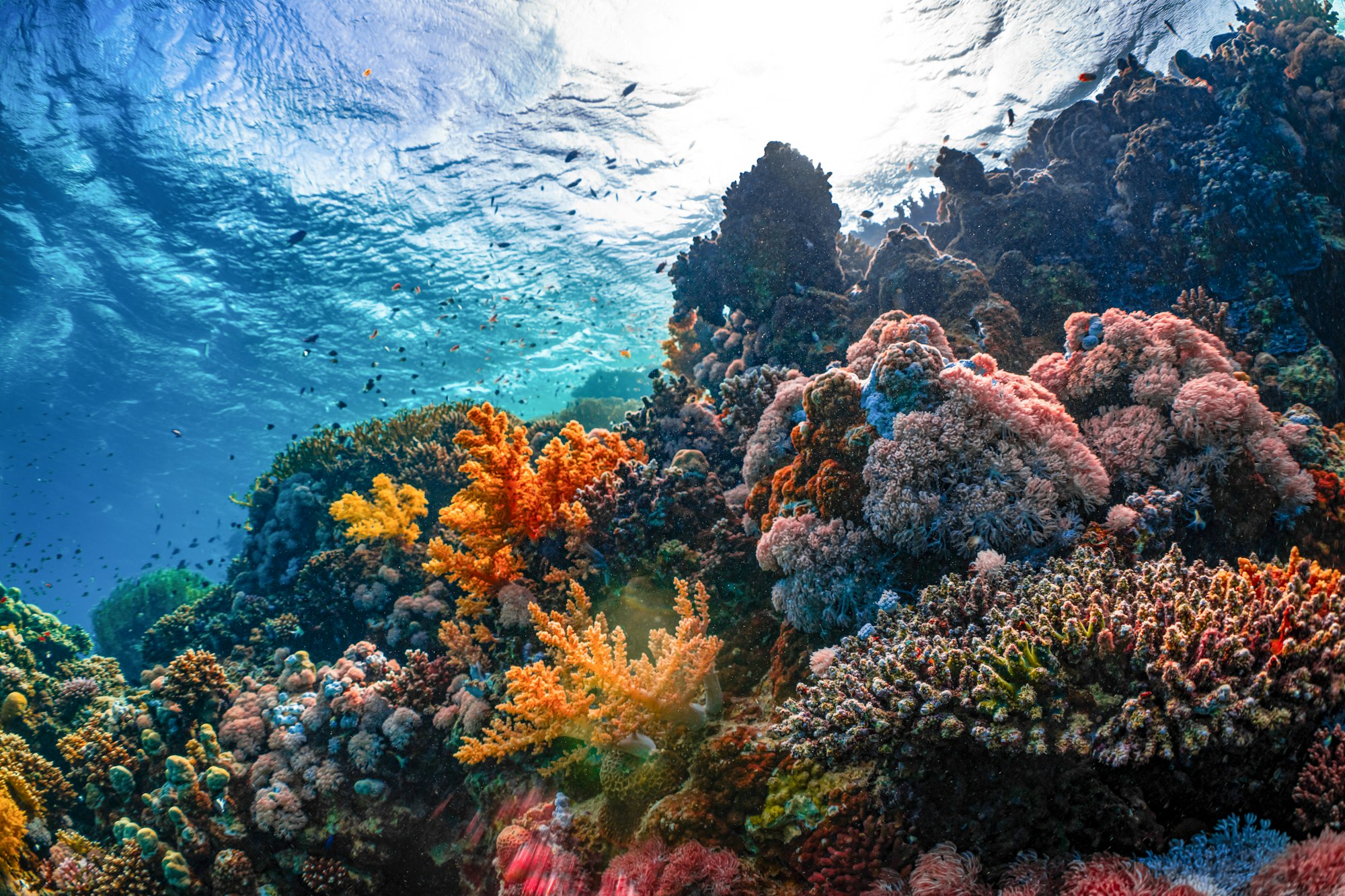
Grey reef and white-tip reef sharks are the main event, sometimes in numbers. Scalloped hammerheads turn up occasionally on the outermost edge of the channel, around 30 m. Add Napoleon wrasse, dogtooth tuna, eagle rays, groupers, barracuda, hunting giant trevally and schooling fusiliers, with nurse sharks, hawksbill turtles and giant morays on the reef itself. Mantas pass through on the outflow, most often in the May–July window for this atoll.
Conditions & who should dive it
Current is the defining feature and can run strong to very strong — this is an advanced drift dive for experienced divers only, comfortable with strong flow and reef-hook technique. On a gentler day it eases toward intermediate. Visibility is typically 20–30 m for the atoll, lower on a hard outgoing current. Always dived with a guide who knows the local tides.
When to go
The northeast monsoon dry season (roughly December to April) generally brings better visibility and more predictable current; the southwest monsoon runs stronger. Whichever season, time the dive to an incoming current for the best shark show.
Getting there
Vaavu Atoll is a fixture of central-Maldives liveaboard itineraries. It can also be dived from the local island of Fulidhoo, which has dive shops running budget, local-island trips out to the channel.
Sea-surface temperature and wave height from Open-Meteo Marine (ERA5 reanalysis, monthly averages).
46 verified species observations (33 species) logged within ~11 km of this site between 1984 and 2023, from the Ocean Biodiversity Information System.
- Chelonia mydas · Green sea turtle
- Lepidochelys olivacea · Olive ridley
- Diala albugo
- Zafra
- Phyllidia marindica
- Mexichromis pusilla
- Philinopsis speciosa
- Parashiela
- Cerithium zebrum
- Elysia mercieri
- Caecum
- Lucidestea
Scientific survey records skew toward sampled taxa (molluscs, corals) and do not reflect what you are guaranteed to see on a dive.
Source: OBIS (obis.org), aggregated Darwin Core occurrence records.
Conditions change with the tide and the season. If you have dived this site, share what it was actually like — date, visibility, current, and what you saw. Real, recent reports from divers are exactly what this guide is built to collect.
Send a conditions report ›