Abu Dabour
25.3807°N 34.7191°E · reef
Abu Dabour is an offshore reef dive site in the northern Marsa Alam area at approximately 25.38°N, 34.72°E, about 4 km off the mainland, 25 km south of Port Ghalib and 32 km north of Marsa Alam.
Overview
Abu Dabour lies in a very narrow bay that offers two contrasting dive profiles, accessible only in good weather due to the entry and exit logistics. The site features a sandy bay interior flanked by reefs on both the north and south sides, with beautiful hard and soft corals at depths of 14, 16, 18, and 24 m on prominent coral block formations.
The south side of the bay is considered the more rewarding dive: from the reef edge, a sloping sandy bottom leads to a glassfish cavity in the reef — a cavern with two chambers, the second of which has an exit to the main bay. Inside the cavern, goatfish and yellow snappers shelter under shafts of light filtering down from the entrance. The north side offers its own coral wall dive with corners and overhangs.
Dive Profile
- Depth: 14–25 m on main reef structures; cavern at approximately 20 m
- Current: Low to moderate; entry/exit can be weather-dependent
- Visibility: Good (20+ m in open water)
- Entry: Boat (weather-dependent)
Marine Life
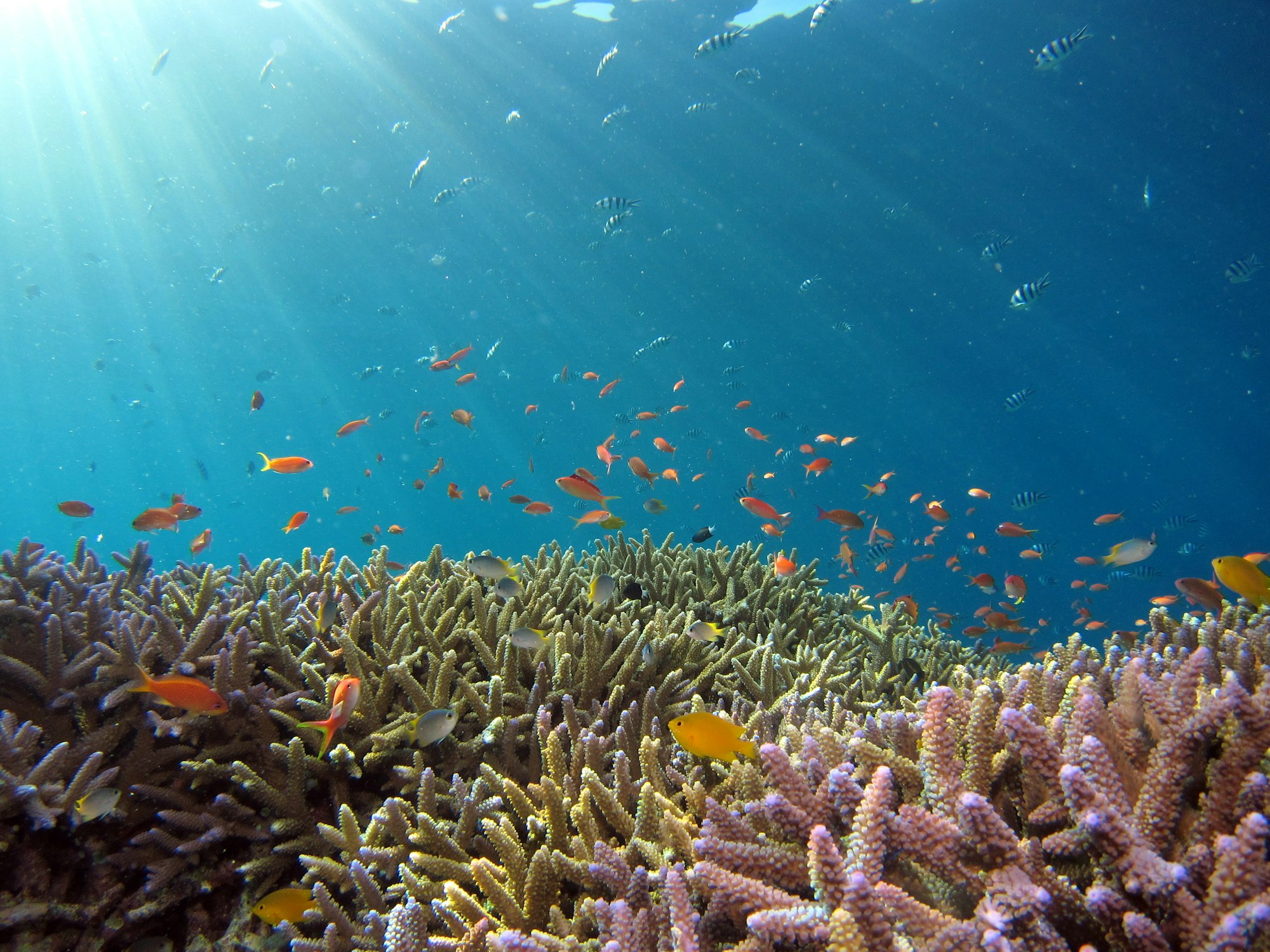
Goatfish and yellow snappers in the south cavern. Soft and hard corals on both north and south reefs. Typical Marsa Alam reef species including parrotfish, grouper, and angelfish along the reef walls.
Sources: SSI Dive Guide — Abu Dabour. Last updated 2026-05-17.
Sea-surface temperature and wave height from Open-Meteo Marine (ERA5 reanalysis, monthly averages).
31 verified species observations (14 species) logged within ~11 km of this site between 1996 and 2026, from the Ocean Biodiversity Information System.
- Tursiops aduncus · Indian ocean bottlenose dolphin
- Stenella longirostris · Spinner dolphin
- Balaenoptera edeni · Eden's whale
- Clanculus
- Fasciolariidae
- Nerita sanguinolenta
- Rochia virgata
- Tripneustes gratilla
- Ophiocoma
- Tetraclita rufotincta
- Chthamalus
- Halophila stipulacea
Scientific survey records skew toward sampled taxa (molluscs, corals) and do not reflect what you are guaranteed to see on a dive.
Source: OBIS (obis.org), aggregated Darwin Core occurrence records.
Conditions change with the tide and the season. If you have dived this site, share what it was actually like — date, visibility, current, and what you saw. Real, recent reports from divers are exactly what this guide is built to collect.
Send a conditions report ›