Abu Helal
28.5424°N 34.5169°E · reef
Abu Helal is a coral reef dive site in the Strait of Tiran area, northeast of Sharm el Sheikh, northern Red Sea, Egypt.
Overview
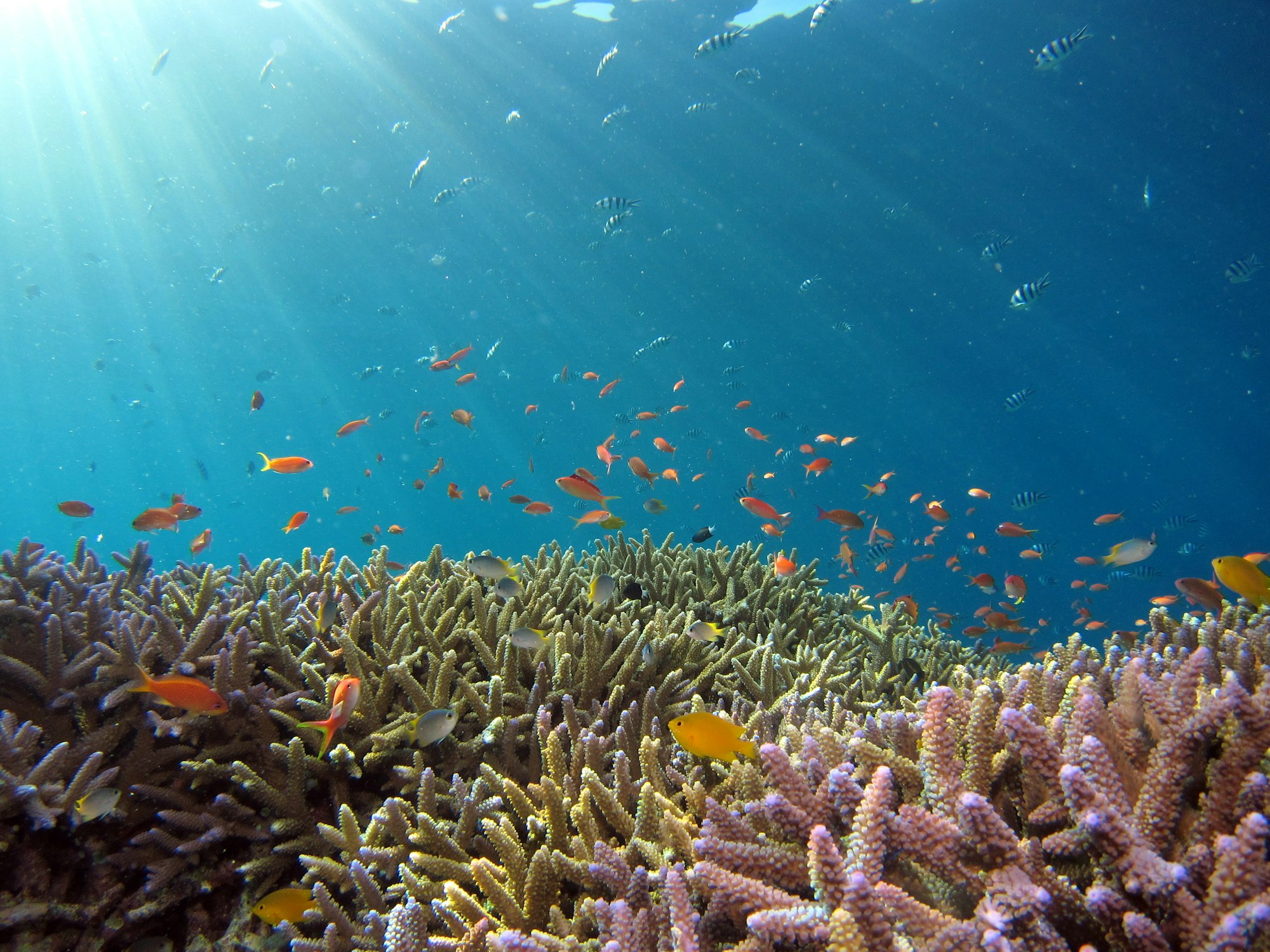
Abu Helal sits in one of the most current-swept and biologically productive zones of the northern Red Sea — the Strait of Tiran, which channels water between the Gulf of Aqaba and the main Red Sea body. This constant flow of nutrient-rich water from depth supports some of the most diverse and abundant marine life in Egypt. Abu Helal offers a well-structured reef with dramatic topography including walls, slopes, and coral gardens. The site is part of the Ras Mohammed National Park protected area, which has helped maintain the outstanding coral health seen here.
Site Information
- Location: Strait of Tiran, Ras Mohammed National Park, Sharm el Sheikh, Red Sea, Egypt
- Entry Type: Boat dive
- Site Type: Reef
- Difficulty Level: Intermediate
- Maximum Depth: 20 meters
- Typical Visibility: 25–40 meters
- Current: Moderate to strong; tidal-driven Tiran Strait currents
- Best Time: October to May
Marine Life
The nutrient upwellings through the Tiran Strait sustain exceptional reef life. Large schools of fusiliers and anthias are a constant feature. Reef sharks — grey reefs and whitetip reefs — are regular visitors to the outer slopes. humphead wrasse are reliably present in the Tiran area. Turtles are seen year-round. Eagle rays and occasional hammerhead sharks have been reported during liveaboard dives. The coral itself is among the most diverse in the northern Red Sea.
Dive Profile
Descend to the shallow reef crest and assess the current before committing to direction. Follow the reef structure at 10–15 m and descend to the outer slope at 15–20 m when conditions permit. Use the current to assist navigation along the reef. Ascend carefully and conduct a full safety stop, deploying an SMB in the current.
Entry and Exit
By liveaboard or day-trip dive boat from Sharm el Sheikh or Na’ama Bay. The Tiran sites are a standard liveaboard destination and also accessible on organised day-trip excursions. Back roll entry; SMB ascent.
Tips and Recommendations
- The Tiran Strait sites are best experienced on a liveaboard allowing multiple dives over consecutive days
- Time dives to the tidal current — incoming current delivers the best pelagic activity
- Carry a reef hook for the current-heavy sections where you want to hold position
- Abu Helal pairs well with Jackson Reef, Thomas Reef, and Gordon Reef for a classic Tiran circuit
- Night dives in the Tiran area can be spectacular — access depends on liveaboard permissions
Safety Considerations
The Tiran Strait is known for strong and variable currents. Always carry an SMB and an audible signalling device. Maintain close buddy contact in current conditions. Follow the liveaboard or day-trip guide’s briefing exactly — departure from the agreed dive plan can lead to separation in the strait.
Photography
Outstanding wide-angle conditions with schooling fish and diverse reef architecture. Reef sharks and humphead wrasse provide dramatic subjects. The coral walls with sea fans and soft corals frame well with natural light. The exceptional visibility makes ambient-light wide-angle possible throughout the dive.
Sources: Divezone - Red Sea, Dive the World - Egypt Red Sea, Red Sea Scuba Diving, PADI - Diving in Egypt. Last updated 2026-04-04.
Sea-surface temperature and wave height from Open-Meteo Marine (ERA5 reanalysis, monthly averages).
341 verified species observations (263 species) logged within ~11 km of this site between 1968 and 2024, from the Ocean Biodiversity Information System.
- Pleurosicya micheli · Michel's Ghost Goby
- Aseraggodes macronasus
- Siganus · Black Spinefoot
- Priolepis cincta · Banded Reef Goby
- Haliophis guttatus
- Pleurosicya prognatha · Beaky Acropora Goby
- Gobiodon irregularis
- Tursiops aduncus · Indian ocean bottlenose dolphin
- Gobiodon ater
- Gobiodon fuscoruber
- Pteraeolidia ianthina
- Chelidonura livida
Scientific survey records skew toward sampled taxa (molluscs, corals) and do not reflect what you are guaranteed to see on a dive.
Source: OBIS (obis.org), aggregated Darwin Core occurrence records.
Conditions change with the tide and the season. If you have dived this site, share what it was actually like — date, visibility, current, and what you saw. Real, recent reports from divers are exactly what this guide is built to collect.
Send a conditions report ›