Aluminium
26.7667°N 33.9464°E · reef
Aluminium is a reef dive site located in the Hurghada region of the Egyptian Red Sea, named for the distinctive appearance of its pale, bleached coral formations which can give the reef a metallic sheen in certain light conditions.
Overview
Situated amid the scatter of reef systems north of Hurghada, Aluminium offers a classic mid-Red Sea reef experience with a mix of coral gardens, hard coral plateaux, and sand channels. Maximum depth is around 20 meters, making it well-suited for Open Water graduates and those building experience. The reef is home to a good cross-section of Red Sea reef life, and the site is frequented by day boats out of Hurghada. Visibility typically runs 15–25 meters, and water temperatures sit between 22–29°C throughout the year.
Site Information
- Location: Red Sea, Egypt
- Entry Type: Boat dive
- Site Type: Reef
- Difficulty Level: Intermediate
- Maximum Depth: 20 meters
- Typical Visibility: 15–25 meters (50–82 feet)
- Current: Light to moderate
- Best Time: October to May
Marine Life
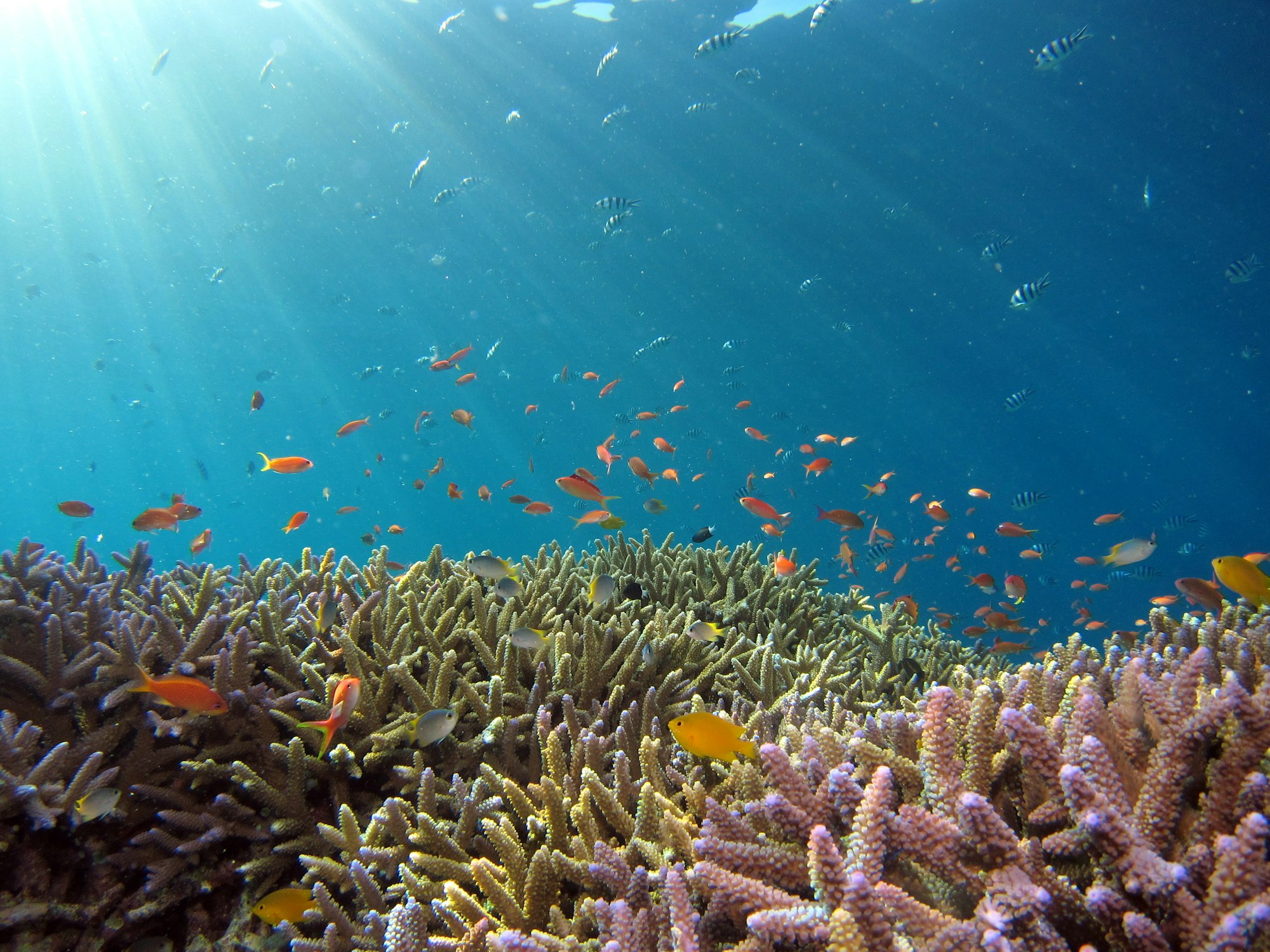
Expect the full complement of northern Red Sea reef species: anthias in dense clouds over coral heads, parrotfish grazing the hard corals, and groups of bannerfish drifting in mid-water. Moray eels and lionfish occupy sheltered ledges. Turtles are common, and larger jacks and barracuda often patrol the reef edge.
Dive Profile
Enter at the reef crest in 5–8 meters and explore the sloping coral garden toward the sandy floor at 18–20 meters. Coral formations are dense in the upper sections, transitioning to a more open sand and rubble bottom. Spend the deepest portion early in the dive, then work back up through the shallower corals. Safety stop at 5 meters is standard.
Entry and Exit
Day boats from Hurghada run regular trips to this site. Giant stride or back roll entry from the dive platform. Exit via the boat ladder on the operator’s signal.
Tips and Recommendations
- A reliable site in calm conditions when stronger current sites are unsuitable
- Suitable as a second or third dive when managing gas and depth profiles
- Look closely at the coral bases for crustaceans and small nudibranchs
- The site is popular with snorkellers in the shallows — maintain awareness on ascent
- Early morning dives tend to have the calmest conditions
Safety Considerations
Traffic from day boats is a consideration — always ascend close to the mooring line and deploy an SMB before surfacing away from the line. Currents are generally mild but can increase around the reef edge. Avoid contact with the pale bleached coral formations, which may still be fragile.
Photography
The reef profile and good light penetration suit both wide-angle and macro work. Schools of anthias against hard coral backgrounds provide classic Red Sea wide-angle shots. Inspect crevices for cleaner shrimp, hawkfish, and nudibranch subjects.
Sources: Divezone - Red Sea, Dive the World - Egypt Red Sea, Red Sea Scuba Diving, PADI - Diving in Egypt. Last updated 2026-04-04.
Sea-surface temperature and wave height from Open-Meteo Marine (ERA5 reanalysis, monthly averages).
275 verified species observations (250 species) logged within ~11 km of this site between 1936 and 2023, from the Ocean Biodiversity Information System.
- Tursiops aduncus · Indian ocean bottlenose dolphin
- Stenella longirostris · Spinner dolphin
- Branchiostoma
- Hexabranchus sanguineus
- Epimenia
- Conus
- Thuridilla hopei
- Tellinidae
- Diodora ruppellii
- Conus arenatus
- Orphanopusia osiridis
- Odostomia ritae
Scientific survey records skew toward sampled taxa (molluscs, corals) and do not reflect what you are guaranteed to see on a dive.
Source: OBIS (obis.org), aggregated Darwin Core occurrence records.
Conditions change with the tide and the season. If you have dived this site, share what it was actually like — date, visibility, current, and what you saw. Real, recent reports from divers are exactly what this guide is built to collect.
Send a conditions report ›