Balena
27.1782°N 33.8320°E · wreck
A shallow wreck dive in the Hurghada area of the Egyptian Red Sea, sitting on a sandy seabed at approximately 9 metres.
Overview
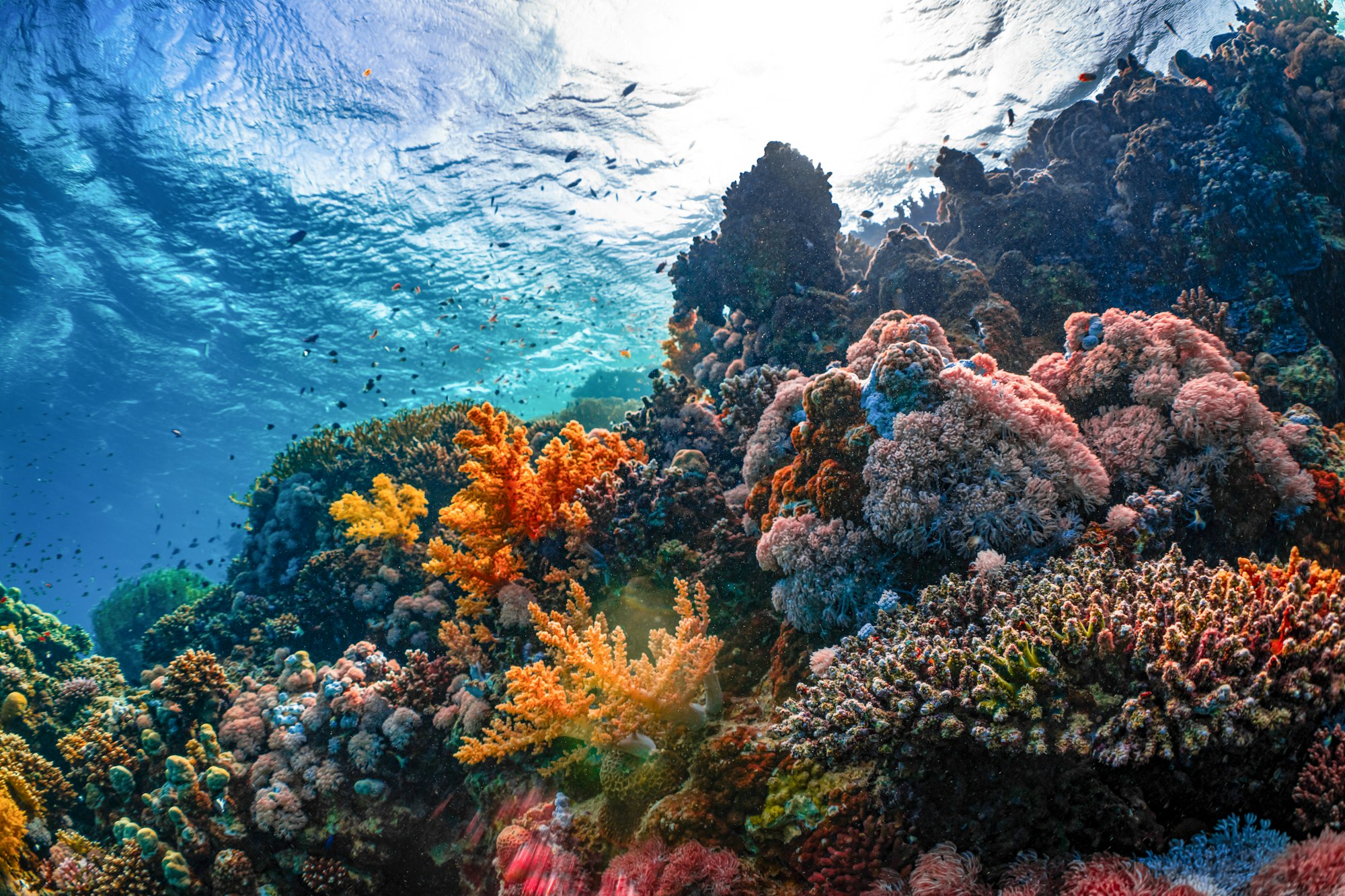
The Balena wreck rests on a sandy bottom at approximately 9 metres (the OSM record also lists an upper structure at 3 metres, but the confirmed maximum depth per OSM tags is 8.5 metres, here rounded to 9m). The wreck has become encrusted with coral growth and now acts as an artificial reef. The shallow depth means natural light floods the wreck throughout the dive, making it particularly appealing for photography and for divers wanting extended bottom time without decompression concerns. Visibility in the immediate area is typically 10–20 metres. The site is accessed by day boat from Hurghada-area operators.
Site Information
- Location: Red Sea, Egypt
- Entry Type: Boat dive
- Site Type: Wreck dive
- Difficulty Level: Intermediate
- Maximum Depth: 9 meters
- Typical Visibility: 10–20 meters (33–65 feet)
- Current: Very light
- Best Time: Year-round
Marine Life
Due to its extreme shallowness, the wreck is bathed in bright light and has attracted rich fish life — glassfish schools shelter within the hull, while lionfish, moray eels, and small grouper occupy the structure. Turtles occasionally visit the site, and sea urchins colonise the exterior. Chromis and butterflyfish surround the coral-encrusted edges.
Dive Profile
With a maximum depth of approximately 9 metres, the Balena is straightforward to plan. The upper structure starts at around 3 metres, so most of the dive is spent in the 3–9 metre range with excellent natural light throughout. Divers typically circumnavigate the wreck exterior and investigate the interior where accessible. No decompression obligations apply.
Entry and Exit
Boat access only. Entry by giant stride or back roll into very shallow water — exercise caution on entry to avoid contact with the wreck or seafloor. Exit via the boat ladder.
Tips and Recommendations
- Best appreciated on a clear day when sunlight illuminates the entire wreck
- Suitable for wide-angle photography without additional strobes
- An excellent site for divers wanting extended time on a wreck without depth concerns
- Combine with a deeper nearby site for a two-dive day
- Snorkellers can enjoy much of what divers see from the surface
Safety Considerations
The primary hazard is accidental contact with the wreck structure in such confined shallow space — buoyancy control is essential. Surge from passing boat wake can cause movement in very shallow water. Lionfish present a stinging hazard inside the wreck.
Photography
One of the Red Sea’s best naturally lit wreck photography sites. The shallow depth and clear water allow ambient light shooting without strobes. Schools of glassfish inside the hull create atmospheric wide-angle compositions.
Depth corrected to 9m (from erroneous 3m) per OSM tag scuba_diving:maxdepth=8.5. No site-specific sources found for vessel identity or history. Last updated 2026-06-27.
Sea-surface temperature and wave height from Open-Meteo Marine (ERA5 reanalysis, monthly averages).
723 verified species observations (345 species) logged within ~11 km of this site between 1758 and 2016, from the Ocean Biodiversity Information System.
- Sousa chinensis · Chinese white dolphin
- Haliophis guttatus
- Pseudochromis olivaceus
- Neoglyphidodon melas
- Pomacentrus
- Gobiodon
- Cheilinus trilobatus
- Zebrasoma velifer
- Lethrinus mahsena
- Pomacentrus trilineatus
- Tursiops aduncus · Indian ocean bottlenose dolphin
- Chromis viridis
Scientific survey records skew toward sampled taxa (molluscs, corals) and do not reflect what you are guaranteed to see on a dive.
Source: OBIS (obis.org), aggregated Darwin Core occurrence records.
Conditions change with the tide and the season. If you have dived this site, share what it was actually like — date, visibility, current, and what you saw. Real, recent reports from divers are exactly what this guide is built to collect.
Send a conditions report ›