Barge de Gubal
27.6780°N 33.8046°E · wreck
Barge de Gubal is a wreck dive site in the Gubal Island area of the northern Gulf of Suez, Red Sea. The wreck of a large cargo barge lies in 20–25 meters of water amid the scattered reef systems of the Gubal Straits — a historically treacherous shipping lane that has claimed numerous vessels over the centuries.
Overview
The Barge de Gubal is a substantial wreck that has become heavily encrusted with coral over the years, effectively transforming into an artificial reef. The flat barge deck provides a stable, easy-to-navigate surface for divers, while the sides drop away into sand. The area around Gubal Island is renowned for its concentration of wrecks, and the Barge de Gubal is one of several accessible wrecks in the vicinity, often dived as part of a multi-wreck day. Visibility is typically 15–25 meters, with water temperatures of 22–28°C.
Site Information
- Location: Red Sea, Egypt
- Entry Type: Boat dive
- Site Type: Wreck dive
- Difficulty Level: Intermediate
- Maximum Depth: 25 meters
- Typical Visibility: 15–25 meters (50–82 feet)
- Current: Moderate
- Best Time: October to May
Marine Life
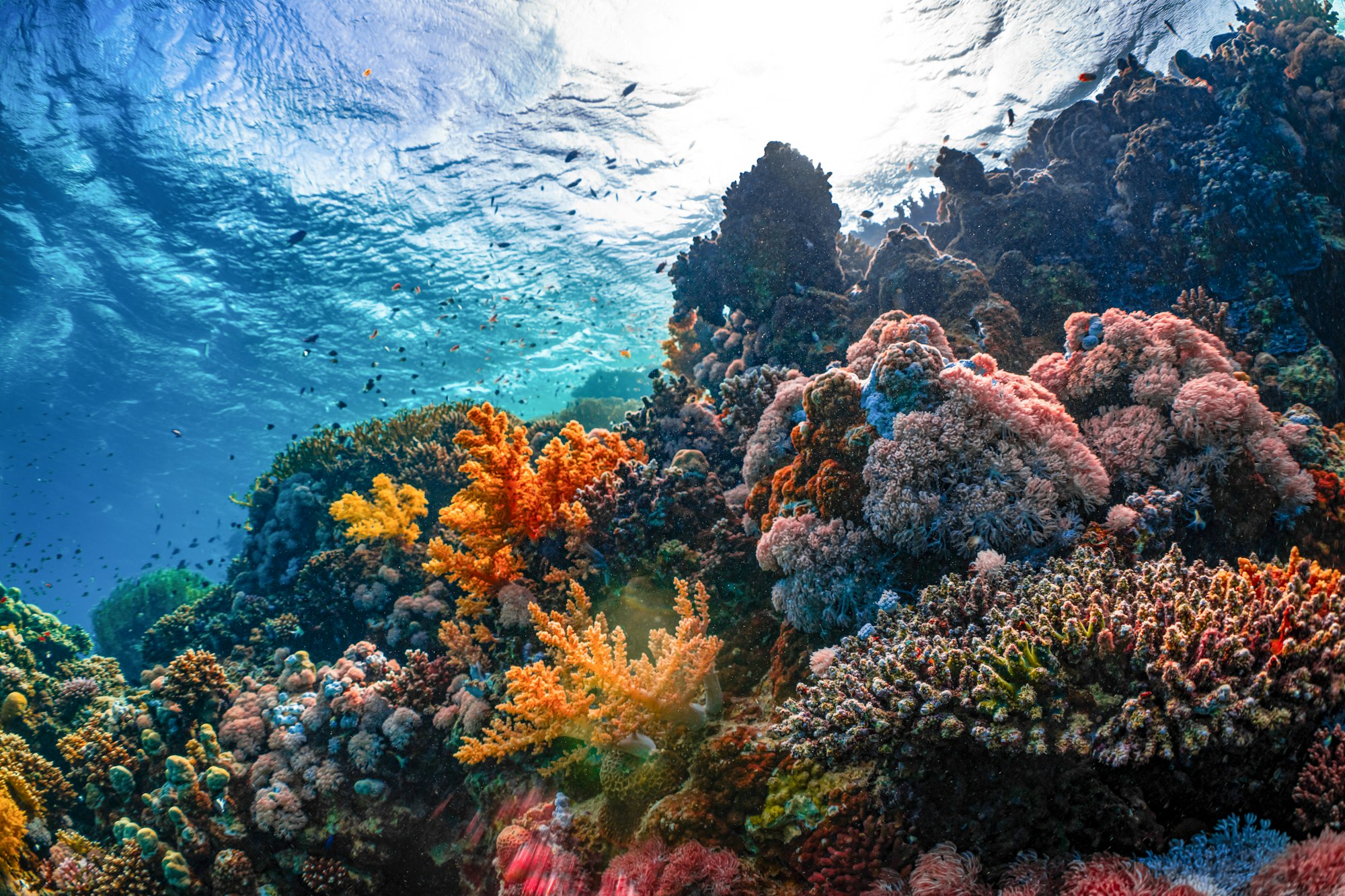
Soft corals and sea fans cover the barge deck and sides, and glassfish schools shelter within the protected structural spaces. Lionfish, moray eels, and grouper occupy the wreck. Batfish and barracuda are regularly seen hovering mid-water above the structure. The sandy areas adjacent to the barge are home to blue-spotted ribbontail rays and crocodilefish.
Dive Profile
Descend to the deepest part of the barge hull at 22–25 meters and work methodically across the deck, inspecting the encrusted metalwork and any cargo remnants. Ascend the sides of the barge progressively before spending time in the mid-water above the structure where batfish congregate. Safety stop at 5 meters above or near the wreck.
Entry and Exit
Boat dive; the site is typically accessed on day trips or liveaboard circuits. A mooring line to the wreck or a shot line is commonly deployed. Use the line for descent and ascent. SMB deployment for open water exit if no line is available.
Tips and Recommendations
- Combine with other Gubal Straits wrecks for a dedicated wreck-diving day
- Dive torch essential for inspecting the darker structural recesses
- Look under the barge hull edges for resting whitetip reef sharks
- The encrusted deck offers excellent macro subjects including nudibranchs
- Be prepared for current on the wreck — tie off or maintain contact with the structure
Safety Considerations
Currents in the Gubal Straits can be significant — site conditions should be evaluated before descending. Penetration of enclosed spaces requires wreck diving certification. Fire coral is present on the superstructure. Always carry an SMB and dive with a buddy.
Photography
The soft coral encrustation on the barge structure provides vivid colour for wide-angle photography. Glassfish clouds inside structural openings against ambient light are a classic wreck photography composition. Macro work yields nudibranchs and crustaceans on the hull.
Sources: redsea-diving.com, Divezone - Red Sea. No dedicated wreck database entry found for this barge. Last updated 2026-05-25.
Sea-surface temperature and wave height from Open-Meteo Marine (ERA5 reanalysis, monthly averages).
94 verified species observations (33 species) logged within ~11 km of this site between 1928 and 2012, from the Ocean Biodiversity Information System.
- Tursiops aduncus · Indian ocean bottlenose dolphin
- Decapterus russelli · Indian Scad
- Etrumeus sadina · Maray
- Cephalopholis · Rockcod
- Tursiops · Bottlenose dolphins
- Cephalopholis miniata · Coral Cod
- Parupeneus cyclostomus · Bright Goatfish
- Variola louti · Common Lyretail-cod
- Tylosurus choram
- Etrumeus
- Engyprosopon grandisquama
- Grampus griseus · Risso's dolphin
Scientific survey records skew toward sampled taxa (molluscs, corals) and do not reflect what you are guaranteed to see on a dive.
Source: OBIS (obis.org), aggregated Darwin Core occurrence records.
Conditions change with the tide and the season. If you have dived this site, share what it was actually like — date, visibility, current, and what you saw. Real, recent reports from divers are exactly what this guide is built to collect.
Send a conditions report ›