Canyon
28.5544°N 34.5212°E · reef
The Canyon is one of Dahab’s most celebrated and technically demanding dive sites on the Sinai Peninsula. Located a short distance south of Dahab’s famous Blue Hole, the Canyon is a narrow underwater gorge that descends through a labyrinthine passage system down to depths of 45 meters and beyond.
Overview
The Canyon is a complex system of fissures, passages, and chambers cutting through the Sinai reef. Entry is through a narrow entrance on the reef flat, descending rapidly through a chimney to the main canyon floor at around 30–45 meters. The passages twist and open into larger chambers, with dramatic light effects where sunlight penetrates the cracks above. The Canyon is considered a guided dive and should never be attempted without an experienced local guide who knows the specific route. Visibility in the open sections is 20–35 meters; the confined sections require a torch. Water temperatures are 22–28°C.
Site Information
- Location: Red Sea, Egypt
- Entry Type: Boat dive
- Site Type: Reef
- Difficulty Level: Advanced
- Maximum Depth: 45 meters
- Typical Visibility: 20–35 meters (65–115 feet)
- Current: Minimal inside canyon
- Best Time: September to May
Marine Life
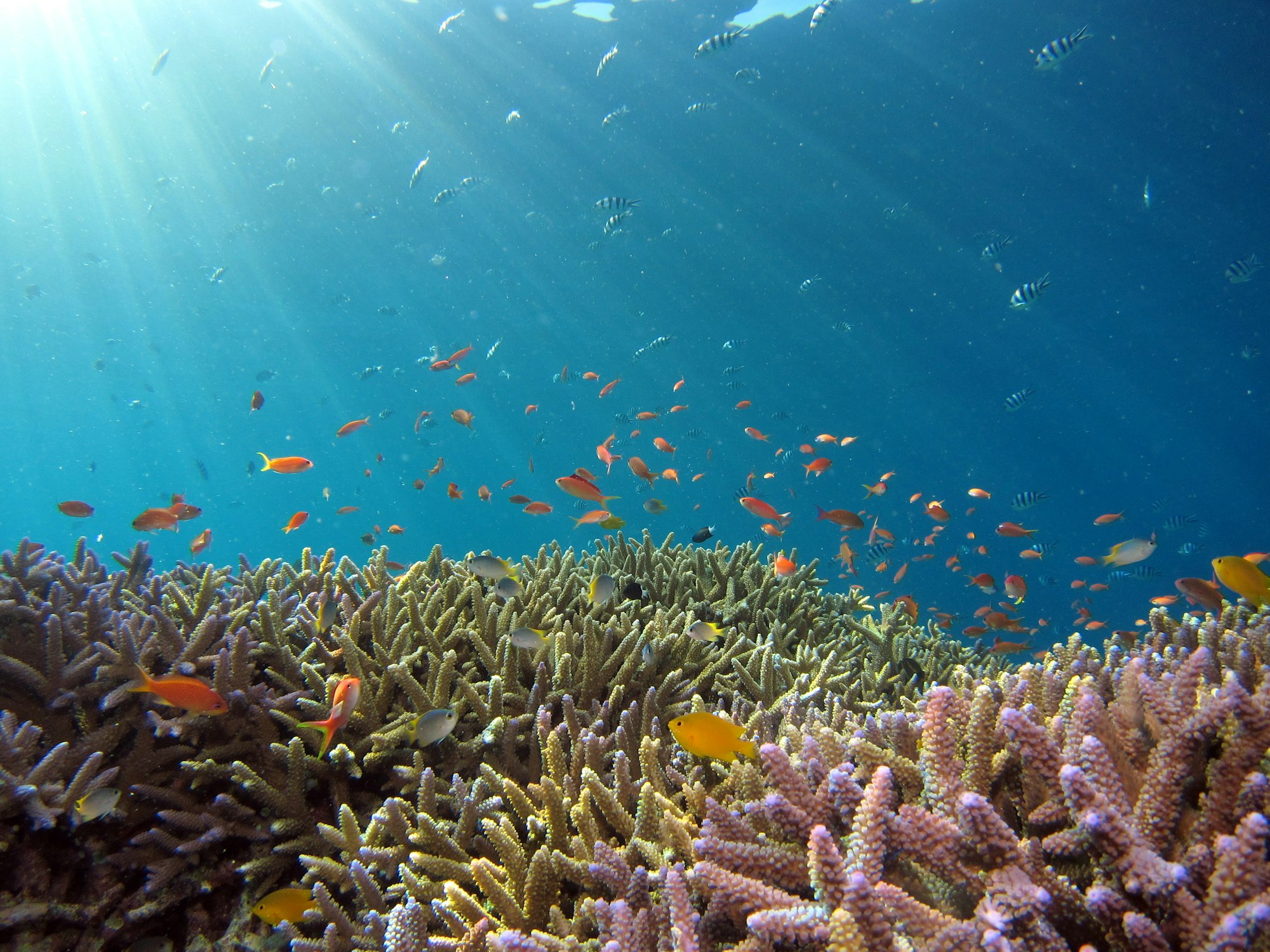
Marine life inside the canyon itself is sparse due to the confined, shaded environment — glassfish swarm in some of the larger chambers, and lionfish inhabit the darker recesses. The reef surrounding the canyon entrance and exit supports the full range of Sinai reef species: anthias, parrotfish, turtles, and moray eels. The sand plateau at depth outside the canyon occasionally hosts rays and crocodilefish.
Dive Profile
Shore or boat entry to the reef flat, then descent through the canyon entrance. The classic route follows the main canyon passage down to approximately 30–45 meters, navigates through the connected passages, and exits back to the open reef. Gas management is critical — divers must have sufficient air to complete the passage and ascend. Begin ascent with a minimum 100 bar remaining. Safety stop at 5 meters on the open reef.
Entry and Exit
The Canyon has a shore accessible entry point, though boat trips and guided tours are the more common approach. Local guides are essential — the passage system is complex and disorientation is possible without intimate knowledge of the route.
Tips and Recommendations
- Do not enter without a guide who regularly dives this specific canyon
- Carry a reliable torch as primary light — a backup is strongly recommended
- Strict gas management: turn at one-third of tank capacity at a minimum
- Advanced buoyancy control is critical — silt disturbance in confined spaces can rapidly reduce visibility to zero
- This is not a dive for divers prone to depth narcosis — 40+ meters in an enclosed space compounds narcosis effects
Safety Considerations
The Canyon carries significant hazard risks. Disorientation inside passages, silt-out events, nitrogen narcosis at depth, and running low on gas are all documented incident causes. Only Advanced or Rescue certified divers with overhead environment experience should enter the deeper passages. A pre-dive briefing with the guide on the exact route and turn-around point is mandatory. Always carry an SMB for the open reef ascent.
Photography
The canyon interior offers unique photography opportunities — light shafts penetrating cracks, silhouettes in passages, and glassfish clouds in chambers. A wide-angle lens suits the spatial drama. Good torch technique is essential to illuminate subjects without creating backscatter in confined spaces.
Sources: Divezone - Red Sea, Dive the World - Egypt Red Sea, Red Sea Scuba Diving, PADI - Diving in Egypt. Last updated 2026-04-04.
Sea-surface temperature and wave height from Open-Meteo Marine (ERA5 reanalysis, monthly averages).
353 verified species observations (270 species) logged within ~11 km of this site between 1968 and 2024, from the Ocean Biodiversity Information System.
- Pleurosicya micheli · Michel's Ghost Goby
- Trimma barralli
- Aseraggodes macronasus
- Siganus · Black Spinefoot
- Priolepis cincta · Banded Reef Goby
- Haliophis guttatus
- Pleurosicya prognatha · Beaky Acropora Goby
- Gobiodon irregularis
- Tursiops aduncus · Indian ocean bottlenose dolphin
- Gobiodon ater
- Gobiodon fuscoruber
- Pteraeolidia ianthina
Scientific survey records skew toward sampled taxa (molluscs, corals) and do not reflect what you are guaranteed to see on a dive.
Source: OBIS (obis.org), aggregated Darwin Core occurrence records.
Conditions change with the tide and the season. If you have dived this site, share what it was actually like — date, visibility, current, and what you saw. Real, recent reports from divers are exactly what this guide is built to collect.
Send a conditions report ›