Gamul Kebir
26.7864°N 33.9872°E · reef
Gamul Kebir (“Big Gamul”) is the larger of two reef structures in the Gamul group, located offshore between Hurghada and El Gouna in the northern Egyptian Red Sea.
Overview
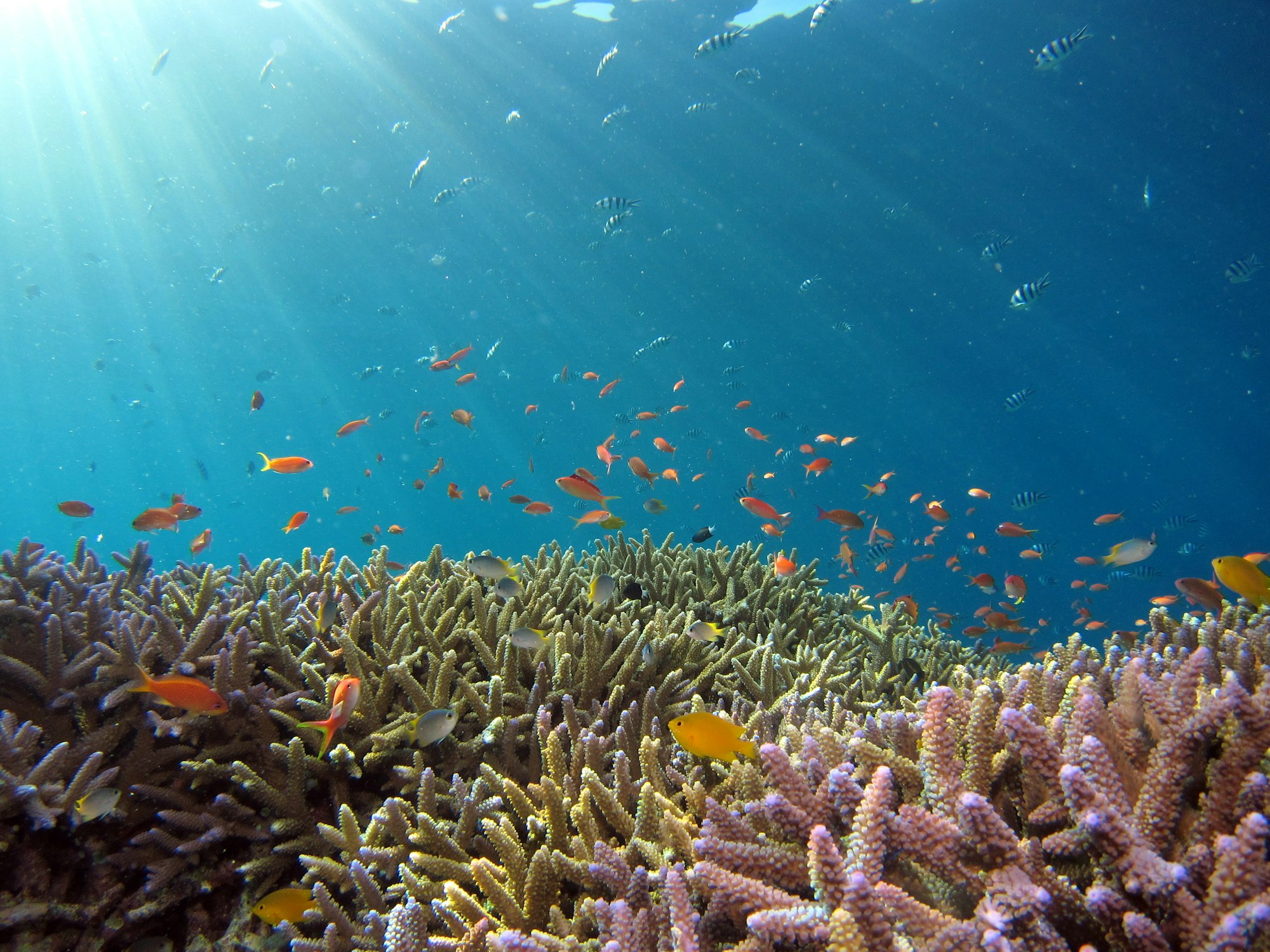
The Gamul reefs are a popular destination for Hurghada-based day boats, with Gamul Kebir standing out for its size and variety of habitats. The reef rises from around 25 meters to within 2–3 meters of the surface, offering a coral-draped plateau on top and a sloping reef wall on the eastern face. Soft corals, sea fans, and dense stands of fire coral cling to the shallow crest, while the deeper sections of the slope host large table corals and branching coral thickets. The reef’s position in the open sea means it attracts a richer mix of pelagics than inshore fringing reefs.
Site Information
- Location: Offshore northern Egyptian Red Sea, between Hurghada and El Gouna
- Entry Type: Boat dive
- Site Type: Reef
- Difficulty Level: Intermediate
- Maximum Depth: 20 meters
- Typical Visibility: 20–30 meters
- Current: Moderate; can be stronger on the exposed eastern face
- Best Time: October to May
Marine Life
humphead wrasse are frequently seen cruising the outer reef edge. Schools of snapper, fusiliers, and goatfish move across the reef plateau, chased by barracuda patrolling above. Reef sharks are occasionally spotted at depth below 15 meters. Large groupers claim the deeper overhangs, and giant moray eels are resident in the coral heads on the slope. Sea turtles rest on the platform and in the shallower sections of the reef crest, and eagle rays have been seen in the blue water on the eastern side.
Dive Profile
Start on the reef top at 3–5 meters and circumnavigate the plateau to get a sense of the reef’s layout. Drop down the eastern wall to 18–20 meters to look for larger species and pelagics, then ascend the slope methodically and finish in the shallows for the safety stop. The reef is large enough for two separate dives with different profiles.
Entry and Exit
Boat access from Hurghada or El Gouna operators. Entry by giant stride. Ascend on the lee side of the reef and deploy an SMB for the pickup boat, which may be mooring on the western side away from current.
Tips and Recommendations
- Combine Gamul Kebir with the adjacent Gamul Soraya for a two-dive day with good variety
- The eastern wall is best dived on a rising tide when current helps carry you along it
- Check the mooring buoy — if the boat is pulling hard on the mooring, expect current on the wall
- Bring an underwater torch to peer into the deeper overhangs on the slope
- A wide-angle lens suits the outer wall; macro works well in the sheltered northern section
Safety Considerations
The exposed eastern face can experience strong tidal flow. Be cautious of unintentional drift toward open water and monitor your position relative to the reef. Ascend on the reef side in strong conditions. Deploy an SMB before surfacing — the area receives moderate boat traffic from Hurghada operators. Fire coral is abundant on the reef crest.
Photography
The outer wall provides dramatic wide-angle backdrops with deep blue water and sloping reef. humphead wrasse and barracuda make striking subjects. The sheltered northern section of the reef top offers colourful macro photography among the coral heads.
Sources: Divezone - Red Sea, Dive the World - Egypt Red Sea, Red Sea Scuba Diving, PADI - Diving in Egypt. Last updated 2026-04-04.
Sea-surface temperature and wave height from Open-Meteo Marine (ERA5 reanalysis, monthly averages).
278 verified species observations (251 species) logged within ~11 km of this site between 1990 and 2023, from the Ocean Biodiversity Information System.
- Tursiops aduncus · Indian ocean bottlenose dolphin
- Stenella longirostris · Spinner dolphin
- Branchiostoma
- Balaenoptera omurai · Omurai's whale
- Hexabranchus sanguineus
- Epimenia
- Conus
- Thuridilla hopei
- Tellinidae
- Diodora ruppellii
- Conus arenatus
- Orphanopusia osiridis
Scientific survey records skew toward sampled taxa (molluscs, corals) and do not reflect what you are guaranteed to see on a dive.
Source: OBIS (obis.org), aggregated Darwin Core occurrence records.
Conditions change with the tide and the season. If you have dived this site, share what it was actually like — date, visibility, current, and what you saw. Real, recent reports from divers are exactly what this guide is built to collect.
Send a conditions report ›