Gamul Soraya
26.7958°N 33.9920°E · reef
Gamul Soraya (“Little Gamul” or “Gamul Soraya”) is the smaller companion reef to Gamul Kebir, sitting just north of the main Gamul structure offshore between Hurghada and El Gouna.
Overview
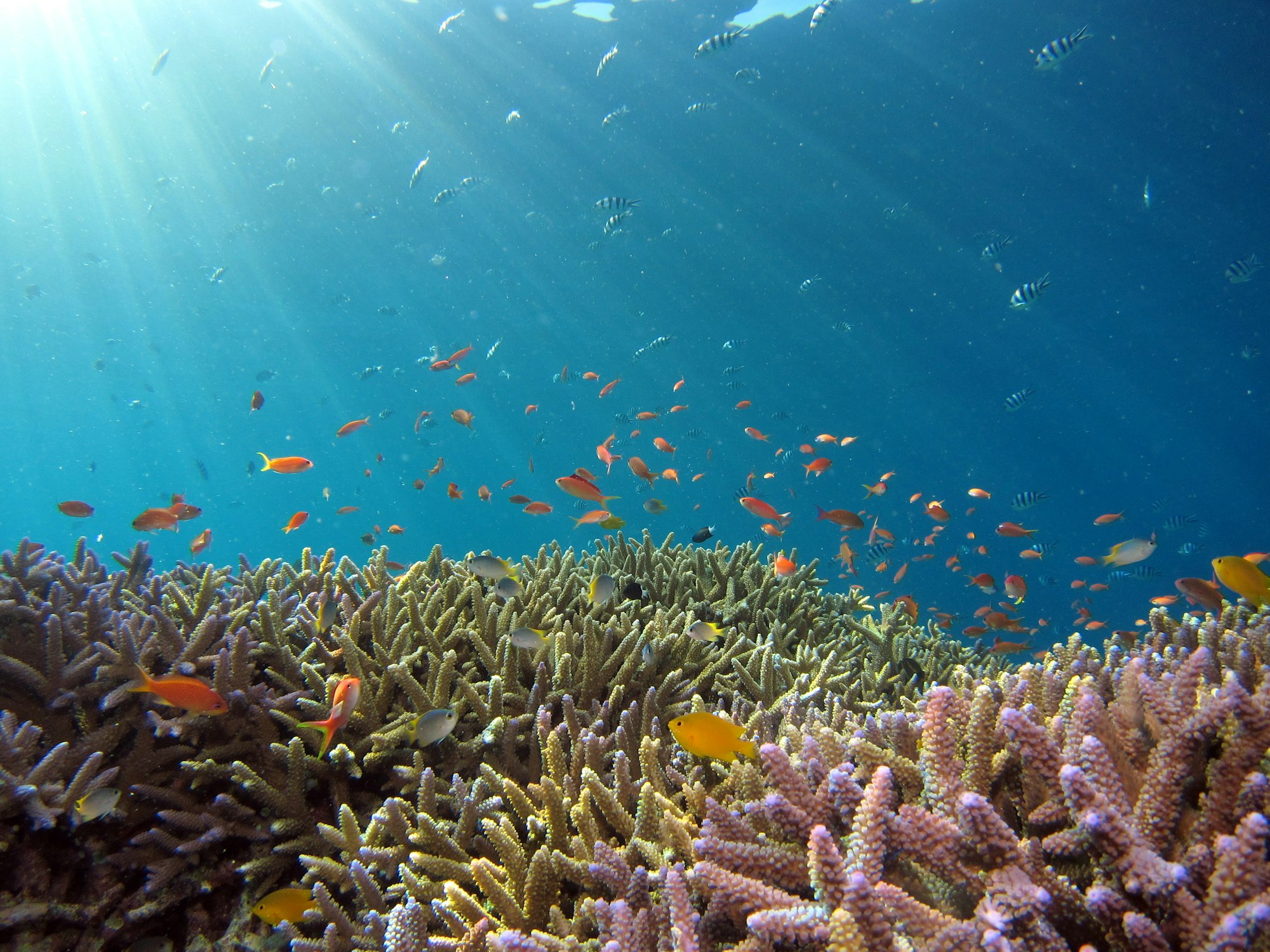
Where Gamul Kebir is the bigger, more dramatic reef, Gamul Soraya tends to be quieter and slightly shallower, making it a natural choice for a second dive when visiting the Gamul group. The reef forms a compact platform barely breaking the surface, fringed by a sloping coral garden on all sides. The coral here is in notably good condition — likely because fewer boats moor here compared to the larger neighbouring reef. Soft corals and sea fans are particularly lush on the deeper sections of the slope, and large plate corals create a layered effect on the upper slope at 8–15 meters.
Site Information
- Location: Offshore northern Egyptian Red Sea, Hurghada–El Gouna area
- Entry Type: Boat dive
- Site Type: Reef
- Difficulty Level: Intermediate
- Maximum Depth: 20 meters
- Typical Visibility: 20–30 meters
- Current: Mild to moderate; generally less exposed than Gamul Kebir
- Best Time: October to May
Marine Life
The shallower reef platform draws large schools of anthias, chromis, and bannerfish that create a constant movement above the coral. humphead wrasse and groupers are present, and sea turtles are regularly seen resting on the reef plateau. The deeper slope harbours sweeping schools of snapper and fusiliers, and small reef sharks occasionally pass through below 15 meters. Garden eels populate the sandy patches at the reef base, and bluespotted stingrays rest in the sand between coral outcrops.
Dive Profile
Descend directly to the reef top at 3–5 meters and follow the perimeter of the small platform before dropping down the slope to the sandy floor at 18–20 meters. The compact size of the reef means you can circle it in a single dive, allowing a thorough survey of both the upper coral garden and the deeper slope. Ascend to 5 meters for the safety stop and surface on the mooring side.
Entry and Exit
Day-boat access from Hurghada or El Gouna. Entry by giant stride from the boat stern. Boats often moor on the western (sheltered) side. Deploy an SMB before ascending if current is running on the eastern face.
Tips and Recommendations
- Dive this as a second dive after Gamul Kebir — the shallower profile suits a shorter bottom time
- Look for garden eels in the sandy areas to the north of the reef platform
- The soft-coral sections between 12 and 18 meters reward unhurried exploration
- Better for macro photography than the more dramatic Gamul Kebir
- Turtle sightings are common — approach slowly and give them space
Safety Considerations
Currents are generally milder here than at Gamul Kebir, but can still be significant on ebb tide. Keep the reef in view throughout the dive to avoid drifting into open water. Always ascend with an SMB deployed. Fire coral is present on the reef crest.
Photography
The lush soft-coral sections on the deeper slope are ideal for wide-angle close-focus shots. Macro subjects including nudibranchs and flatworms are found in the coral rubble at the reef base. The colourful reef top in 3–8 meters photographs well in natural light.
Sources: Divezone - Red Sea, Dive the World - Egypt Red Sea, Red Sea Scuba Diving, PADI - Diving in Egypt. Last updated 2026-04-04.
Sea-surface temperature and wave height from Open-Meteo Marine (ERA5 reanalysis, monthly averages).
279 verified species observations (252 species) logged within ~11 km of this site between 1990 and 2023, from the Ocean Biodiversity Information System.
- Tursiops aduncus · Indian ocean bottlenose dolphin
- Stenella longirostris · Spinner dolphin
- Branchiostoma
- Balaenoptera omurai · Omurai's whale
- Hexabranchus sanguineus
- Epimenia
- Conus
- Thuridilla hopei
- Tellinidae
- Diodora ruppellii
- Conus arenatus
- Orphanopusia osiridis
Scientific survey records skew toward sampled taxa (molluscs, corals) and do not reflect what you are guaranteed to see on a dive.
Source: OBIS (obis.org), aggregated Darwin Core occurrence records.
Conditions change with the tide and the season. If you have dived this site, share what it was actually like — date, visibility, current, and what you saw. Real, recent reports from divers are exactly what this guide is built to collect.
Send a conditions report ›