Ghazala Beach Housereef
27.9108°N 34.3294°E · reef
Ghazala Beach Housereef is a dive site in Red Sea, Middle East.
Overview
Ghazala Beach is a dive site on the northern outskirts of Sharm el-Sheikh — approximately 12 km north of the main resort area and 15 minutes north of Na’ama Bay. The housereef is associated with the Ghazala Beach Hotel and features a headland with a characteristically complex reef structure: the reef flat is cut into a series of shallow bays at around 6 m, outside of which the reef drops away through a wall of buttresses and sandy gullies to approximately 60 m. The best diving is generally done shallow, among the coral heads between the bays and through the caves and short swim-throughs connecting them. The headland is exposed enough to catch current from the north, which brings in pelagic species not commonly seen on calmer inshore sites.
Marine Life
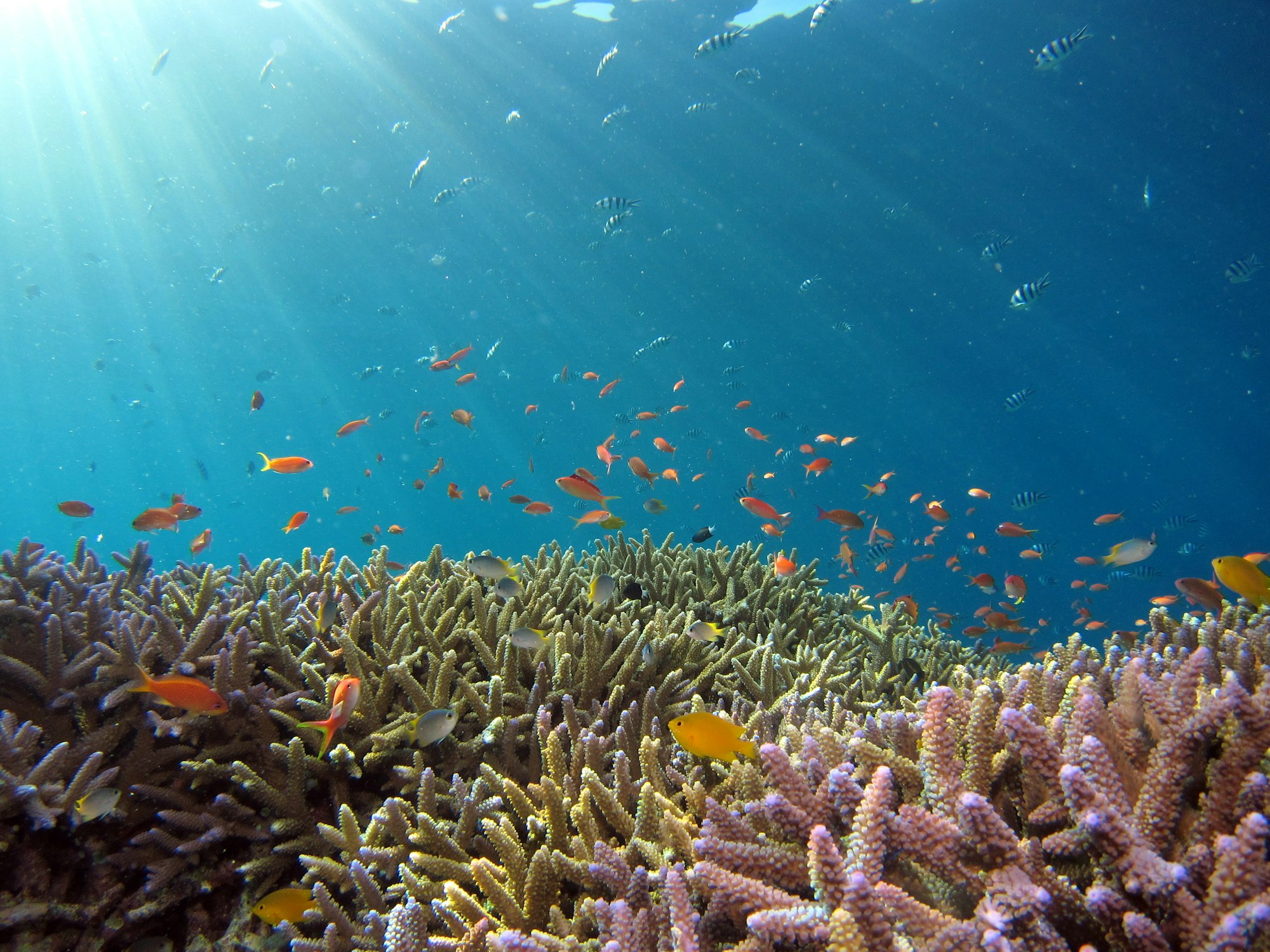
Strong tidal currents at the headland periodically attract jacks, tuna, barracuda, and on rare occasions manta rays and even whale sharks, according to local dive accounts. The shallow coral heads and swim-throughs support a typical Sharm el-Sheikh reef community: moray eels, lionfish, angelfish, butterflyfish, and parrotfish. Night dives reveal crabs foraging on the reef, Spanish dancers (Hexabranchus sanguineus), cone shells on sand patches, and squid. Blue-spotted stingrays rest on sandy gully floors.
Dive Profile
The structure offers choices: shallow reef exploration through the bays and swim-throughs at 3–10 m, or deeper wall diving to 30–60 m. Inside the headland the current typically runs northward at low speed; drift diving is possible from the outer wall. Night dives are particularly rewarding. Visibility 15–25 m typically.
Entry and Exit
Shore entry from the Ghazala Beach Hotel beach. Boat diving from the hotel’s marina is also available. Sinai Divers operates a dive centre at the property. Suitable for Open Water and above.
Tips and Recommendations
Keep dives shallow in the 3–15 m zone for the richest coral life and the most rewarding cave and swim-through exploration. Evening and night dives are highly recommended. If a current is running at the headland, take advantage of it with a drift dive along the outer wall.
Safety Considerations
The headland catches stronger currents than the enclosed bays — check conditions before committing to the outer wall. Fire coral is present throughout. Boat traffic in the area requires surfacing away from the headland and using an SMB. Sun protection is essential during surface intervals.
Site Information
- Location: ~12 km north of Sharm el-Sheikh / 15 min north of Na’ama Bay, Sinai Peninsula
- Entry Type: Shore entry
- Site Type: Reef
- Difficulty Level: Intermediate
- Maximum Depth: 60 m (recreational sections to 30 m)
Sources: Ghazala Dahab — Diving page, Scuba World Divers — Sharm el-Sheikh area dive guide (contextual). Last updated 2026-05-17.
Sea-surface temperature and wave height from Open-Meteo Marine (ERA5 reanalysis, monthly averages).
565 verified species observations (347 species) logged within ~11 km of this site between 1957 and 2015, from the Ocean Biodiversity Information System.
- Grampus griseus · Risso's dolphin
- Rhincodon typus · Whale Shark
- Pempheris tominagai
- Sargocentron caudimaculatum · Tailspot Squirrelfish
- Stenella attenuata · Pantropical spotted dolphin
- Tursiops truncatus · Common bottlenose dolphin
- Vinciguerria mabahiss
- Epinephelus fasciatus · Black-tipped Cod
- Stenella · Spinner dolphins
- Tursiops · Bottlenose dolphins
- Stenella longirostris · Spinner dolphin
- Nettenchelys
Scientific survey records skew toward sampled taxa (molluscs, corals) and do not reflect what you are guaranteed to see on a dive.
Source: OBIS (obis.org), aggregated Darwin Core occurrence records.
Conditions change with the tide and the season. If you have dived this site, share what it was actually like — date, visibility, current, and what you saw. Real, recent reports from divers are exactly what this guide is built to collect.
Send a conditions report ›