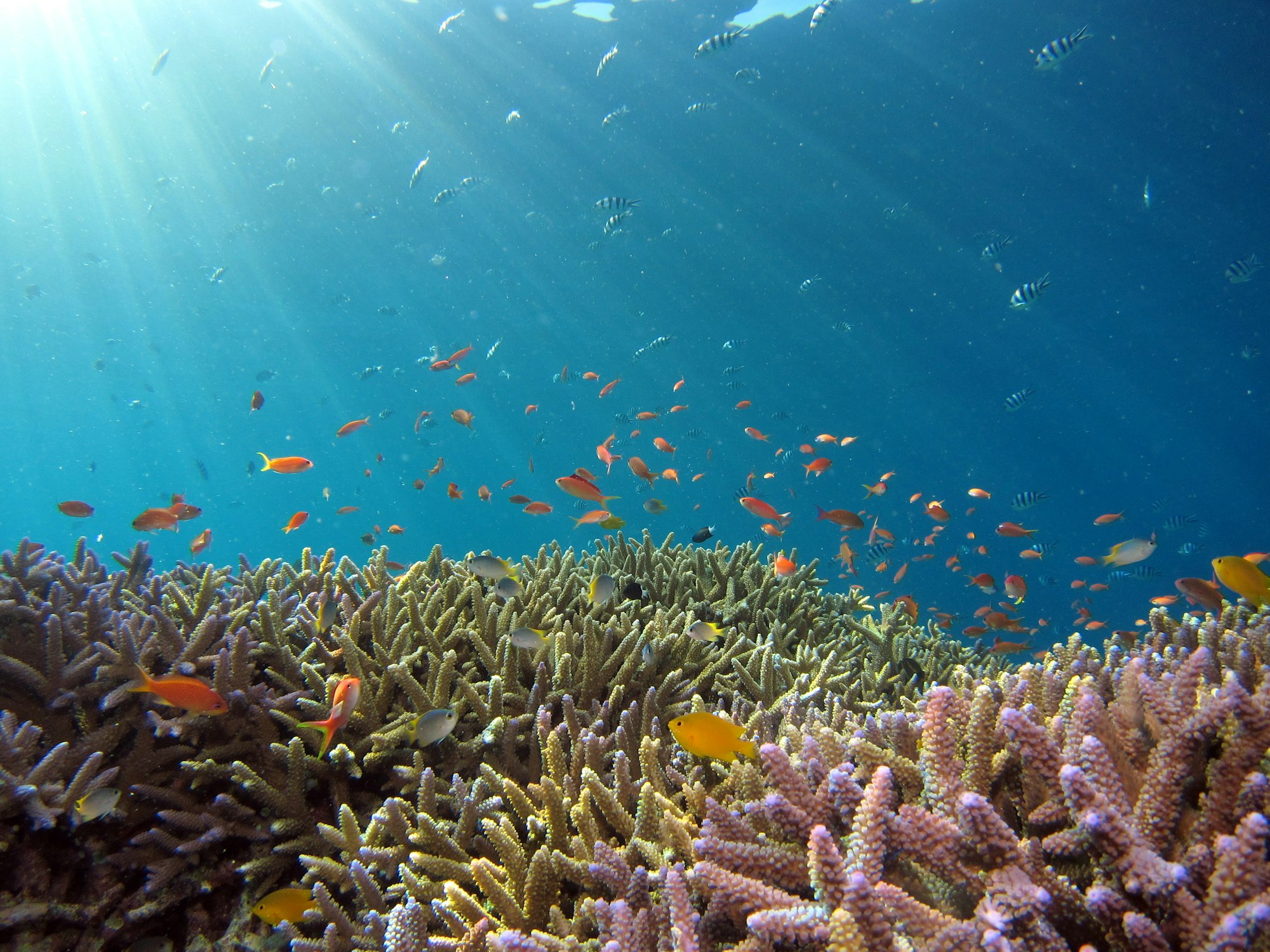
Gota Wadi Gamal
24.6914°N 35.1461°E · reef
Gota Wadi Gamal is an offshore reef pinnacle within the Wadi El Gemal National Park, the large protected marine area south of Marsa Alam in the Egyptian Red Sea.
Overview
Wadi El Gemal National Park encompasses a vast stretch of coastline and offshore reef system, and the gotas (pinnacle reefs) within its boundaries represent some of the healthiest coral in Egypt. Gota Wadi Gamal is a compact isolated pinnacle rising from sandy seafloor to within a few meters of the surface, its flanks colonised by both hard and soft corals in excellent condition. The national park status has helped shield the site from anchor damage and overfishing, and the result is visibly more abundant fish life than at many northern Red Sea sites. The offshore position brings open-water pelagics within range, while the pinnacle structure concentrates reef life on its flanks.
Site Information
- Location: Wadi El Gemal National Park, southern Egyptian Red Sea coast (south of Marsa Alam)
- Entry Type: Boat dive
- Site Type: Reef
- Difficulty Level: Intermediate
- Maximum Depth: 20 meters
- Typical Visibility: 20–30 meters
- Current: Moderate; variable around the pinnacle
- Best Time: October to May
Marine Life
Sea turtles — both hawksbill and green — are notably abundant in this national park area and are almost guaranteed on every dive. humphead wrasse are resident. Schools of snapper and fusiliers move in dense clouds above the reef. The protected status means large groupers are more common here than at unprotected sites, and moray eels are found throughout the coral structure. Eagle rays pass through from the sandy seafloor areas adjacent to the pinnacle. In summer, whale shark sightings are recorded in the area around Wadi El Gemal.
Dive Profile
Descend to the base of the pinnacle at 18–20 meters and circumnavigate the structure to note current direction and wildlife. Work up the flanks in the 10–18 meter range, spending time wherever wildlife concentrations are highest. The shallow crown rewards careful exploration before the safety stop. If multiple dives are planned in the park, a deep first dive here followed by a shallower reef dive provides a good profile.
Entry and Exit
Day-boat access from Marsa Alam or Port Ghalib operators, or via liveaboard. Wadi El Gemal National Park entry fees apply and are typically included in the dive operator’s price. Entry by giant stride. Deploy an SMB before ascending in this open-water environment.
Tips and Recommendations
- National park rules apply: no anchoring, no feeding fish, no removing anything from the reef
- Turtle encounters in Wadi El Gemal are exceptional — give them space and let them approach you
- The park sees considerably fewer divers than Hurghada-area sites, so expect a more pristine experience
- Combine with a snorkelling visit to the Wadi El Gemal mangroves for a full park experience
- Liveaboard itineraries that include this park are typically high-quality operations
Safety Considerations
Standard open-water pinnacle precautions apply. Deploy an SMB before every ascent. Keep group sizes small to minimise disturbance to the protected reef. National park rangers patrol the area and enforce environmental regulations. Obey all park guidelines including no-feeding and no-touching rules.
Photography
The turtle population makes this site exceptional for turtle portrait photography. Wide-angle shots of turtles against the colourful pinnacle background are possible and highly rewarding. The clear water allows natural-light photography to good depth. School fish compositions are productive above the reef crown.
Sources: Divezone - Red Sea, Dive the World - Egypt Red Sea, Red Sea Scuba Diving, PADI - Diving in Egypt. Last updated 2026-04-04.
Sea-surface temperature and wave height from Open-Meteo Marine (ERA5 reanalysis, monthly averages).
302 verified species observations (121 species) logged within ~11 km of this site between 1986 and 2023, from the Ocean Biodiversity Information System.
- Phoxocampus belcheri · Black Rock Pipefish
- Stenella longirostris · Spinner dolphin
- Halicampus mataafae · Samoan Pipefish
- Tursiops aduncus · Indian ocean bottlenose dolphin
- Rhincodon typus · Whale Shark
- Enneapterygius altipinnis
- Scorpaenodes hirsutus
- Sebastapistes strongia
- Fowleria aurita
- Megaptera novaeangliae · Humpback whale
- Fowleria variegata
- Nerita sanguinolenta
Scientific survey records skew toward sampled taxa (molluscs, corals) and do not reflect what you are guaranteed to see on a dive.
Source: OBIS (obis.org), aggregated Darwin Core occurrence records.
Conditions change with the tide and the season. If you have dived this site, share what it was actually like — date, visibility, current, and what you saw. Real, recent reports from divers are exactly what this guide is built to collect.
Send a conditions report ›