Habili Omran
23.5157°N 35.8144°E · reef
Habili Omran is an offshore reef pinnacle in the southern Egyptian Red Sea, situated in the open waters south of Marsa Alam in the liveaboard corridor between Berenice and the Brothers–Zabargad group.
Overview
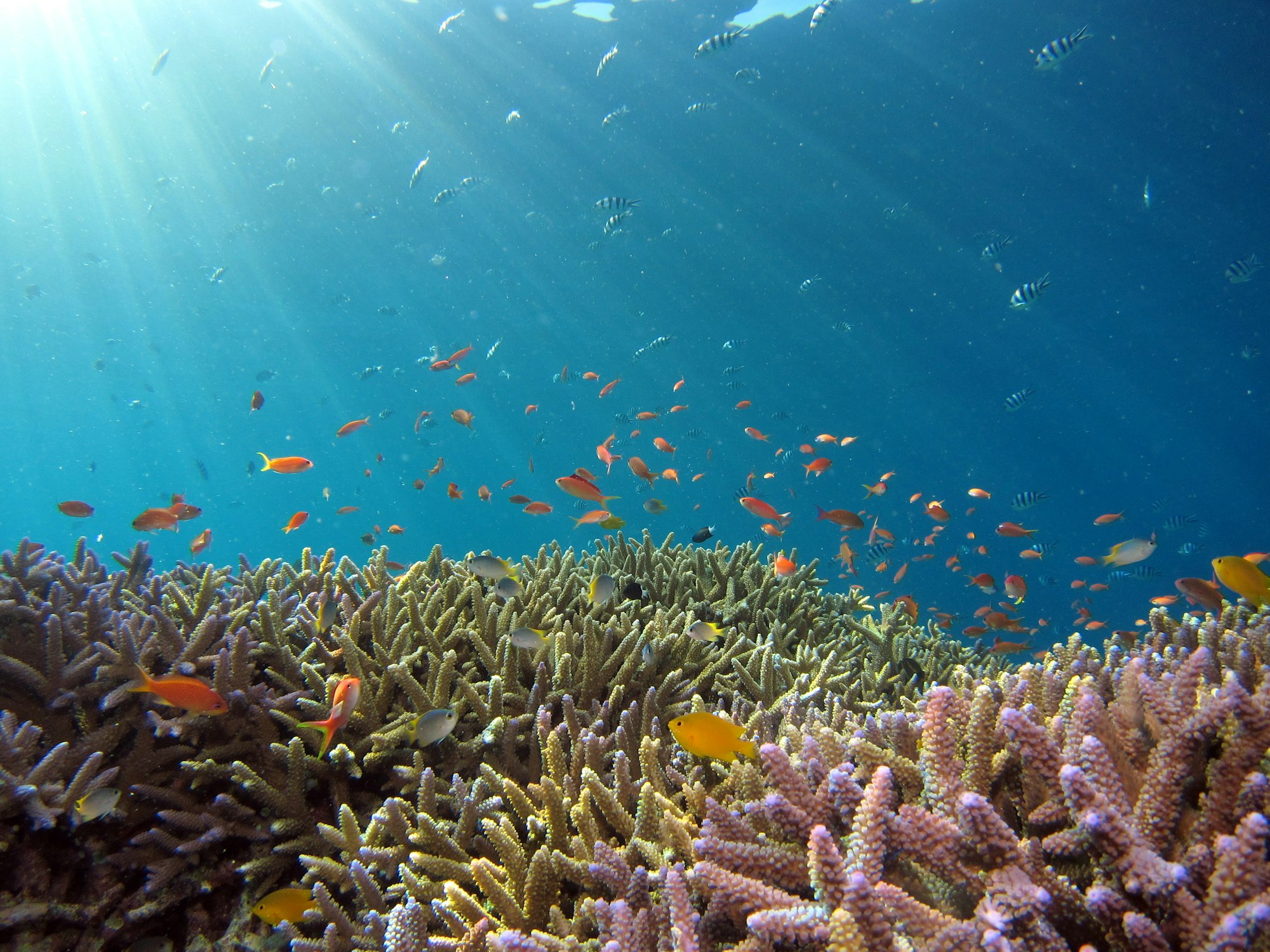
Like the other habili sites scattered across the southern Egyptian Red Sea, Habili Omran is a submerged rocky reef that rises from deep water, providing an isolated focal point for both reef and pelagic marine life. The pinnacle here is known among liveaboard guides for its soft-coral richness and the reliable presence of humphead wrasse that have come to associate the site with human visitors. The flanks slope from a shallow crown at around 5 meters to 18–20 meters before the sand, supporting a continuous carpet of soft coral, encrusting sponges, and sea fans across all depth zones. The surrounding open-ocean water is typically clear and inviting, with the pinnacle’s silhouette visible from the surface on calm days.
Site Information
- Location: Southern Egyptian Red Sea, offshore between Marsa Alam and Berenice
- Entry Type: Boat dive
- Site Type: Reef
- Difficulty Level: Intermediate
- Maximum Depth: 20 meters
- Typical Visibility: 25–35 meters
- Current: Moderate; typically directional around the pinnacle
- Best Time: October to May
Marine Life
humphead wrasse are the headline species here and are regularly encountered in pairs or small groups. Large groupers (including potato cod size range) occupy the deeper overhangs. Schools of anthias and fusiliers create a constant, colourful backdrop above the soft-coral flanks. Barracuda and trevally patrol the open-water zone above the pinnacle. Whitetip reef sharks rest on the sand at the base during daylight hours, becoming active hunters around the structure at dusk. Hawksbill turtles are a consistent presence. Garden eels populate the sandy areas immediately adjacent to the reef base.
Dive Profile
Descend to 18–20 meters at the pinnacle base and identify the current direction. Follow the upstream face of the pinnacle upward, letting any current assist the ascent. Spend the productive middle phase of the dive between 8–15 meters where soft coral coverage peaks. The reef crown at 5 meters warrants a complete circuit before the safety stop. In calm conditions, the site can be completely circumnavigated at depth before ascending.
Entry and Exit
Liveaboard or extended day-charter access from Marsa Alam or Port Ghalib. Entry by giant stride. Deploy an SMB before ascending and maintain surface visibility with the boat crew for the pickup.
Tips and Recommendations
- humphead wrasse at this site are known to be particularly approachable — move slowly and avoid sudden fin kicks
- The pinnacle is compact enough to thoroughly explore in a single dive
- Look along the sandy base for resting sharks during the descent
- If current is running along one face of the pinnacle, position yourself to drift up that face for an effortless ascent
- Combine with other southern offshore sites for a high-quality liveaboard itinerary
Safety Considerations
Standard offshore pinnacle precautions apply. Deploy an SMB on every ascent. Monitor gas carefully, as the pinnacle’s compact size can encourage divers to circle repeatedly at depth. Keep the reef in view to prevent being carried off in current. The liveaboard must maintain an active watch during all dives.
Photography
The approachable humphead wrasse provide exceptional fish portrait opportunities. Close-focus wide-angle of the soft-coral-draped flanks is highly productive. The open blue water surrounding the pinnacle allows backlit silhouette shots of schooling fish above the reef crown.
Sources: Divezone - Red Sea, Dive the World - Egypt Red Sea, Red Sea Scuba Diving, PADI - Diving in Egypt. Last updated 2026-04-04.
Sea-surface temperature and wave height from Open-Meteo Marine (ERA5 reanalysis, monthly averages).
7 verified species observations (4 species) logged within ~11 km of this site between 2009 and 2012, from the Ocean Biodiversity Information System.
- Stenella longirostris · Spinner dolphin
- Tursiops truncatus · Common bottlenose dolphin
- Stenella attenuata · Pantropical spotted dolphin
- Grampus griseus · Risso's dolphin
Scientific survey records skew toward sampled taxa (molluscs, corals) and do not reflect what you are guaranteed to see on a dive.
Source: OBIS (obis.org), aggregated Darwin Core occurrence records.
Conditions change with the tide and the season. If you have dived this site, share what it was actually like — date, visibility, current, and what you saw. Real, recent reports from divers are exactly what this guide is built to collect.
Send a conditions report ›