Habili Radir
24.8654°N 35.1172°E · reef
Habili Radir is an offshore reef pinnacle in the southern Egyptian Red Sea within the Wadi El Gemal National Park zone, located in the open water south of Marsa Alam.
Overview
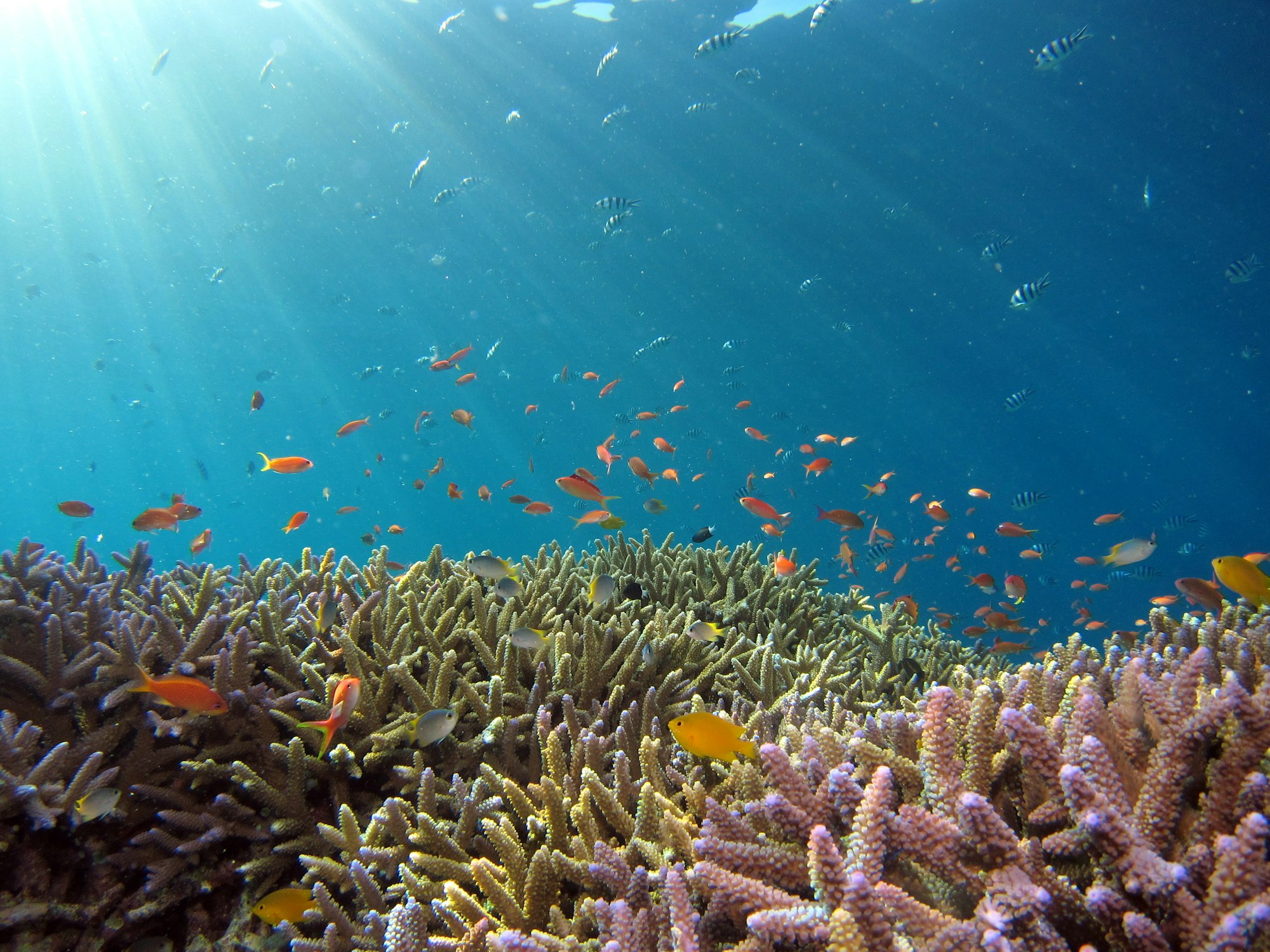
Habili Radir sits within or adjacent to the boundaries of the Wadi El Gemal Hussien National Park, one of Egypt’s larger marine protected areas. The national park designation provides meaningful protection from anchoring and fishing, and the habili structure here reflects the benefit: coral coverage is among the best in the southern Red Sea dive corridor. The pinnacle rises from the sandy seafloor to a crown a few meters below the surface, with steeply sloping flanks producing an efficient, compact dive area. The national park’s conservation management has preserved the reef’s fish stocks, making this a notably fish-rich site compared to unprotected habilis of similar size.
Site Information
- Location: Southern Egyptian Red Sea, Wadi El Gemal area south of Marsa Alam
- Entry Type: Boat dive
- Site Type: Reef
- Difficulty Level: Intermediate
- Maximum Depth: 20 meters
- Typical Visibility: 20–30 meters
- Current: Moderate; can run directionally around the pinnacle
- Best Time: October to May
Marine Life
The national park’s protection is evident in the size of groupers and the density of reef fish. Large coral groupers, lyretail groupers, and humphead wrasse are abundant. Schools of snapper and fusiliers are dense. Sea turtles — hawksbill and occasionally green turtle — appear on most dives. Moray eels are numerous in the coral structure. Dolphins occasionally visit the area in the early morning, and reef sharks are periodically seen at the deeper base of the pinnacle. The reef crown hosts large numbers of butterflyfish and surgeonfish.
Dive Profile
Descend to the sandy base at 18–20 meters, circle the pinnacle once at depth, then follow the slope upward. Spend most of the dive in the 8–15 meter range on the flanks. The reef crown at 3–5 meters is worth a slow circuit to observe turtle activity and the dense reef fish schools before the safety stop. Allow adequate time for the safety stop in the clear, shallow water above the crown.
Entry and Exit
Day-boat access from Marsa Alam or Port Ghalib operators, or via liveaboard. National park entry fees apply. Entry by giant stride. Deploy an SMB before ascending in the open water surrounding the pinnacle.
Tips and Recommendations
- National park rules are strictly enforced — no touching reef, no feeding fish, no anchoring
- Early morning is best for turtle encounters on the crown; they tend to rest here through the night
- The healthy grouper population is a direct result of national park protection — note the size difference versus northern Red Sea sites
- Combine with other Wadi El Gemal sites such as Gota Wadi Gamal for a full park diving day
- A wetsuit of at least 3mm is advisable year-round; 5mm for winter months
Safety Considerations
National park regulations govern the dive. Follow all briefings from the licensed guide. Deploy an SMB before ascending. Habili sites in the park often have stronger-than-expected currents on exposed faces. The boat must use designated mooring buoys where provided — random anchoring is prohibited.
Photography
The park’s healthy fish stocks make for exceptional reef photography. Grouper portraits, turtle encounters, and dense school shots are all highly achievable. The soft-coral coverage on the deeper flanks complements wide-angle compositions.
Sources: Divezone - Red Sea, Dive the World - Egypt Red Sea, Red Sea Scuba Diving, PADI - Diving in Egypt. Last updated 2026-04-04.
Sea-surface temperature and wave height from Open-Meteo Marine (ERA5 reanalysis, monthly averages).
31 verified species observations (18 species) logged within ~11 km of this site between 1964 and 2023, from the Ocean Biodiversity Information System.
- Stenella longirostris · Spinner dolphin
- Tursiops aduncus · Indian ocean bottlenose dolphin
- Stenella attenuata · Pantropical spotted dolphin
- Rhincodon typus · Whale Shark
- Conomurex fasciatus
- Spondylus candidus
- Gibberulus albus
- Lamarcka ventricosa
- Lima paucicostata
- Iacra kallima
- Lyncina lynx
- Calliotrochus marmoreus
Scientific survey records skew toward sampled taxa (molluscs, corals) and do not reflect what you are guaranteed to see on a dive.
Source: OBIS (obis.org), aggregated Darwin Core occurrence records.
Conditions change with the tide and the season. If you have dived this site, share what it was actually like — date, visibility, current, and what you saw. Real, recent reports from divers are exactly what this guide is built to collect.
Send a conditions report ›