Hamada
24.4383°N 35.2131°E · wreck
The Hamada is a small cargo ship wreck located off Abu Ghusun, approximately 70 km south of Marsa Alam within the Wadi El Gemal National Park. It is one of the least-visited wrecks in the southern Egyptian Red Sea, offering an intimate dive without the crowds of the northern wreck sites.
Overview
The Hamada was a 65.1-metre, 654 GRT cargo vessel built in 1965 by John Lewis & Sons Ltd. in Aberdeen, UK, originally named Avocet for P&O’s General Steam Navigation subsidiary. On 28 June 1993, while en route from Jeddah to Suez carrying plastic granulate, she struck a submerged object in heavy weather at approximately 24.42°N, 35.25°E near Ras Banas and foundered. The wreck lies on its starboard side in two sections in approximately 14 metres of water at Abu Ghusun reef. Both the cargo holds and engine room are accessible and largely intact. The wreck sits within the protected waters of Wadi El Gemal National Park.
Site Information
- Location: Abu Ghusun, ~70 km south of Marsa Alam, Wadi El Gemal National Park, Egypt
- Entry Type: Boat dive
- Site Type: Wreck dive
- Difficulty Level: Intermediate
- Maximum Depth: 14 meters
- Typical Visibility: 20–30 meters
- Current: Moderate; can be stronger when wind is from the north
- Best Time: October to May
Marine Life
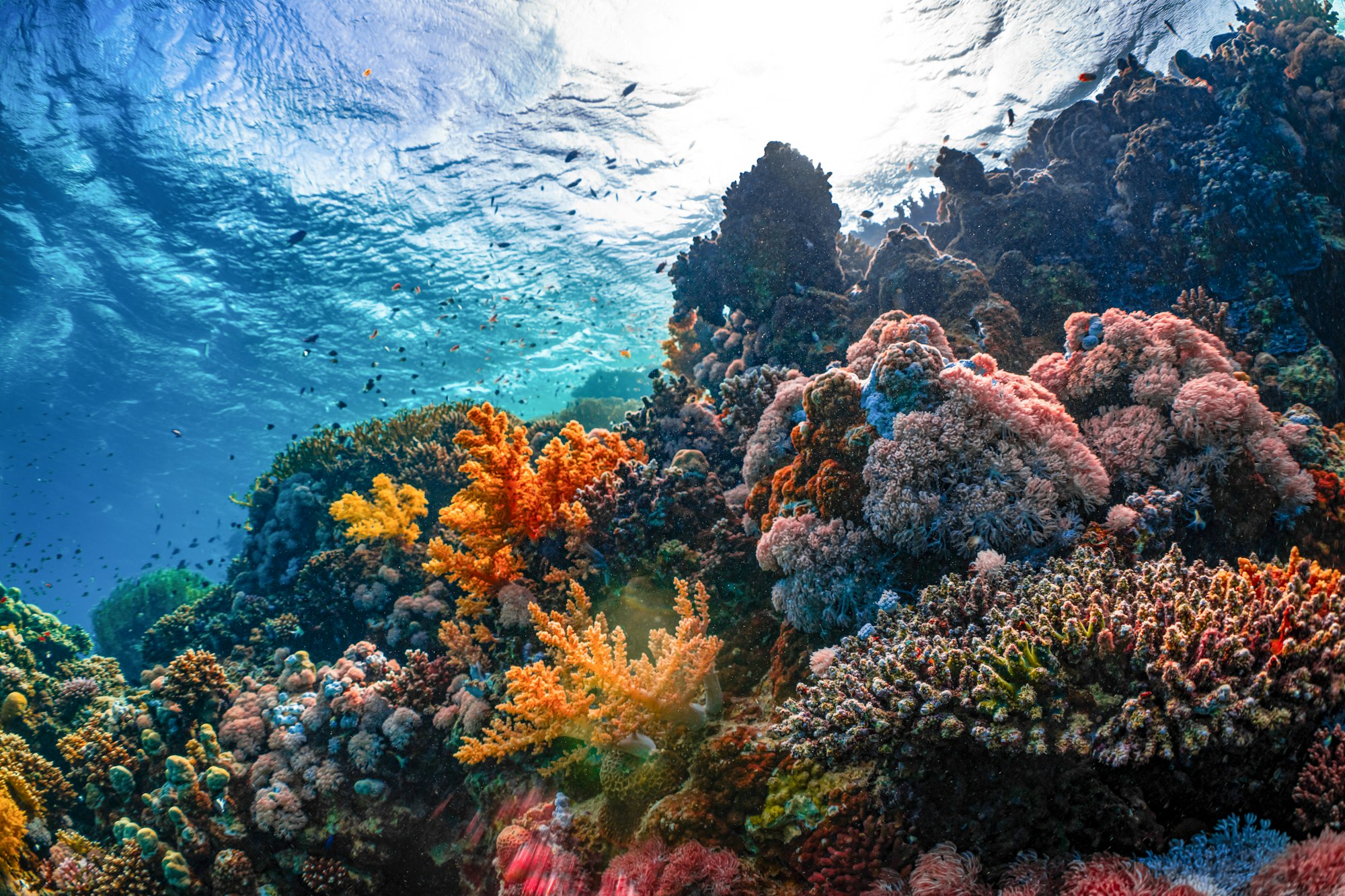
The wreck structure has attracted the typical encrusted wreck community of the Red Sea. Schools of glassy sweepers fill any enclosed spaces, and lionfish are present throughout. Large groupers occupy the deeper sections of the hull, and moray eels have colonised the wreck’s recesses. The coral growth on the exterior hull supports anthias, butterflyfish, and parrotfish. The sandy area around the wreck base is patrolled by bluespotted stingrays. The open water above the wreck occasionally yields barracuda and, on fortunate days, reef sharks drawn by the fish concentration.
Dive Profile
Descend to the deepest part of the wreck — typically the bow or stern section — at 18–20 meters and work along the hull systematically. The mid-depth range (8–15 meters) contains the richest coral encrustation and most diverse fish life. Approach any potential penetration points with caution and only enter spaces you can exit without difficulty. Ascend along the upper hull surface and complete the safety stop hovering above the shallowest section of the wreck.
Entry and Exit
Day-boat access from Marsa Alam or Port Ghalib operators, or via liveaboard. Entry by giant stride. The wreck is typically approached from the sheltered leeward side. Deploy an SMB before ascending, as the boat may be mooring off the wreck structure.
Tips and Recommendations
- A dive torch is essential for examining the interior spaces and illuminating the coral encrustation’s colours
- Maintain strict buoyancy control inside any wreck — silt disturbance reduces visibility rapidly
- Do not attempt penetration of enclosed spaces without wreck diving training
- The wreck makes an interesting change from the region’s predominantly reef diving character
- Combine with a nearby reef dive for a varied Marsa Alam day trip
Safety Considerations
Wreck diving requires awareness of entanglement hazards (loose nets, cables, fishing line) and siltation risk. Never penetrate beyond the light zone without proper equipment and training. Currents on the open side of the wreck can be significantly stronger than on the sheltered side. Deploy an SMB before ascending.
Photography
The coral encrustation on the hull provides colourful wide-angle subjects with good detail. Interior shots require a powerful torch to balance the ambient light at depth. The schooling fish inside the wreck spaces are excellent subjects for atmospheric wreck photography.
Sources: Red Sea Wreck Project - Hamada, Deep South Divers - Abu Ghusun, Marsa Alam Shipwrecks Guide. Last updated 2026-05-25.
Sea-surface temperature and wave height from Open-Meteo Marine (ERA5 reanalysis, monthly averages).
413 verified species observations (227 species) logged within ~11 km of this site between 2010 and 2026, from the Ocean Biodiversity Information System.
- Tursiops aduncus · Indian ocean bottlenose dolphin
- Hastula hectica
- Bulla arabica
- Canarium erythrinum
- Clanculus pharaonius
- Centrocardita akabana
- Atys ehrenbergi
- Lyncina carneola
- Quidnipagus palatam
- Conus striatus
- Iacra seychellarum
- Circenita varia
Scientific survey records skew toward sampled taxa (molluscs, corals) and do not reflect what you are guaranteed to see on a dive.
Source: OBIS (obis.org), aggregated Darwin Core occurrence records.
Conditions change with the tide and the season. If you have dived this site, share what it was actually like — date, visibility, current, and what you saw. Real, recent reports from divers are exactly what this guide is built to collect.
Send a conditions report ›