Khanka
23.6167°N 36.2047°E · wreck
A shipwreck at Zabargad Island in the southern Egyptian Red Sea — depth approximately 20 metres, liveaboard access only.
Overview
The Khanka is a steel-hulled cargo or supply vessel resting near Zabargad Island (Abu Zabad), an offshore island in the southern Egyptian Red Sea at approximately 23.6°N. Zabargad is reached exclusively by liveaboard from Marsa Alam or Port Ghalib. The wreck has been colonised by coral growth over the years and now supports a resident fish community. Note: a separate OSM entry named “Neptuna” exists at nearly identical coordinates (~30m away) — these two entries are likely the same wreck recorded twice, and deduplication may be needed. The vessel’s identity and sinking history have not been confirmed from independent sources.
Site Information
- Location: Zabargad Island, southern Red Sea, Egypt (~23.6°N, 36.2°E)
- Entry Type: Boat dive
- Site Type: Wreck dive
- Difficulty Level: Intermediate
- Maximum Depth: 20 meters
- Typical Visibility: 20-35 meters (65-115 feet)
- Current: Variable; can be moderate on exposed sections
- Best Time: October to April (liveaboard season)
Marine Life
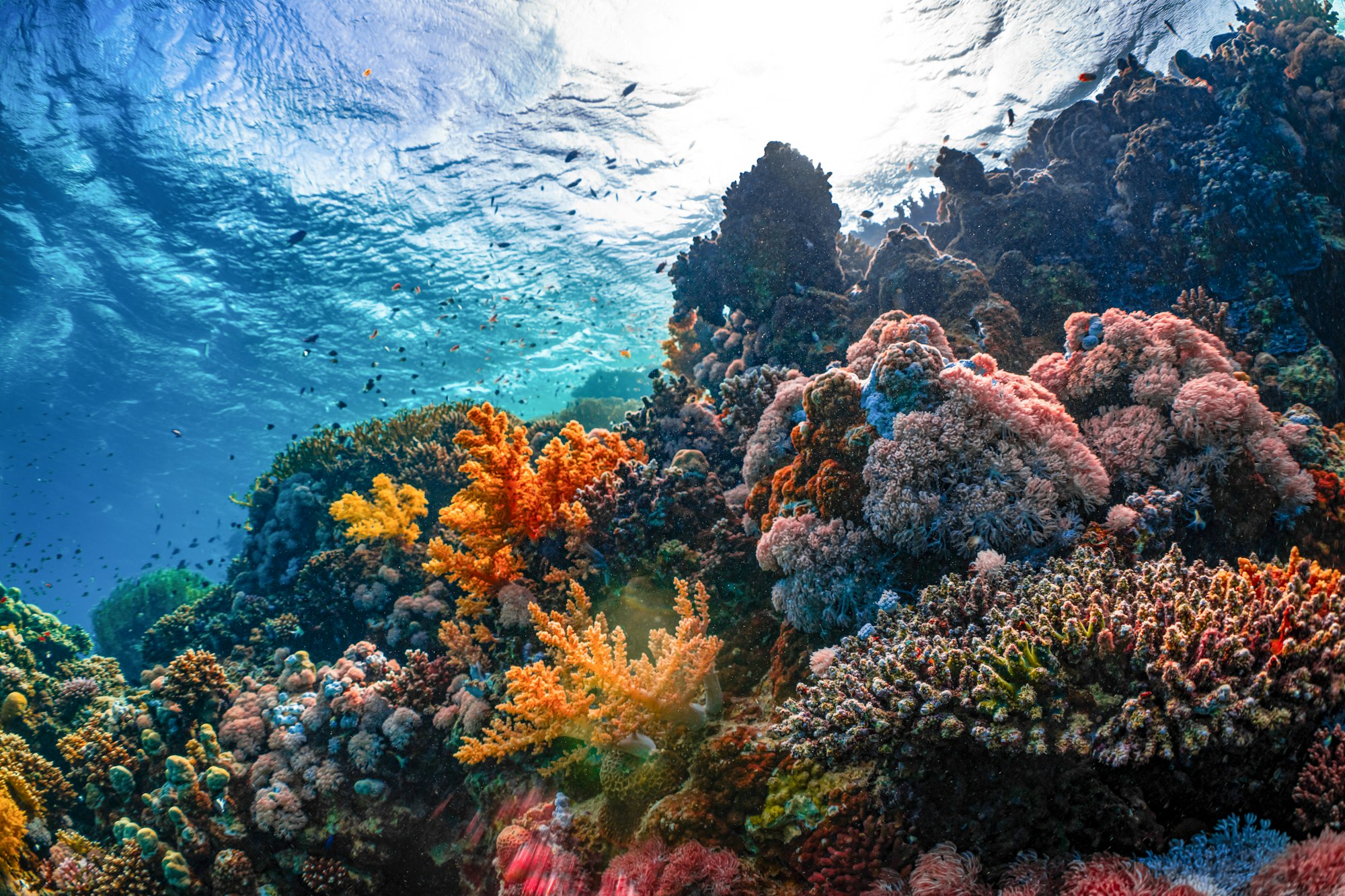
Wreck structures in the Red Sea are magnets for marine life, and the Khanka is no exception. Large schools of glassy sweepers fill the interior spaces in shimmering silver clouds. Groupers and humphead wrasse occupy territories around the hull, and moray eels emerge from rusted gaps in the plating. Lionfish are resident along the shaded underside sections. The coral growth across the exterior — soft corals in purple and orange, fan corals, and encrusting hard corals — creates a richly textured surface that attracts nudibranchs, feather stars, and Christmas tree worms visible on close inspection.
Dive Profile
Descend to the wreck top and begin by orienting yourself to the overall hull shape and its orientation on the seabed. Work progressively around the exterior, exploring the coral-encrusted deck structures, any open cargo holds, and the propeller or stern section. Maximum depth is reached at the deepest hull section on the seabed at around 20 meters. The intermediate skill rating reflects that wreck navigation, buoyancy control around encrusted structures, and managing silt disturbance require some diving experience.
Entry and Exit
Accessed exclusively by liveaboard, typically on southern Red Sea circuits from Marsa Alam or Port Ghalib that include Zabargad Island. A mooring line or descent line to the wreck provides orientation for the descent. Entry via giant stride or back roll. Surface with sufficient air for a safety stop at 5 meters, signaling the boat with an SMB.
Tips and Recommendations
- Carry a primary dive torch — the interior spaces and underside sections are significantly darker than the surrounding open water
- Buoyancy control is critical to avoid stirring up silt inside the wreck and disturbing the soft coral growth
- Check with the dive guide about any accessible interior sections worth visiting
- Pair this dive with adjacent reef sections if the wreck can be explored in less than a full tank
Safety Considerations
Wreck penetration should only be attempted by divers with wreck diving training and appropriate equipment (line, redundant light, buoyancy mastery). Entanglement hazards exist in the form of fishing line, loose cables, and collapsed structures. Silt is easily disturbed in enclosed spaces and can rapidly reduce visibility to zero. Fire coral is present on all exposed surfaces — avoid contact.
Photography
Wide-angle images of the coral-encrusted hull with natural light filtering down from the surface are the signature shot at wreck sites like the Khanka. Schools of glassy sweepers create dramatic interior scenes with a torch for fill light. Close-up shots of the soft coral growth on the hull reveal intricate textures and color.
Location corrected to Zabargad Island based on coordinates (23.617°N/36.205°E). Vessel identity unconfirmed — no site-specific sources found. Possible duplicate of “Neptuna” entry at same location. Last updated 2026-06-27.
Sea-surface temperature and wave height from Open-Meteo Marine (ERA5 reanalysis, monthly averages).
9 verified species observations (3 species) logged within ~11 km of this site between 2004 and 2013, from the Ocean Biodiversity Information System.
- Stenella longirostris · Spinner dolphin
- Pseudorca crassidens · False killer whale
- Tursiops · Bottlenose dolphins
Scientific survey records skew toward sampled taxa (molluscs, corals) and do not reflect what you are guaranteed to see on a dive.
Source: OBIS (obis.org), aggregated Darwin Core occurrence records.
Conditions change with the tide and the season. If you have dived this site, share what it was actually like — date, visibility, current, and what you saw. Real, recent reports from divers are exactly what this guide is built to collect.
Send a conditions report ›