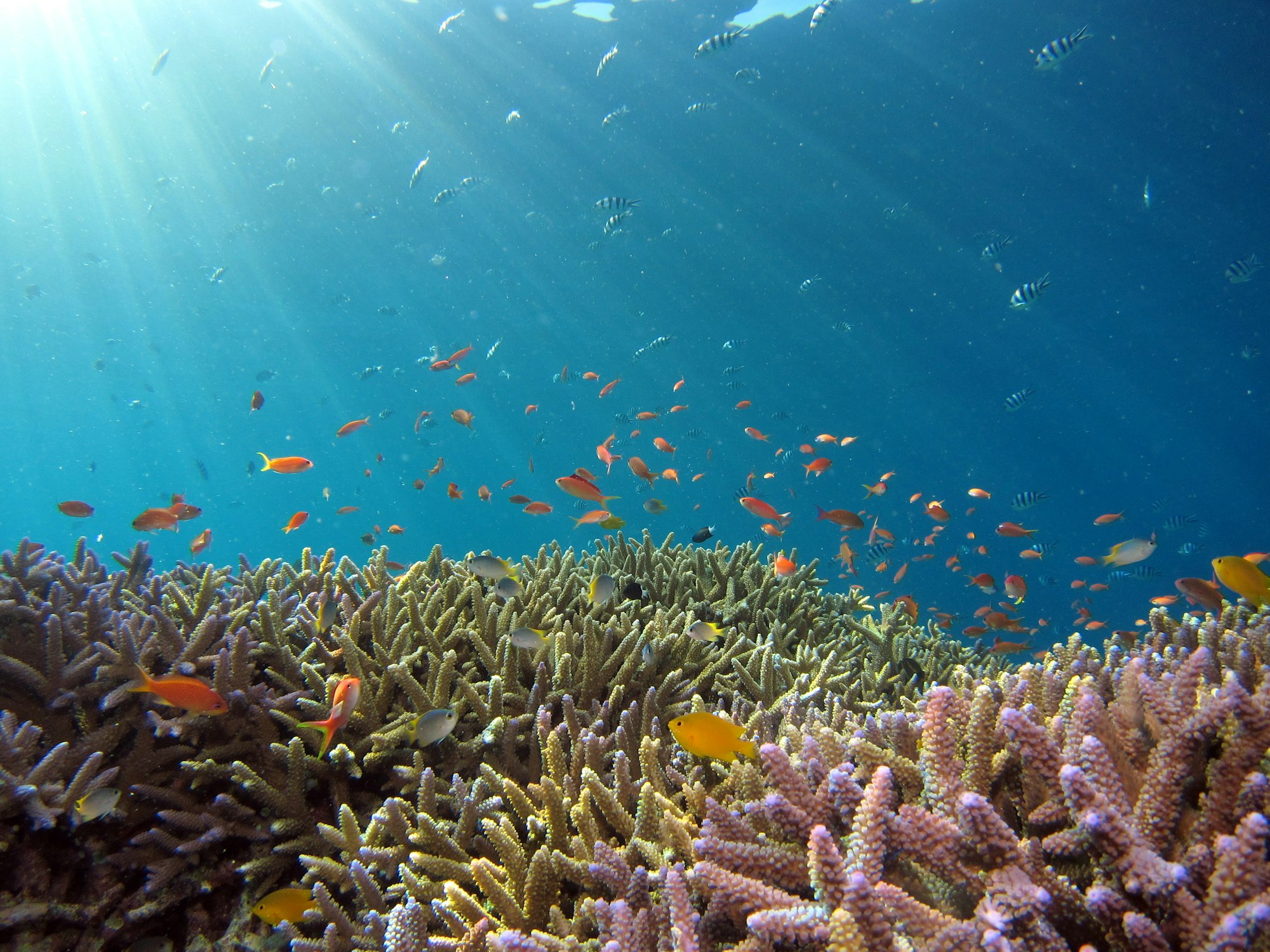
Laguna Reef
28.0064°N 34.4845°E · reef
Laguna Reef sits within the Tiran Island reef system in the northern Red Sea, at approximately 28.006°N, 34.484°E — placing it in the vicinity of Gordon Reef and the lagoon-like sheltered waters between the Tiran reefs. The site takes its name from the calmer, more enclosed character of the water here, sheltered by the reef structure from the stronger tidal flows that dominate the outer passages.
Overview
Unlike the exposed outer walls of Jackson and Thomas Reef, Laguna Reef offers a comparatively protected dive environment within the Tiran complex. The shallower, more sheltered character makes it a useful site for the second or third dive of the day after more demanding sites in the group. Coral coverage in the sheltered inner areas of the Tiran reef system tends to be lush, with prolific growth on hard substrate at depths well within the recreational range. Visibility remains excellent throughout the year, and the calmer conditions make buoyancy control and fish observation easier than at the more current-exposed outer sites.
Site Information
- Location: Tiran Island reef system, northern Red Sea, Egypt
- Entry Type: Boat dive
- Site Type: Reef
- Difficulty Level: Intermediate
- Maximum Depth: 20 meters
- Typical Visibility: 20-30 meters (65-100 feet)
- Current: Generally moderate; calmer than outer Tiran passages
- Best Time: September to May
Marine Life
The Tiran reef ecosystem supports some of the northern Red Sea’s finest marine life, and Laguna Reef benefits from proximity to this broader system. humphead wrasse are frequently encountered here, circling reef structures with characteristic ease. Schools of barracuda hover in mid-water, and large groupers hold territories in the deeper coral formations. Sea turtles rest on sandy patches and graze on seagrass. The reef surface is covered in colourful anthias, butterflyfish, and angelfish, while moray eels and lionfish occupy the ubiquitous reef crevices. On calm days, the lagoon character of the site concentrates fish and reduces the pelagic encounters typical of the outer Tiran sites.
Dive Profile
Begin the dive at the reef edge and work along the coral formations at 10-20 meters, exploring the mixed hard and soft coral structures. The more sheltered nature of the site allows a relaxed, exploratory dive pace. Work the reef edge at depth before ascending to the shallower reef top for the final part of the dive, maximising the range of environments covered and allowing extended bottom time overall.
Entry and Exit
Day boats and liveaboards from Sharm el-Sheikh reach the Tiran area in 30-60 minutes. Entry via giant stride or back roll. The calmer lagoon conditions make surface entry and exit less demanding than outer Tiran sites. Deploy an SMB before ascending for pickup.
Tips and Recommendations
- Use Laguna Reef as a relaxed second or third dive after starting the day at the more demanding Jackson or Thomas Reef
- The calmer conditions make this a good choice for divers still building comfort in mild current environments
- Look for resident humphead wrasse — they are often found circling the same reef sections repeatedly
- Morning light at 8-10 meters makes for excellent natural-light photography
Safety Considerations
Even in the more sheltered Tiran lagoon area, conditions can change with tidal state. Monitor current throughout the dive and be prepared to ascend early if flow increases. Fire coral is present on all reef structures — maintain careful buoyancy. Always carry an SMB and conduct a 5-minute safety stop before surfacing.
Photography
The calm conditions and excellent reef fish populations make Laguna Reef one of the better sites for relaxed fish portraiture in the Tiran area. humphead wrasse and large grouper close-ups are the signature shots. Coral garden wide-angles work beautifully in the morning light when the sun angle illuminates the shallow reef top.
Sources: Divezone - Red Sea, Dive the World - Egypt Red Sea, Red Sea Scuba Diving, PADI - Diving in Egypt. Last updated 2026-04-04.
Sea-surface temperature and wave height from Open-Meteo Marine (ERA5 reanalysis, monthly averages).
166 verified species observations (74 species) logged within ~11 km of this site between 1968 and 2023, from the Ocean Biodiversity Information System.
- Grampus griseus · Risso's dolphin
- Stenella attenuata · Pantropical spotted dolphin
- Tursiops truncatus · Common bottlenose dolphin
- Stenella longirostris · Spinner dolphin
- Tursiops · Bottlenose dolphins
- Tursiops aduncus · Indian ocean bottlenose dolphin
- Bathygobius fuscus
- Istigobius decoratus
- Stenella · Spinner dolphins
- Rhincodon typus · Whale Shark
- Meiacanthus nigrolineatus
- Trimma avidori
Scientific survey records skew toward sampled taxa (molluscs, corals) and do not reflect what you are guaranteed to see on a dive.
Source: OBIS (obis.org), aggregated Darwin Core occurrence records.
Conditions change with the tide and the season. If you have dived this site, share what it was actually like — date, visibility, current, and what you saw. Real, recent reports from divers are exactly what this guide is built to collect.
Send a conditions report ›