Legend
25.0724°N 34.9374°E · wreck
The Legend is a shipwreck in the Marsa Alam area of the southern Red Sea, Egypt, lying at approximately 20 metres since its sinking on October 17, 2002.
Overview
The Legend sank on October 17, 2002 — the OSM record notes this date. Research has not confirmed whether the sinking was accidental or a deliberate scuttling; earlier descriptions claiming it was “intentionally sunk as an artificial reef” were not verified by independent sources and have been removed. Having been on the seabed for over two decades, the hull supports established coral and sponge growth. At a maximum depth of approximately 20 metres, the site is within intermediate recreational limits. Vessel identity, size, and sinking history remain unconfirmed pending independent source verification.
Site Information
- Location: Marsa Alam area, southern Red Sea, Egypt
- Entry Type: Boat dive
- Site Type: Wreck dive
- Difficulty Level: Intermediate
- Maximum Depth: 20 meters
- Typical Visibility: 20-30 meters (65-100 feet)
- Current: Moderate; variable with tidal conditions
- Best Time: October to May
Marine Life
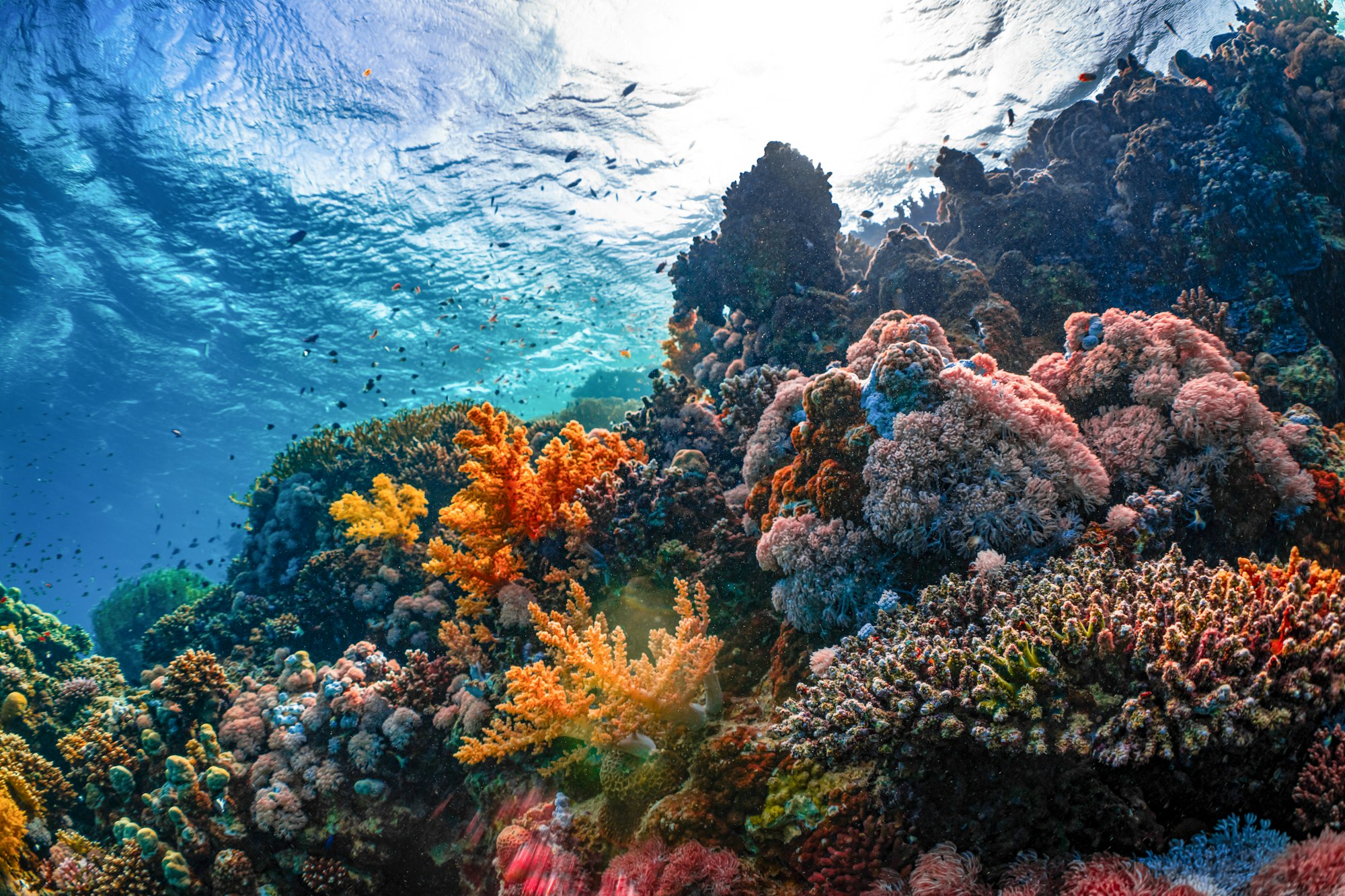
After more than twenty years on the seabed, the Legend supports a mature artificial reef community. Soft corals, sea fans, and hard coral encrustation cover exposed surfaces, and the combination of dark interior spaces and complex exterior structure provides habitat for an impressive density of fish. Large schools of glassy sweepers fill the interior spaces, and groupers have established territories in the hold areas. Moray eels are resident in hull crevices, and lionfish pose in characteristic resting positions on ledges. The surrounding sandy seabed often shelters garden eels and flatfish. Sea turtles are possible in the surrounding waters given the Marsa Alam region’s healthy turtle populations.
Dive Profile
Descend the mooring line to the highest point of the wreck and orient yourself to the hull before exploring. Work from one end to the other, examining deck structures, any open interior sections, the engine room area, and the stern or bow features. Most of the interesting coral growth concentrates on the upper sections exposed to natural light. If penetrating, stay shallow within the structure and maintain a clear visual reference to daylight. Ascend with 50 bar reserve and complete a 5-minute safety stop at 5 meters.
Entry and Exit
Accessible by day boat from Marsa Alam-area dive centres and on liveaboard itineraries covering the southern Red Sea coast. Entry via giant stride from the dive deck. Mooring or descent line is typically rigged to the wreck. Deploy SMB before ascending for boat pickup.
Tips and Recommendations
- Carry a torch — interior and dark hull sections benefit significantly from artificial light
- The coral growth after 20+ years means careful buoyancy is essential to avoid damaging established reef
- Penetration requires wreck training and appropriate equipment; stay within your certification level
- Ask the dive operator about any notable features specific to this vessel
Safety Considerations
Wreck penetration should only be undertaken by trained wreck divers with appropriate equipment. Structural changes occur over two decades — collapsed sections and reduced openings are possible. Always carry a torch, a reel or line for penetration, and a cutting tool. Fire coral and sharp edges on the corroding hull require exposure protection and buoyancy control.
Photography
The combination of colorful coral growth and the stark geometry of the steel hull makes the Legend an excellent photography site. Natural light filtering through open deck structures creates dramatic light shafts in the interior. The soft coral growth in orange and purple tones on the exterior shoots beautifully with a strobe against the blue water background.
“Intentionally sunk” claim removed — not confirmed by independent sources. Sinking date 2002-10-17 per OSM record. Vessel identity and history unverified. No site-specific dive sources found. Last updated 2026-06-27.
Sea-surface temperature and wave height from Open-Meteo Marine (ERA5 reanalysis, monthly averages).
179 verified species observations (63 species) logged within ~11 km of this site between 1895 and 2025, from the Ocean Biodiversity Information System.
- Stenella longirostris · Spinner dolphin
- Tursiops truncatus · Common bottlenose dolphin
- Mobula
- Tursiops aduncus · Indian ocean bottlenose dolphin
- Stenella attenuata · Pantropical spotted dolphin
- Decapterus russelli
- Alepes djedaba
- Mobulidae
- Gobiodon ater
- Saurida undosquamis
- Tursiops · Bottlenose dolphins
- Chromodoris quadricolor
Scientific survey records skew toward sampled taxa (molluscs, corals) and do not reflect what you are guaranteed to see on a dive.
Source: OBIS (obis.org), aggregated Darwin Core occurrence records.
Conditions change with the tide and the season. If you have dived this site, share what it was actually like — date, visibility, current, and what you saw. Real, recent reports from divers are exactly what this guide is built to collect.
Send a conditions report ›