Marsa Bareika
27.7866°N 34.2178°E · reef
Marsa Bareika is a sheltered bay dive site within Ras Mohammed National Park at the southern tip of the Sinai Peninsula, Egypt. “Marsa” in Arabic means bay or harbour, and Bareika refers to the specific inlet — a protected cove within the park boundaries that offers calm, sheltered diving conditions in contrast to the exposed outer walls of nearby Shark Reef and Yolanda Reef.
Overview
Ras Mohammed National Park is Egypt’s oldest and most strictly protected marine reserve, established in 1983. The park encompasses the cape at the southern tip of Sinai where the Gulf of Suez meets the Gulf of Aqaba, creating a complex current and nutrient environment that produces exceptional coral reef biodiversity. Marsa Bareika sits within the park’s protected bay system, offering an accessible intermediate dive that contrasts with the more demanding outer sites. The bay character means calmer surface and underwater conditions, with reef formations lining the bay walls and a sandy floor at manageable depths. The protection afforded by the national park has maintained strong coral coverage and fish population densities well above regional averages.
Site Information
- Location: Ras Mohammed National Park, southern Sinai, Egypt
- Entry Type: Boat dive
- Site Type: Reef
- Difficulty Level: Intermediate
- Maximum Depth: 20 meters
- Typical Visibility: 20-35 meters (65-115 feet)
- Current: Generally mild within the bay; stronger at bay entrance
- Best Time: September to May
Marine Life
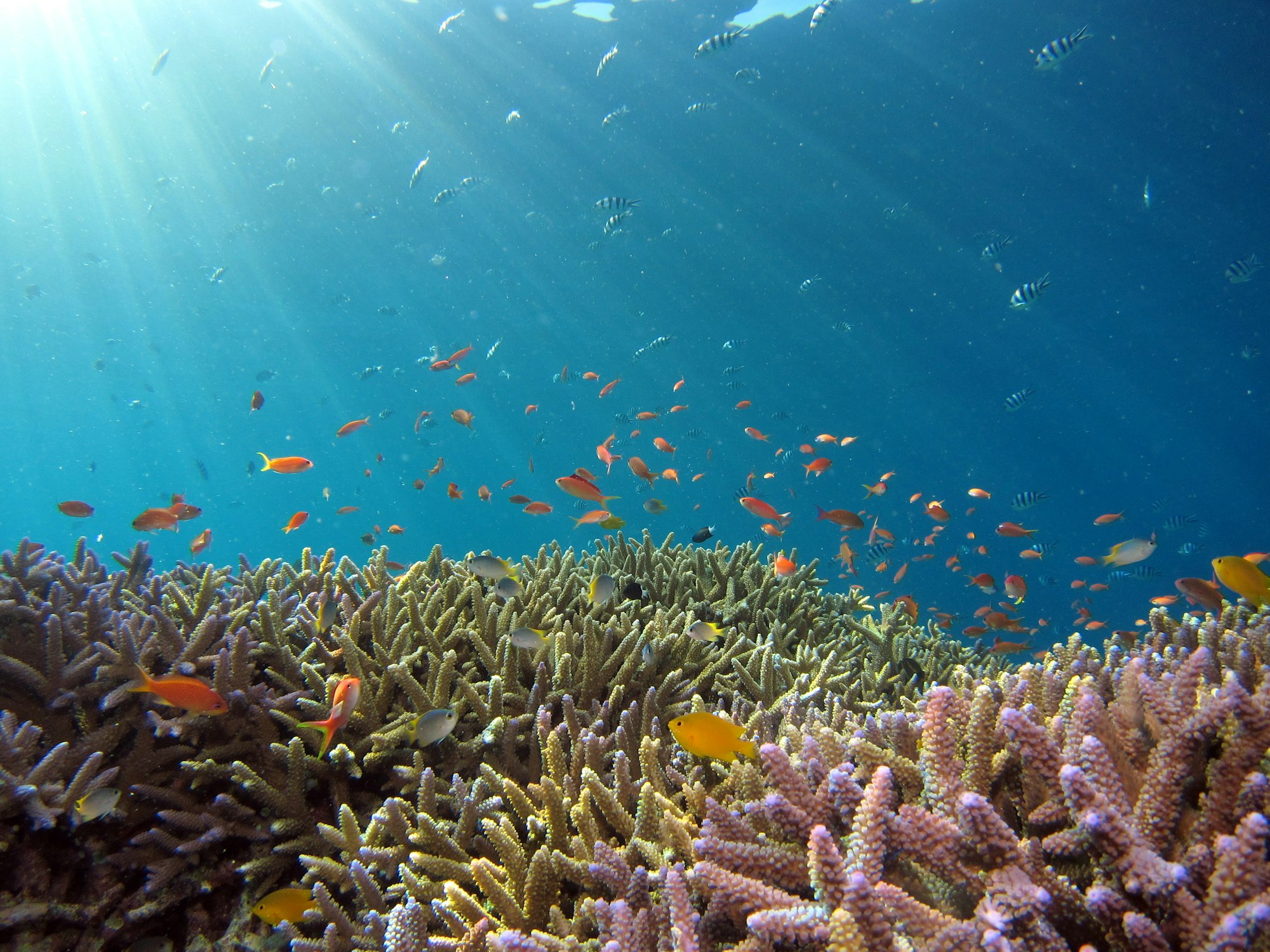
Ras Mohammed’s protected status means remarkably healthy reef ecosystems, and Marsa Bareika benefits from this conservation context. Sea turtles are commonly encountered resting on sandy areas and grazing on the reef. humphead wrasse and giant moray eels are regular sightings. Schools of batfish congregate at certain times of year within the bay’s sheltered waters, and spinner dolphins frequently enter the bay. Dense anthias clouds, butterflyfish, and surgeonfish populations are consistent throughout the site. The sandy bay floor harbours garden eels in visible colonies, and stingrays are occasional visitors.
Dive Profile
Descend along the bay wall reef from the boat anchor point and follow the reef contour at 10-20 meters. The bay topography creates a natural dive circuit — follow the reef wall from one side to the other, exploring the coral formations and sandy base, before ascending to the shallower reef top for the final portion of the dive. The sheltered bay allows a relaxed pace compared to the more current-affected outer park sites.
Entry and Exit
Day boats from Sharm el-Sheikh enter Ras Mohammed National Park waters and anchor within the bay. Entry via giant stride. The calm bay conditions make entry and exit straightforward. A park entry fee applies to all national park visits — this is typically included in the dive operator’s pricing.
Tips and Recommendations
- Dive Marsa Bareika as a paired dive with Shark Reef or Yolanda Reef on the same day — the calm bay provides an excellent contrast to the outer park experience
- The bay’s sheltered conditions make it one of the better sites for divers who want to practice buoyancy and navigation skills in a forgiving environment
- Look for spinner dolphin schools in the bay — they are present year-round and frequently engage with anchored boats
- Respect the national park rules: no touching marine life, no collecting, and follow operator guidelines strictly
Safety Considerations
Ras Mohammed National Park requires strict adherence to marine conservation rules — feeding, collecting, or touching marine life can result in significant fines. Conditions within the bay are generally benign, but the bay entrance can experience stronger current from the outer park waters. Always carry an SMB and conduct a full safety stop. Fire coral is present on reef surfaces; full exposure protection is required.
Photography
The calm, well-lit conditions of Marsa Bareika make it an excellent photography site. Sea turtle portraits, humphead wrasse close-ups, and garden eel colonies are signature subjects. The healthy coral coverage creates beautiful wide-angle reef scenes. If dolphins enter the bay, wide-angle surface-to-underwater shots through the thermocline produce striking images.
Sources: Divezone - Red Sea, Dive the World - Egypt Red Sea, Red Sea Scuba Diving, PADI - Diving in Egypt. Last updated 2026-04-04.
Sea-surface temperature and wave height from Open-Meteo Marine (ERA5 reanalysis, monthly averages).
805 verified species observations (348 species) logged within ~11 km of this site between 1828 and 2018, from the Ocean Biodiversity Information System.
- Rhincodon typus · Whale Shark
- Stenella attenuata · Pantropical spotted dolphin
- Tursiops · Bottlenose dolphins
- Tursiops truncatus · Common bottlenose dolphin
- Grampus griseus · Risso's dolphin
- Pempheris tominagai
- Tursiops aduncus · Indian ocean bottlenose dolphin
- Sargocentron caudimaculatum
- Epinephelus fasciatus · Black-tipped Cod
- Grammistes sexlineatus
- Ecsenius frontalis
- Cheilinus fasciatus
Scientific survey records skew toward sampled taxa (molluscs, corals) and do not reflect what you are guaranteed to see on a dive.
Source: OBIS (obis.org), aggregated Darwin Core occurrence records.
Conditions change with the tide and the season. If you have dived this site, share what it was actually like — date, visibility, current, and what you saw. Real, recent reports from divers are exactly what this guide is built to collect.
Send a conditions report ›