Marsa Shabir
27.9924°N 34.4854°E · reef
Marsa Shabir is the southern mooring lagoon within the Lagoona Reef system on the western side of Tiran Island, in the Straits of Tiran between the Sinai Peninsula and Saudi Arabia. Local fishermen know this sheltered bay as “Marsa Shabir” (meaning “small bay” in the local dialect), while dive guides commonly refer to it as South Laguna. It provides the main sheltered anchorage for liveaboards and day boats visiting the Tiran reef systems.
Overview
A transverse hard coral wall divides the lagoon into North and South sections (Lagoona North and South), each marked by a navigation beacon. South Laguna — Marsa Shabir — is the larger of the two and provides the best mooring point in the region. The lagoon interior averages 10–12 metres in depth and is bordered by a madreporic (stony coral) formation. The outer reef wall drops further and harbours the wreck of the Zingara (also known as Kormoran), a German freighter that sank here in 1984.
Marine Life
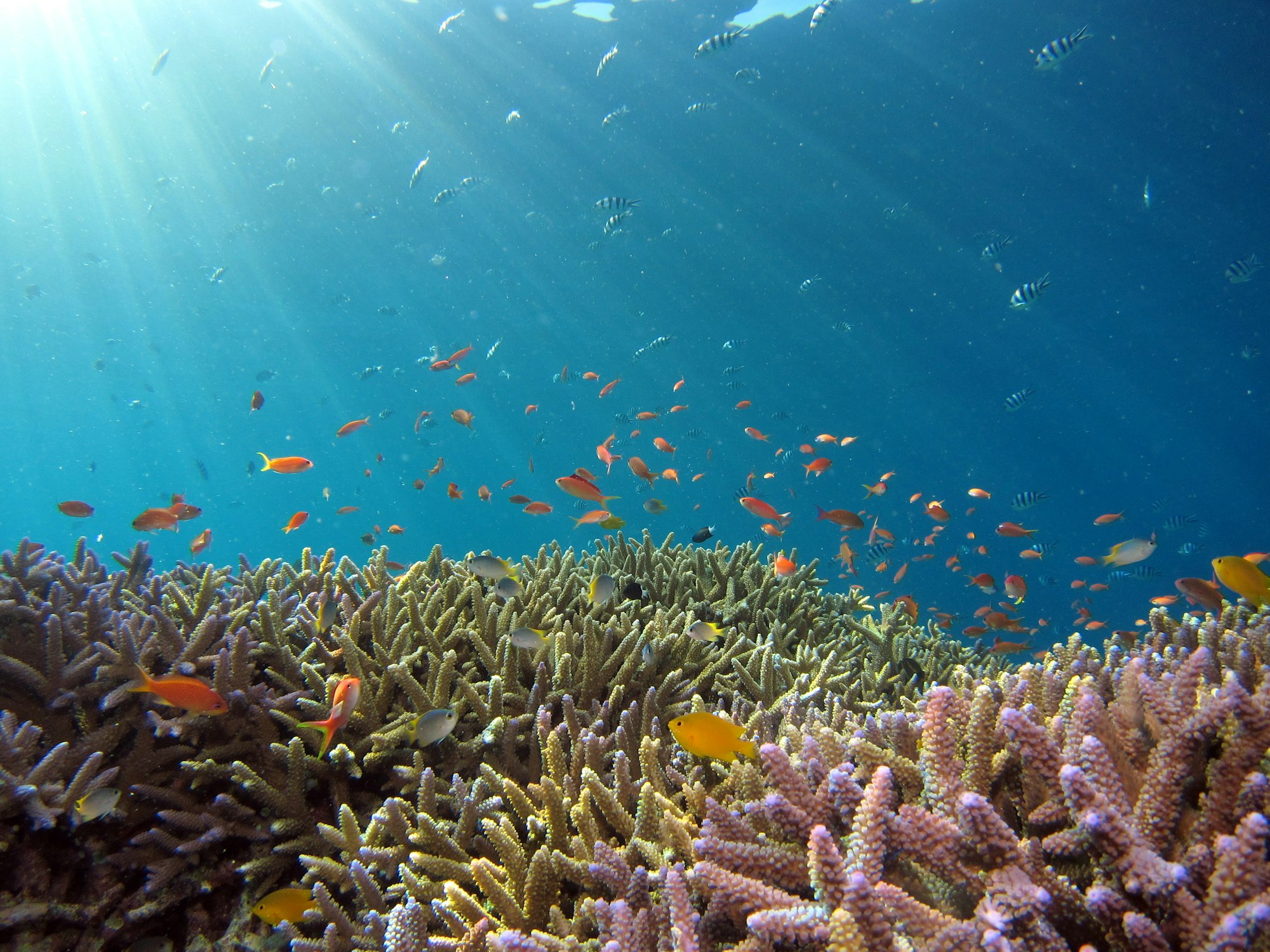
The lagoon’s hard coral formations support anemones, gorgonians, soft corals, and table corals (Acropora species). Large colonies of table corals and fire corals populate the plateau areas. The diverse reef structure provides habitat for butterflyfish, wrasse, damsels, and other typical Red Sea reef fish. Currents sweeping through the Straits of Tiran from the Gulf of Aqaba carry nutrients that support strong coral growth across the system.
Dive Profile
The lagoon interior at 10–12 metres offers relaxed, sheltered diving suitable for all levels. The outer reef wall with the Zingara wreck is an additional option for more experienced divers. Dive direction is strongly influenced by tidal currents; afternoon dives are generally recommended for better conditions. The site is well-suited for pre-dive check dives or safety-focused familiarisation dives.
Entry / Exit
Boat only; typically accessed as part of a Tiran Island liveaboard or day trip from Sharm El Sheikh (approximately 45–60 minutes by boat).
Site Information
- Location: Western side of Tiran Island, Straits of Tiran
- Entry Type: Shore entry
- Site Type: Reef
- Maximum Depth: 20 metres (lagoon interior 10–12 m)
- Difficulty: Intermediate
- Note: Tiran Island is administered by Saudi Arabia but traditionally dived from Sharm El Sheikh, Egypt
Additional Resources
- Last Updated: 2026-05-17
Sources: Dive the World — Straits of Tiran, Red Sea Diving — Lagoona Reef, Straits of Tiran — Sharm Scuba Service. Last updated 2026-05-17.
Sea-surface temperature and wave height from Open-Meteo Marine (ERA5 reanalysis, monthly averages).
176 verified species observations (82 species) logged within ~11 km of this site between 1968 and 2023, from the Ocean Biodiversity Information System.
- Grampus griseus · Risso's dolphin
- Stenella attenuata · Pantropical spotted dolphin
- Tursiops truncatus · Common bottlenose dolphin
- Stenella longirostris · Spinner dolphin
- Tursiops · Bottlenose dolphins
- Tursiops aduncus · Indian ocean bottlenose dolphin
- Stenella · Spinner dolphins
- Bathygobius fuscus
- Istigobius decoratus
- Rhincodon typus · Whale Shark
- Meiacanthus nigrolineatus
- Trimma avidori
Scientific survey records skew toward sampled taxa (molluscs, corals) and do not reflect what you are guaranteed to see on a dive.
Source: OBIS (obis.org), aggregated Darwin Core occurrence records.
Conditions change with the tide and the season. If you have dived this site, share what it was actually like — date, visibility, current, and what you saw. Real, recent reports from divers are exactly what this guide is built to collect.
Send a conditions report ›