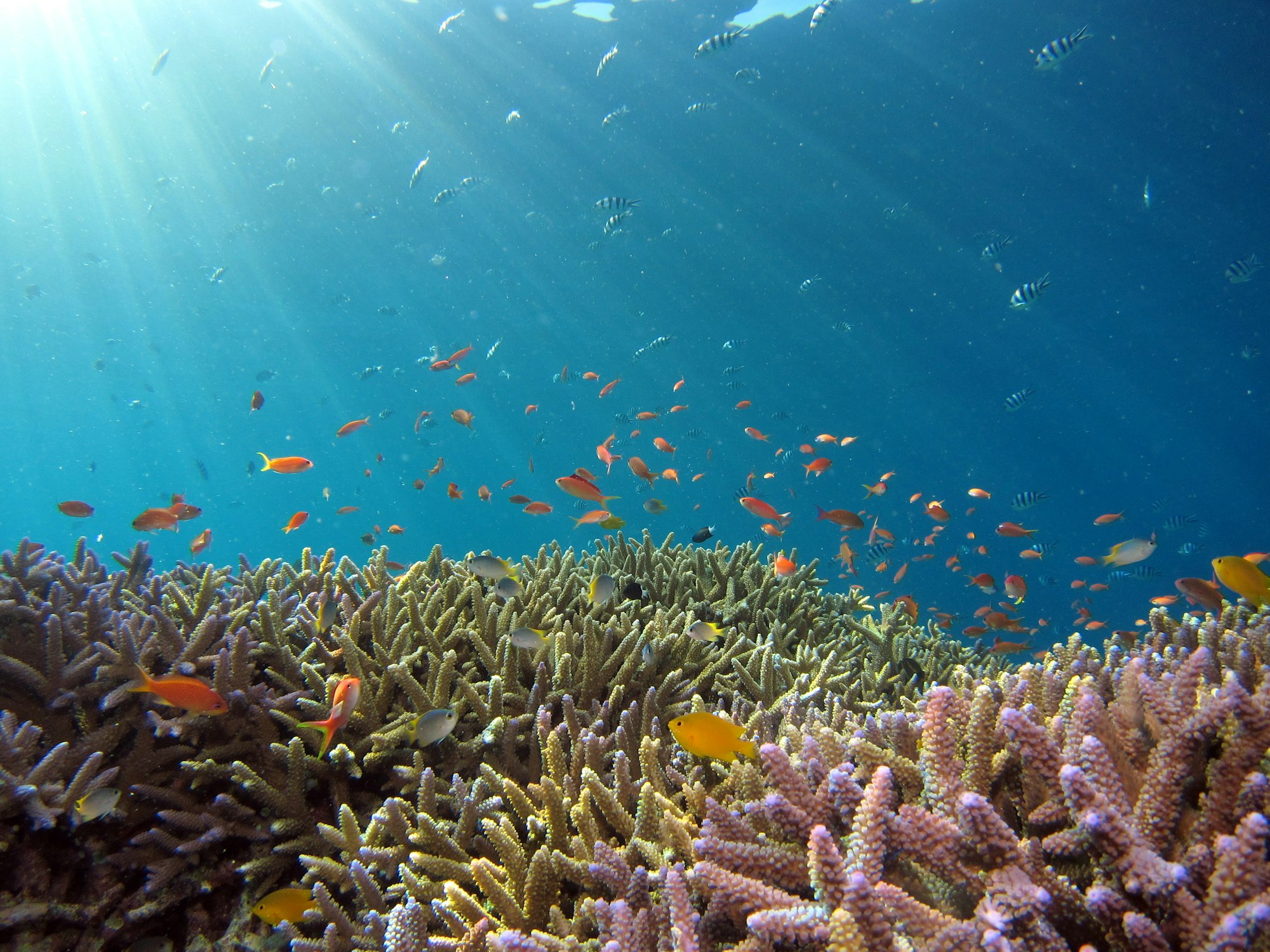
Middle Reef
22.3733°N 38.8553°E · reef
Middle Reef is an offshore reef site in the southern Red Sea at approximately 22.37°N, 38.85°E, situated in the central section of the sea in the waters between Egypt and Saudi Arabia. This position places it in a rarely visited region of the Red Sea, accessible only by liveaboard operating southern or transoceanic routing. The close proximity to the North Long Reef site (at 22.34°N, 38.85°E) — just a few hundred meters to the south — suggests these are part of a reef complex in the open Red Sea.
Overview
Middle Reef and its neighbouring North Long Reef form a reef complex in open Red Sea waters at a latitude that sees very little recreational diving traffic. The isolation of the site from any major dive hub means the reef is in essentially pristine condition relative to accessible resort sites. The combination of clear, oceanic water and undisturbed coral and fish communities creates conditions that experienced liveaboard divers find markedly different in character from the busier northern Red Sea resort sites. The 20-meter maximum depth keeps the site within intermediate recreational range.
Site Information
- Location: Open Red Sea (approximately 22.37°N, 38.85°E)
- Entry Type: Boat dive
- Site Type: Reef
- Difficulty Level: Intermediate
- Maximum Depth: 20 meters
- Typical Visibility: 25-40 meters (80-130 feet)
- Current: Variable; can be strong in open Red Sea conditions
- Best Time: November to April
Marine Life
Remote open Red Sea reefs with minimal diver pressure support well-established shark populations. Grey reef sharks and whitetip reef sharks are the most likely encounters along the reef edge, with silvertip sharks possible at depth. Large schools of barracuda and trevally are common at mid-water. humphead wrasse and groupers take up territories on the reef, noticeably calmer than the same species at heavily dived northern sites. Sea turtles make appearances at offshore reefs throughout the Red Sea. Coral coverage on rarely-visited reefs tends to be exceptional, with both hard coral and sea fan development at their best.
Dive Profile
Descend to the reef and work the outer edge at 10-20 meters. The open position of this reef means there is typically no sheltered side to retreat to — plan for the possibility of increasing current and monitor conditions throughout. Cover the reef perimeter by following the edge, examining the reef face for shark activity in the adjacent blue water. Ascend conservatively with good air reserve and deploy SMB well before the surface.
Entry and Exit
Exclusively liveaboard access. Surface conditions in the open Red Sea can be variable and sometimes rough. Entry only when the boat captain confirms conditions are safe. Giant stride entry; drift pickup by the boat. Carry a full range of safety signalling equipment.
Tips and Recommendations
- Pair with the adjacent North Long Reef for a comprehensive exploration of this reef complex
- The isolation is the site’s defining character — embrace the expedition feeling and expect potentially dramatic encounters
- Nitrox extends bottom time at the 15-20 meter productive range
- Carry a reef hook to hold position without touching coral when current is present
Safety Considerations
Open Red Sea at 22°N is genuinely remote — emergency services are measured in many hours’ response time at best. All divers must be comfortable with the full range of open-water dive safety procedures: independent ascent, SMB deployment, audible signalling, and self-sufficiency. Currents can be unpredictable at offshore reefs without the modulating effect of coastal topography. Fire coral is present on all reef surfaces.
Photography
Pristine, rarely-dived reefs in clear oceanic water produce exceptional wide-angle imagery. The combination of untouched coral, large resident fish, and potential shark encounters creates opportunities for portfolio-quality images. A wide rectilinear lens or fisheye and a reliable strobe system are the essential tools for capturing the depth and colour of an unspoiled Red Sea reef.
Sources: Divezone - Red Sea, Dive the World - Egypt Red Sea, Red Sea Scuba Diving, PADI - Diving in Egypt. Last updated 2026-04-04.
Sea-surface temperature and wave height from Open-Meteo Marine (ERA5 reanalysis, monthly averages).
1313 verified species observations (326 species) logged within ~11 km of this site between 2011 and 2022, from the Ocean Biodiversity Information System.
- Gobiidae
- Dascyllus trimaculatus
- Eviota
- Pycnochromis dimidiatus
- Pseudocheilinus hexataenia
- Sargocentron caudimaculatum
- Muraenidae
- Serranidae
- Canthigaster cyanospilota
- Balistidae
- Ophidiidae
- Neopomacentrus xanthurus
Scientific survey records skew toward sampled taxa (molluscs, corals) and do not reflect what you are guaranteed to see on a dive.
Source: OBIS (obis.org), aggregated Darwin Core occurrence records.
Conditions change with the tide and the season. If you have dived this site, share what it was actually like — date, visibility, current, and what you saw. Real, recent reports from divers are exactly what this guide is built to collect.
Send a conditions report ›