Million Hope
28.0564°N 34.4492°E · wreck
The Million Hope is a large cargo vessel wreck in the Strait of Tiran, northern Red Sea, Egypt, positioned at approximately 28.06°N, 34.45°E — in the same reef-strewn strait as the famous Tiran island reefs. The vessel ran aground on the reef and sank, adding to the collection of wrecks that have foundered in these notoriously treacherous waters over the decades.
Overview
The Million Hope was a substantial cargo ship — reports suggest it was a large bulk carrier — which gives the wreck impressive scale. Lying in waters reaching approximately 20 meters, the upper structure of the vessel may be close to the surface, visible from the dive boat above. The combination of dramatic size, the Tiran Strait setting, and years of coral and sponge encrustation makes the Million Hope one of the more visually arresting wrecks in the northern Red Sea. The site sits within the broader Tiran area ecosystem, so divers may expect encounters typical of the strait — including pelagic species along the open reef edge sections adjacent to the wreck.
Site Information
- Location: Strait of Tiran, northern Red Sea, Egypt
- Entry Type: Boat dive
- Site Type: Wreck dive
- Difficulty Level: Intermediate
- Maximum Depth: 20 meters
- Typical Visibility: 20-35 meters (65-115 feet)
- Current: Moderate to strong; tidal flow through the strait
- Best Time: September to May
Marine Life
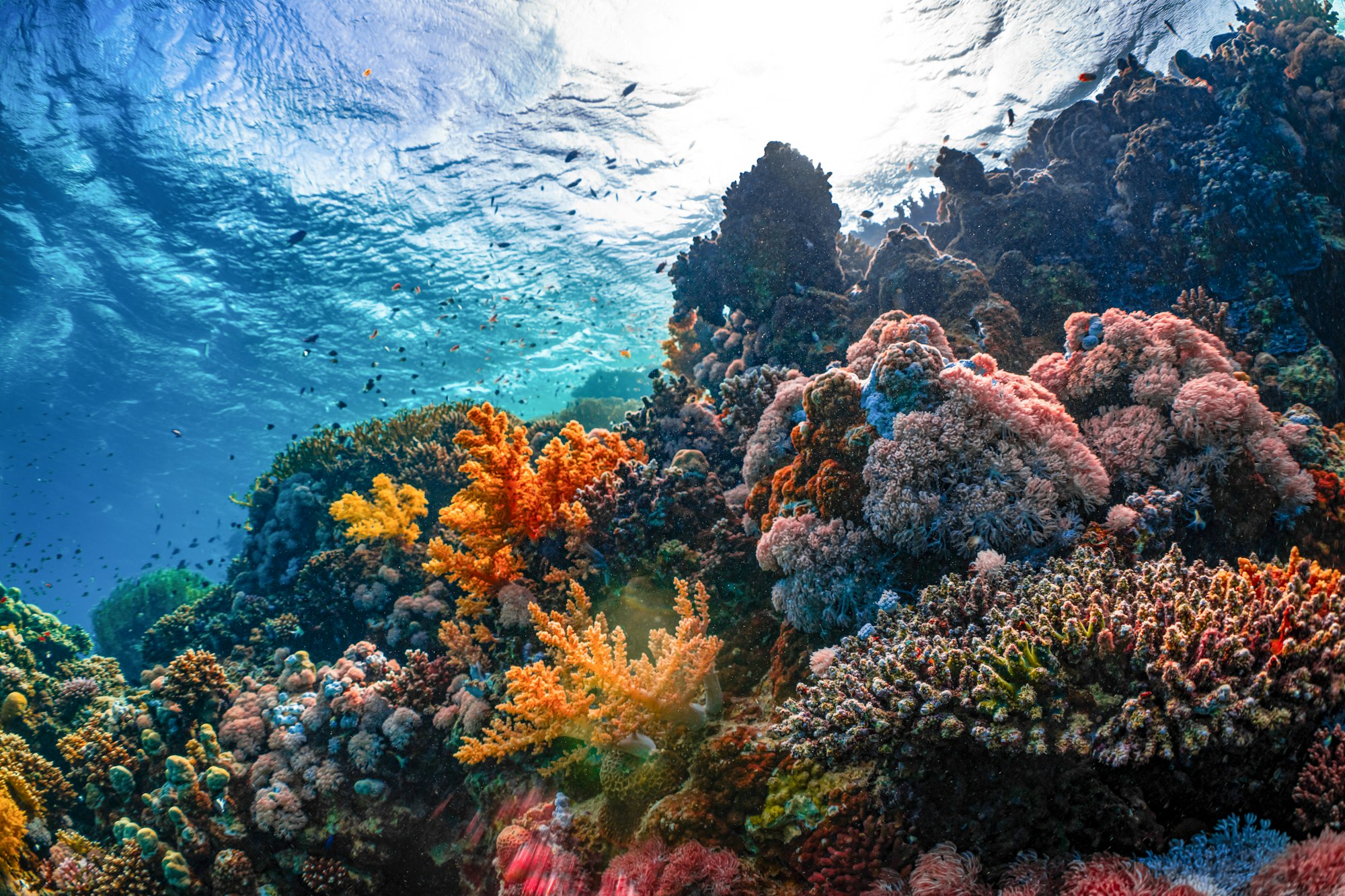
The hull structure of the Million Hope provides habitat for one of the Red Sea’s characteristic wreck marine communities. Massive schools of glassy sweepers fill any interior spaces accessible to divers. Groupers of impressive size occupy the hold areas, and moray eels take up residence in every gap in the corroding hull. Lionfish pose on ledges and overhangs throughout the structure. The soft coral growth on the hull exterior — sea fans, tree corals, and encrusting sponges — creates a colourful artificial reef. Given the Tiran Strait location, grey reef sharks, barracuda, and humphead wrasse may be encountered in the open water alongside the wreck.
Dive Profile
The large scale of the wreck allows an exploratory exterior circuit that itself fills most of a dive. Begin at the bow or stern and work progressively along one side of the hull, examining deck features, bridge structure (if accessible), and hull openings. The scale of the vessel means a single dive covers only a portion of the full structure — multiple dives are rewarding. At maximum depth on the hull base, manage NDL carefully on air. Ascend with adequate reserve and deploy SMB for Tiran Strait drift pickup.
Entry and Exit
Day boats and liveaboards from Sharm el-Sheikh serve the Tiran area. Entry via giant stride. Given tidal currents in the strait, the boat typically operates a drift pickup rather than fixed anchoring. Follow the guide’s pre-dive briefing on current direction and exit procedures.
Tips and Recommendations
- Carry a primary torch — the interior spaces and shaded hull sections require artificial light
- The sheer size of the wreck is its defining feature — step back to see the full hull scale before working in close
- Nitrox is worthwhile for extending bottom time at the 15-20 meter range on the deeper hull sections
- Combine with a Tiran reef dive on the same day to balance pelagic and wreck experiences
- Ask the operator whether any specific sections of the wreck are particularly productive for current marine life residents
Safety Considerations
Tidal currents in the Strait of Tiran can be strong and unpredictable. Wreck penetration requires appropriate training and equipment — the scale of the Million Hope means the interior is genuinely extensive and disorienting without proper line-laying skills. Carry a torch, reel, and cutting tool for any interior work. Always surface with a deployed SMB.
Photography
The scale of the Million Hope provides wide-angle opportunities to photograph the full hull in profile — a fisheye or very wide zoom is needed to capture the vessel’s scale from a reasonable distance. Glassy sweeper schools in torch-lit interior spaces create iconic wreck photography. The hull exterior with coral growth against the blue Tiran water provides dramatic color contrast.
Sources: Divezone - Red Sea, Dive the World - Egypt Red Sea, Red Sea Scuba Diving, PADI - Diving in Egypt. Last updated 2026-04-04.
Sea-surface temperature and wave height from Open-Meteo Marine (ERA5 reanalysis, monthly averages).
137 verified species observations (61 species) logged within ~11 km of this site between 1968 and 2022, from the Ocean Biodiversity Information System.
- Grampus griseus · Risso's dolphin
- Stenella attenuata · Pantropical spotted dolphin
- Tursiops truncatus · Common bottlenose dolphin
- Stenella longirostris · Spinner dolphin
- Tursiops · Bottlenose dolphins
- Tursiops aduncus · Indian ocean bottlenose dolphin
- Bathygobius fuscus
- Istigobius decoratus
- Meiacanthus nigrolineatus
- Stenella · Spinner dolphins
- Trimma avidori
- Trimma mendelssohni
Scientific survey records skew toward sampled taxa (molluscs, corals) and do not reflect what you are guaranteed to see on a dive.
Source: OBIS (obis.org), aggregated Darwin Core occurrence records.
Conditions change with the tide and the season. If you have dived this site, share what it was actually like — date, visibility, current, and what you saw. Real, recent reports from divers are exactly what this guide is built to collect.
Send a conditions report ›