Moray Garden
28.4369°N 34.4586°E · reef
Moray Garden is a reef dive site in the northern Red Sea at approximately 28.44°N, 34.46°E, placing it in the waters north of Sharm el-Sheikh near the Nabq Protected Area along the Sinai coast. The name is unambiguous: this site is known for an unusually high density of moray eels, making it one of the go-to sites for observing and photographing these animals in the northern Sinai region.
Overview
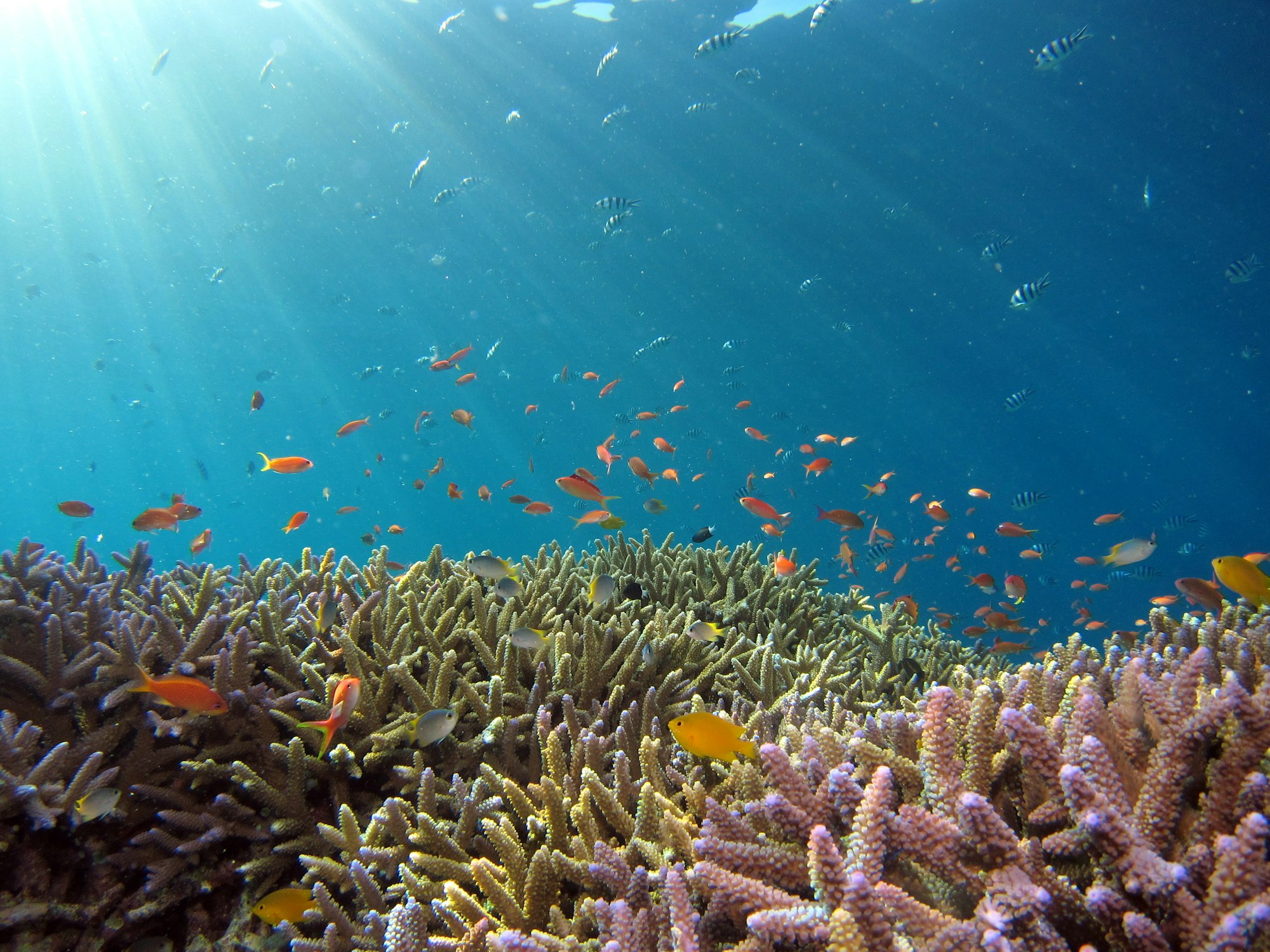
The “garden” in the name reflects both the reef formation type and the characteristic density of morays occupying every available reef crevice — creating an impression of an inhabited, living garden when explored slowly. Sites north of Sharm el-Sheikh in the Nabq area are generally less dived than the famous Ras Mohammed sites to the south, giving Moray Garden a slightly quieter character and somewhat less disturbed marine life. The reef formation supports a productive coral community at depths to 20 meters, with the moray populations concentrated in the well-developed crevice and overhang habitat.
Site Information
- Location: North of Sharm el-Sheikh, Nabq area, Sinai, Egypt
- Entry Type: Boat dive
- Site Type: Reef
- Difficulty Level: Intermediate
- Maximum Depth: 20 meters
- Typical Visibility: 15-25 meters (50-80 feet)
- Current: Mild to moderate
- Best Time: September to May
Marine Life
Giant moray eels (Gymnothorax javanicus) are the defining species at this site — large individuals regularly extend from reef crevices with their characteristic rhythmic breathing motion, and multiple eels can be visible simultaneously at a single section of reef. Undulated moray and snowflake moray are also present in smaller numbers. The broader reef community includes humphead wrasse, groupers, schools of anthias and chromis, and the standard complement of Red Sea reef fish. Lionfish occupy shaded ledges throughout the site. Cleaning stations where cleaner shrimp attend to eels and fish add an interesting behavioural dimension. The site occasionally sees turtles passing through the area.
Dive Profile
The most productive approach at Moray Garden is a slow, methodical inspection of every crevice and overhang along the reef. Rushing through the site means missing the eels that tuck back from view when divers approach quickly. Swim along the reef at 5-15 meters at a deliberate pace, pausing at larger crevices and overhangs to look carefully. The sandy floor at 15-20 meters offers a different habitat worth examining. A relaxed, unhurried dive pace extracts maximum value from this site.
Entry and Exit
Day boat access from Sharm el-Sheikh, travelling north along the coast (approximately 20-30 minutes). Entry via giant stride or back roll. Current is typically mild, making for straightforward entry and exit. Deploy SMB before ascending.
Tips and Recommendations
- Move slowly and deliberately — fast swimming startles morays back into hiding
- Look in every crevice, under table coral ledges, and in the gaps between boulders
- Do not touch or attempt to feed eels — they are large, powerful animals with a painful bite
- A dive torch helps illuminate interior crevices where eels often hide during daylight hours
- Night dives at moray-rich sites are compelling — eels become actively hunting predators after dark and offer dramatically different behaviour to observe
Safety Considerations
Giant moray eels are not aggressive toward divers who maintain respectful distance and do not handle them. Reaching into crevices or attempting to extract eels for photography is dangerous and unethical. Fire coral is present on reef surfaces throughout the site. Maintain neutral buoyancy and avoid resting on or touching the reef. Always complete a safety stop and deploy an SMB before surfacing.
Photography
Moray Garden is one of the best sites in the northern Red Sea for moray eel photography. Close-up portraits of large giant morays with their mouths open (natural breathing behaviour, not aggression) are classic subjects. A 60mm or 100mm macro lens captures detail on the skin patterning, or use a wide angle to show the eel in context with its reef environment. Torch fill-light brings out the colour and texture in what would otherwise be very dark crevice environments.
Sources: Divezone - Red Sea, Dive the World - Egypt Red Sea, Red Sea Scuba Diving, PADI - Diving in Egypt. Last updated 2026-04-04.
Sea-surface temperature and wave height from Open-Meteo Marine (ERA5 reanalysis, monthly averages).
357 verified species observations (274 species) logged within ~11 km of this site between 1968 and 2024, from the Ocean Biodiversity Information System.
- Pleurosicya micheli · Michel's Ghost Goby
- Aseraggodes macronasus
- Siganus · Black Spinefoot
- Priolepis cincta · Banded Reef Goby
- Haliophis guttatus
- Pleurosicya prognatha · Beaky Acropora Goby
- Gobiodon irregularis
- Arnoglossus macrolophus
- Astronesthes martensii
- Grampus griseus · Risso's dolphin
- Gobiodon ater
- Gobiodon fuscoruber
Scientific survey records skew toward sampled taxa (molluscs, corals) and do not reflect what you are guaranteed to see on a dive.
Source: OBIS (obis.org), aggregated Darwin Core occurrence records.
Conditions change with the tide and the season. If you have dived this site, share what it was actually like — date, visibility, current, and what you saw. Real, recent reports from divers are exactly what this guide is built to collect.
Send a conditions report ›