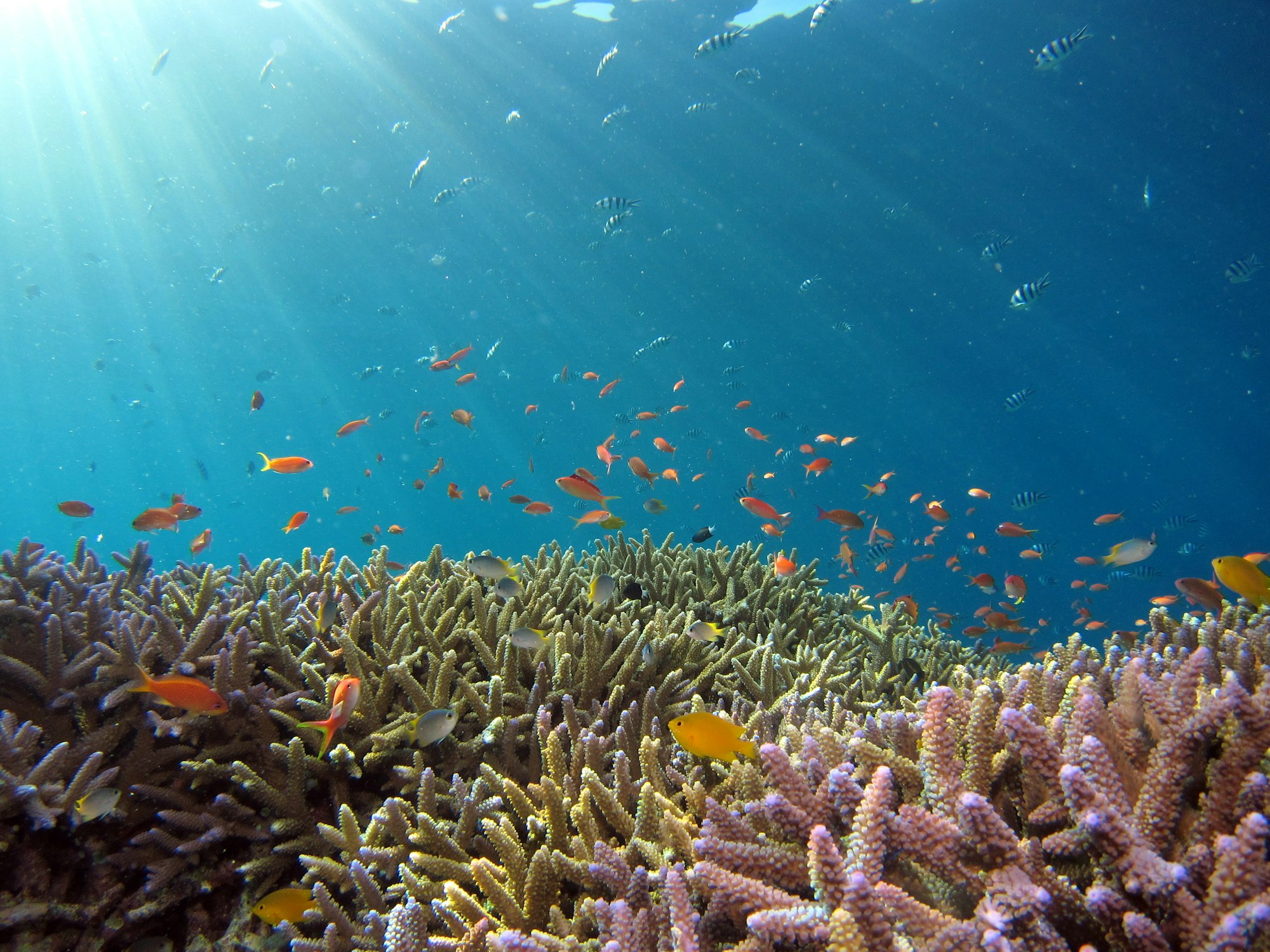
Napoleon Reef
28.4711°N 34.5100°E · reef
Napoleon Reef is a reef dive site on the northern Sinai coast at approximately 28.47°N, 34.51°E, north of Sharm el-Sheikh in the Gulf of Aqaba. Like Moray Garden further south in the same coastal area, Napoleon Reef takes its name from its signature resident species — the humphead wrasse (Cheilinus undulatus), one of the largest and most iconic fish on the Red Sea reef.
Overview
Humphead wrasse are unmistakable — large adults can reach over 2 meters in length and weigh more than 180 kg, with distinctive humped foreheads and thick lips that give them a uniquely memorable appearance. At Napoleon Reef, these fish are resident and sufficiently habituated to divers that reliably close-up encounters are documented in trip reports. The reef itself provides a backdrop of healthy coral formations at intermediate depths, but the defining experience here is the humphead wrasse. The site is accessible by day boat from Sharm el-Sheikh and sits in the productive northern Gulf of Aqaba waters.
Site Information
- Location: North of Sharm el-Sheikh, Sinai coast, Egypt, Gulf of Aqaba
- Entry Type: Boat dive
- Site Type: Reef
- Difficulty Level: Intermediate
- Maximum Depth: 20 meters
- Typical Visibility: 15-30 meters (50-100 feet)
- Current: Mild to moderate
- Best Time: September to May
Marine Life
humphead wrasse are the site’s signature species — resident individuals have established territories on the reef and regularly approach dive groups with remarkable confidence given their size. Multiple individuals may be present simultaneously. The broader reef community supports giant moray eels, groupers, lionfish, sea turtles, and the full spectrum of Red Sea reef fish including clouds of anthias, butterflyfish, and surgeonfish. Turtle sightings at this stretch of the Sinai coast are documented regularly. The Gulf of Aqaba water brings excellent clarity and occasional pelagic visitors to the reef edge.
Dive Profile
humphead wrasse at this site often appear at the start of the descent and may accompany dive groups for extended periods. The dive follows the reef contour at 10-20 meters, with the wrasse encounters occurring across the full depth range rather than at a fixed location. Maintain a relaxed pace and allow the fish to determine the interaction — following rather than leading. The reef topography provides the usual range of coral formations and crevice habitats to explore between wrasse encounters.
Entry and Exit
Day boat from Sharm el-Sheikh (approximately 20-30 minute journey north). Entry via giant stride or back roll. Current is generally mild in this area. Deploy SMB before ascending and follow boat pickup procedures.
Tips and Recommendations
- Approach humphead wrasse slowly and calmly from the front or side — approaching rapidly from behind will cause the fish to retreat
- Never attempt to touch, ride, or feed humphead wrasse — these are wild animals and deserve space
- The wrasse may follow the dive group for the entire dive — enjoy the encounter without rushing
- A wide-angle lens is essential to photograph humphead wrasse close-up due to their impressive size
- This is an excellent site for less experienced intermediate divers wanting a memorable large-animal encounter in benign conditions
Safety Considerations
Conditions are generally mild at this coastal Sinai site. Standard reef hazards apply: fire coral on formations, urchins near the sandy base, and lionfish in shaded overhangs. Always complete a safety stop and deploy SMB before surfacing. Never block the path of or chase humphead wrasse — they are large, powerful fish capable of knocking divers off balance if startled into a quick movement.
Photography
Napoleon Reef is one of the best Red Sea sites for humphead wrasse photography. Use a wide-angle lens — 15-16mm equivalent or wider — to capture the animal’s full size while maintaining close proximity. Shoot from below and slightly to the front for the most dramatic perspective and to catch the characteristic humped forehead profile. Natural light in the 5-12 meter range typically provides sufficient exposure without strobe for ambient reef shots with the wrasse.
Sources: Divezone - Red Sea, Dive the World - Egypt Red Sea, Red Sea Scuba Diving, PADI - Diving in Egypt. Last updated 2026-04-04.
Sea-surface temperature and wave height from Open-Meteo Marine (ERA5 reanalysis, monthly averages).
356 verified species observations (274 species) logged within ~11 km of this site between 1968 and 2024, from the Ocean Biodiversity Information System.
- Pleurosicya micheli · Michel's Ghost Goby
- Aseraggodes macronasus
- Siganus · Black Spinefoot
- Priolepis cincta · Banded Reef Goby
- Haliophis guttatus
- Pleurosicya prognatha · Beaky Acropora Goby
- Gobiodon irregularis
- Tursiops aduncus · Indian ocean bottlenose dolphin
- Arnoglossus macrolophus
- Astronesthes martensii
- Grampus griseus · Risso's dolphin
- Gobiodon ater
Scientific survey records skew toward sampled taxa (molluscs, corals) and do not reflect what you are guaranteed to see on a dive.
Source: OBIS (obis.org), aggregated Darwin Core occurrence records.
Conditions change with the tide and the season. If you have dived this site, share what it was actually like — date, visibility, current, and what you saw. Real, recent reports from divers are exactly what this guide is built to collect.
Send a conditions report ›