Neptuna
23.6186°N 36.2038°E · wreck
The Neptuna is a wreck dive site at approximately 23.62°N, 36.20°E in the Red Sea — a position in the open waters of the central Egyptian Red Sea, close to the Khanka wreck site at nearly identical coordinates. The proximity of these two wrecks (Neptuna at 23.619°N and Khanka at 23.617°N, both at approximately 36.20°E) suggests this is a wreck cluster in the same small area — possibly a reef or shallow bank that has claimed multiple vessels over the years.
Overview
The Neptuna and Khanka wrecks in close proximity create an opportunity for a productive twin-wreck dive day or a single extended dive covering both sites. The Neptuna rests at intermediate diving depths to approximately 20 meters, making it accessible to intermediate divers on standard air fills. Years of submersion have allowed the hull to accumulate encrusting organisms, and the wreck now functions as an artificial reef structure providing habitat for a productive marine community in the open Red Sea. The area around both wrecks is accessed by liveaboard from Hurghada.
Site Information
- Location: Central Red Sea, Egypt (approximately 23.62°N, 36.20°E)
- Entry Type: Boat dive
- Site Type: Wreck dive
- Difficulty Level: Intermediate
- Maximum Depth: 20 meters
- Typical Visibility: 20-35 meters (65-115 feet)
- Current: Moderate; variable in the open Red Sea
- Best Time: October to May
Marine Life
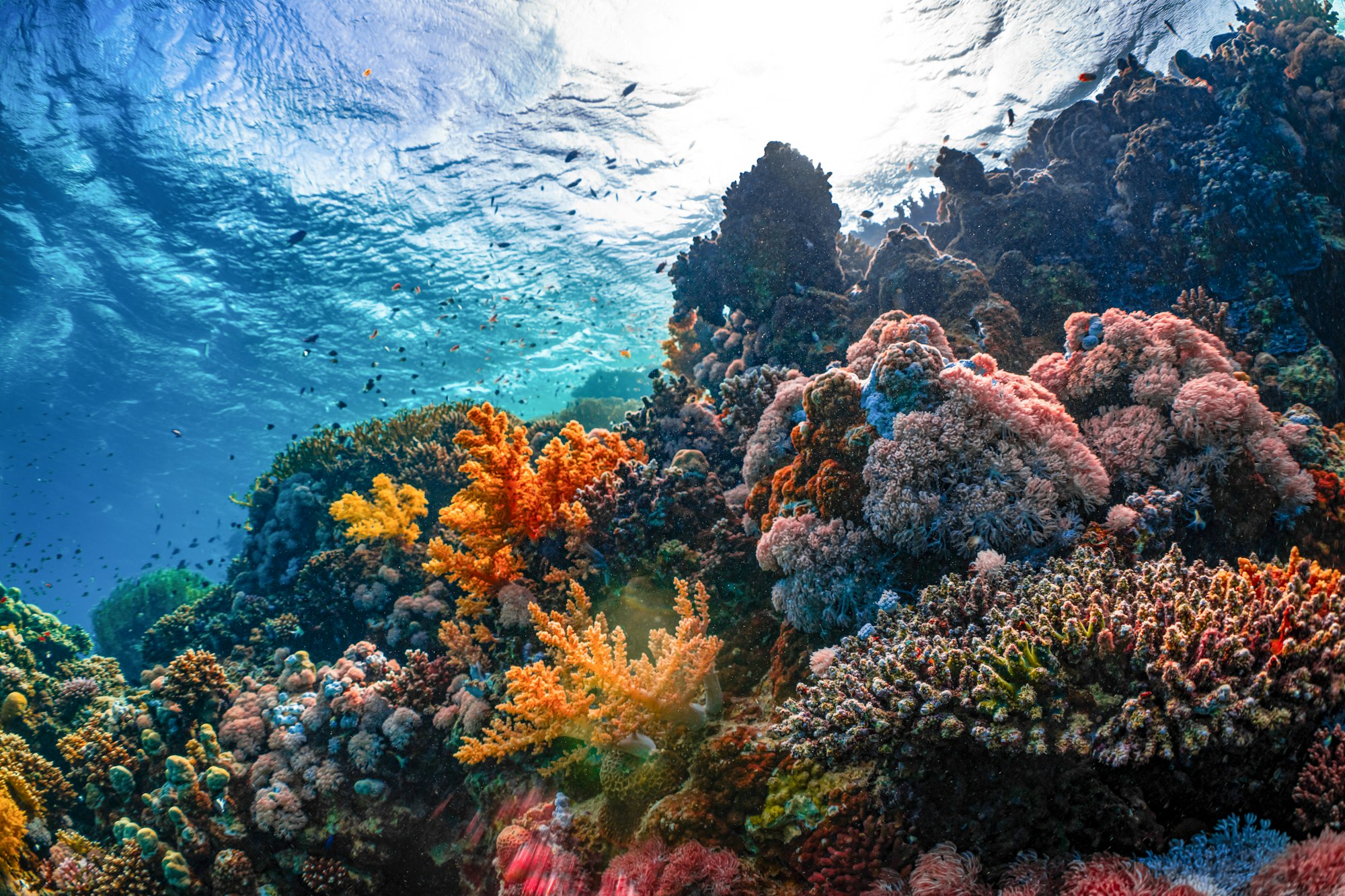
The Neptuna wreck structure hosts the characteristic Red Sea artificial reef community. Schools of glassy sweepers fill accessible interior spaces in dense silver masses. Groupers of significant size hold territory in the hold and machinery spaces, while lionfish occupy every suitable overhang and dark ledge. Giant moray eels are resident in the corroded hull plating gaps. Soft coral growth — particularly sea fans and tree corals — decorates the exterior, and the surrounding sandy seabed may shelter stingrays. The open Red Sea location means occasional pelagic visitors to the wreck: barracuda, trevally, and reef sharks are possible.
Dive Profile
Descend to the wreck and orient by circumnavigating the exterior before diving in detail. Work from one end to the other at the productive depth range of 10-20 meters, examining hull features, cargo holds, and superstructure. If the Khanka wreck is within reach on the same dive, a connecting exploration of both wrecks is possible depending on dive guide knowledge and conditions. Ascend with 50 bar minimum reserve and complete a full safety stop before surfacing.
Entry and Exit
Liveaboard access from Hurghada on central Red Sea routing. Entry via giant stride; drift pickup if current is present. Deploy SMB before ascending in open water conditions.
Tips and Recommendations
- Ask the liveaboard dive guide about combining the Neptuna with the adjacent Khanka wreck
- Carry primary and backup torches for interior sections
- Approach the wreck circumnavigation with enough air to complete a full exterior survey before exploring interiors
- Nitrox is useful for extending time in the 15-20 meter range where the most interesting hull sections are found
Safety Considerations
Remote liveaboard dive in open Red Sea requires full self-sufficiency. Carry charged SMB, audible signal, and signal mirror. Interior penetration requires wreck dive training and line. Silt disturbance in enclosed spaces can rapidly reduce visibility. Fire coral on all external surfaces.
Photography
Wide-angle hull silhouette shots in the clear Red Sea water — the Neptuna wreck framed against the deep blue — are the most dramatic images available at this site. Schools of glassy sweepers in the interior with torch-lit foreground and ambient background light through openings create striking compositions. Soft coral growth on the exterior hull provides detailed close-up subjects.
Sea-surface temperature and wave height from Open-Meteo Marine (ERA5 reanalysis, monthly averages).
9 verified species observations (3 species) logged within ~11 km of this site between 2004 and 2013, from the Ocean Biodiversity Information System.
- Stenella longirostris · Spinner dolphin
- Pseudorca crassidens · False killer whale
- Tursiops · Bottlenose dolphins
Scientific survey records skew toward sampled taxa (molluscs, corals) and do not reflect what you are guaranteed to see on a dive.
Source: OBIS (obis.org), aggregated Darwin Core occurrence records.
Conditions change with the tide and the season. If you have dived this site, share what it was actually like — date, visibility, current, and what you saw. Real, recent reports from divers are exactly what this guide is built to collect.
Send a conditions report ›