Panorama Reef East
26.7540°N 34.0828°E · reef
Panorama Reef East is the eastern face of the larger Panorama Reef system, an offshore reef complex located in the Egyptian Red Sea south of Hurghada. This section of the reef presents a more exposed aspect facing the open water, with strong current potential and excellent big-animal sightings.
Overview
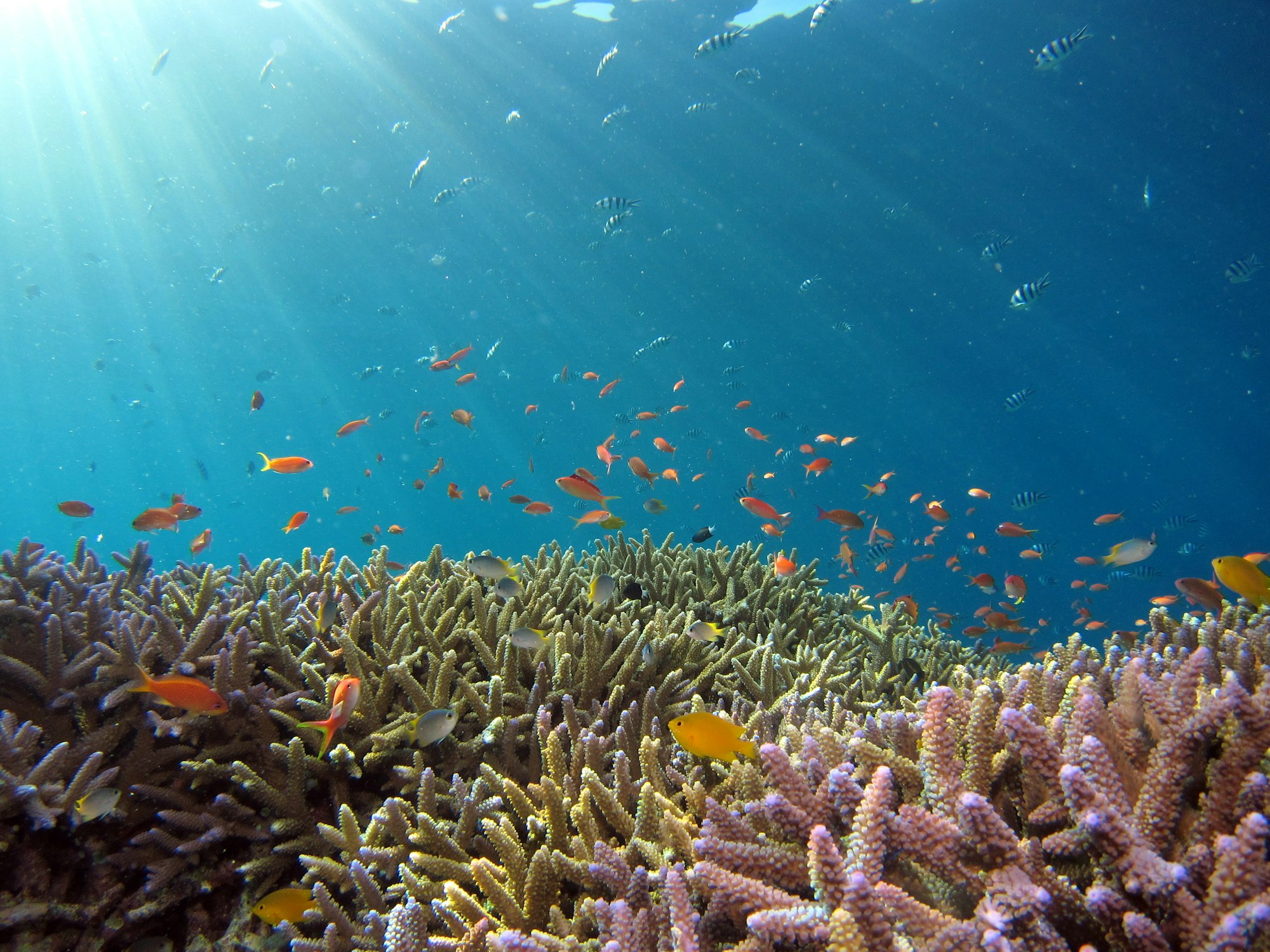
The eastern wall of Panorama Reef drops steeply from a shallow reef top at 3-5 meters down to sand at 25 meters. The outer orientation means stronger tidal currents sweep across this face, creating upwellings that attract pelagic species. Visibility regularly reaches 25-35 meters in clear conditions. The coral cover on the eastern face is healthy, with large sea fans and soft coral formations dominating the deeper sections of the wall.
Site Information
- Location: Red Sea, Egypt (south of Hurghada)
- Entry Type: Boat dive
- Site Type: Reef
- Difficulty Level: Intermediate
- Maximum Depth: 25 meters
- Typical Visibility: 25-35 meters (80-115 feet)
- Current: Moderate to strong, particularly on the exposed eastern face
- Best Time: September to May
Marine Life
The exposed eastern aspect of Panorama Reef regularly draws pelagic visitors including barracuda schools, trevally, and occasional hammerhead sharks during winter months. Oceanic whitetip sharks have been reported at depth along the outer wall. The reef itself hosts dense anthias colonies, humphead wrasse, and large groupers lurking under coral ledges. Moray eels, scorpionfish, and lionfish are found throughout. Hawksbill turtles are regular visitors grazing on the reef top.
Dive Profile
Descend on the mooring line to the reef top at 3-5 meters, then follow the wall east and down. The most productive zone for pelagic encounters is the outer wall between 15-25 meters. Work the wall slowly against or across the current, then ascend to the reef top for the safety stop. Current direction varies — follow the guide’s lead on which direction to run the dive.
Entry and Exit
Boat access from Hurghada or El Gouna with a liveaboard or day boat. Giant stride entry from the dive deck. Deploy your SMB on ascent and conduct a 3-minute safety stop at 5 meters before pickup.
Tips and Recommendations
- Dive this site early in the morning when currents are often calmer and light penetration is optimal
- Watch the blue water off the wall for passing pelagics — hovering mid-water briefly can pay off
- Current can be stronger here than on the western face — check with your guide before diving
- A reef hook is useful for holding station in current while scanning for sharks
Safety Considerations
Current is the primary hazard on the eastern face — be prepared for drift conditions and never fight a strong current. Carry an SMB and ensure it is easily deployable for drift ascents. Depth can creep on a steeply descending wall — monitor your computer regularly. Oceanic whitetips are attracted to splashing and should be respected from a distance.
Photography
The eastern wall is excellent for wide-angle photography of schooling fish and pelagic encounters. The soft corals in the 18-25 meter range photograph beautifully with a strobe. Shooting upward toward the reef top in the afternoon sun creates dramatic silhouette opportunities. Keep camera settings ready for fast-moving open-water species.
Sources: Divezone - Red Sea, Dive the World - Egypt Red Sea, Red Sea Scuba Diving, PADI - Diving in Egypt. Last updated 2026-04-04.
Sea-surface temperature and wave height from Open-Meteo Marine (ERA5 reanalysis, monthly averages).
14 verified species observations (10 species) logged within ~11 km of this site between 1921 and 2010, from the Ocean Biodiversity Information System.
- Stenella longirostris · Spinner dolphin
- Tursiops aduncus · Indian ocean bottlenose dolphin
- Tursiops · Bottlenose dolphins
- Pseudorca crassidens · False killer whale
- Odostomia ritae
- Scutarcopagia delicatula
- Haliotis pustulata
- Lensia subtiloides
- Clypeaster humilis
- Fibularia ovulum
Scientific survey records skew toward sampled taxa (molluscs, corals) and do not reflect what you are guaranteed to see on a dive.
Source: OBIS (obis.org), aggregated Darwin Core occurrence records.
Conditions change with the tide and the season. If you have dived this site, share what it was actually like — date, visibility, current, and what you saw. Real, recent reports from divers are exactly what this guide is built to collect.
Send a conditions report ›