Ras Disha
27.0411°N 33.9067°E · reef
Ras Disha
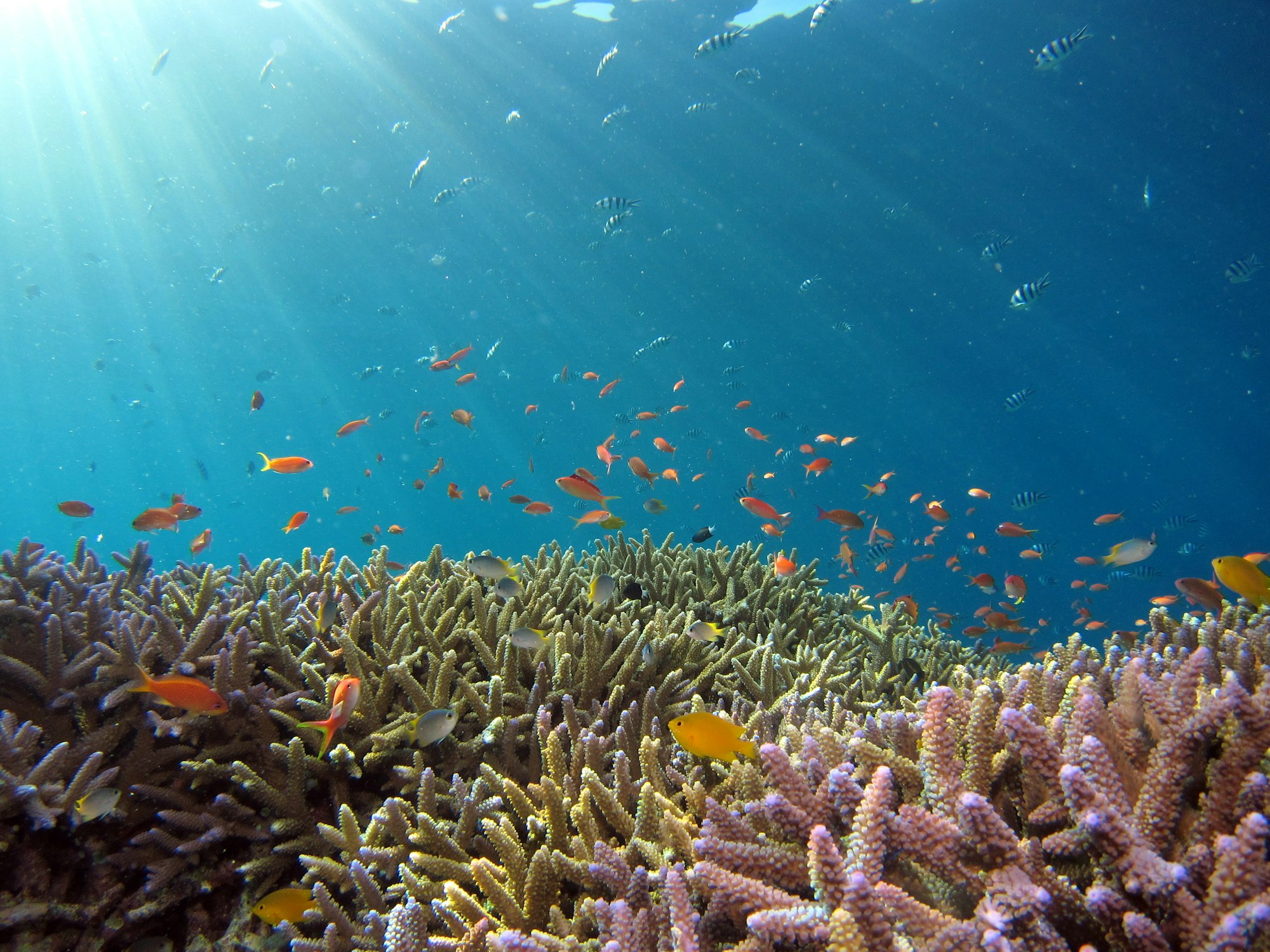
A fringing reef 35 km south of Hurghada with coral pinnacles full of glassfish, a steep outer wall, goby-and-shrimp burrow pairs in the sandy zone, and the “fish tank” density typical of Makadi Bay sites.
Overview
Ras Disha (“fringing reef” in Arabic) lies in the Makadi Bay area approximately 35 kilometres south of central Hurghada, accessible in 90 minutes by dive boat. The reef structure consists of a shallow plateau with a sandy bottom populated by coral pinnacles and an elliptical erg in the southern section. Northwest of the plateau, the reef narrows to a ledge that transitions to a steep outer wall. The pinnacles on the plateau are cracked and perforated, sheltering glassfish schools attended by hunting scorpionfish, stonefish, and trevally. A sandy zone between the pinnacles and the main reef holds productive goby-and-shrimp pairs — small symbiotically partnered goby fish hovering over burrows maintained by pistol shrimps. The site’s relative shelter and position make it accessible in conditions that affect more exposed reefs.
Site Information
- Location: Makadi Bay area, 35 km south of Hurghada, central Egyptian Red Sea
- Entry Type: Boat dive
- Site Type: Reef
- Difficulty Level: Intermediate
- Maximum Depth: 20 meters
- Typical Visibility: 15–25 meters
- Current: Mild to moderate
- Best Time: Year-round; October to May optimal
Marine Life
The pinnacle crannies host dense glassfish schools, with scorpionfish, stonefish, and lionfish using them as ambush positions. Large groupers and tuna are characteristic of this site — the “fish tank” density comes from the rich nutrient supply and moderate protection of the Makadi Bay location. Blue-spotted stingrays and torpedo rays rest on the sandy zones. Goby-and-shrimp burrow pairs are reliably found in the sandy areas between the main reef and the erg. Moses’s sole (flatfish) and crocodilefish are camouflaged on the sand. Eagle rays pass through the site and are sighted with some regularity. Moray eels occupy the wall crevices. Barracuda schools concentrate at the outer wall corner.
Dive Profile
Begin on the sandy area adjacent to the main reef and locate the goby-and-shrimp burrows — stop 2–3 metres from the burrow entrance and observe. Move to the pinnacle cluster on the plateau (10–15 metres) and explore each pinnacle in turn for its glassfish occupants. Proceed to the outer wall at the northwestern edge and follow it at 15–20 metres, watching for passing eagle rays and barracuda. Return to the plateau and complete a safety stop at 5 metres over the reef flat.
Entry and Exit
Boat from Hurghada or Makadi Bay (90-minute transfer from central Hurghada; shorter from Makadi Bay hotels). Giant stride entry. The site can drift in favourable current conditions — plan with the guide before entry. Deploy an SMB before ascending.
Tips and Recommendations
- Approach the goby-and-shrimp burrows from a low angle and move very slowly — the gobies are sentinel fish and will retreat to the burrow the moment they detect any sudden movement
- Look closely at the cracked pinnacle surfaces for stonefish — their camouflage is excellent and they are a contact hazard
- The outer wall is the best section for eagle rays and barracuda — plan to spend 5–10 minutes hovering there
- Combine with the adjacent Makadi Garden site for a two-site day if departing from Makadi Bay hotels
Safety Considerations
The primary hazards at Ras Disha are contact animals: stonefish and scorpionfish are camouflaged on the sandy substrate and pinnacle surfaces — never touch the bottom or reef surfaces. Torpedo rays on the sandy areas can deliver an electric shock if directly contacted. Lionfish in the pinnacle crevices. Fire coral on the reef crest. Current at the outer wall corner can be stronger than on the sheltered plateau. Always deploy an SMB before ascending.
Photography
Goby-and-shrimp pairs in the sandy zone are highly prized macro subjects — a macro lens and very slow, patient approach from a prone position produces the best results. Glassfish clouds in the pinnacle crevices reward torch-assisted wide-angle shots. Scorpionfish portraits in their camouflaged setting are available throughout the site. Eagle rays at the outer wall section are fast-action wide-angle subjects requiring pre-positioned anticipation.
Sources: Divezone - Red Sea, Dive the World - Egypt Red Sea, Red Sea Scuba Diving, PADI - Diving in Egypt. Last updated 2026-04-04.
Sea-surface temperature and wave height from Open-Meteo Marine (ERA5 reanalysis, monthly averages).
827 verified species observations (401 species) logged within ~11 km of this site between 1996 and 2014, from the Ocean Biodiversity Information System.
- Stenella longirostris · Spinner dolphin
- Myurella nebulosa
- Clanculus pharaonius
- Atactodea striata
- Planaxis savignyi
- Clivipollia incarnata
- Fossarus trochlearis
- Purpurcapsula rubramaculosa
- Trochus erithreus
- Gibberula savignyi
- Smaragdia rangiana
- Quadrans sericatus
Scientific survey records skew toward sampled taxa (molluscs, corals) and do not reflect what you are guaranteed to see on a dive.
Source: OBIS (obis.org), aggregated Darwin Core occurrence records.
Conditions change with the tide and the season. If you have dived this site, share what it was actually like — date, visibility, current, and what you saw. Real, recent reports from divers are exactly what this guide is built to collect.
Send a conditions report ›