Ras Malah
28.7289°N 34.6257°E · cave
Ras Malah
A cave dive site in the northern Sinai near the Gulf of Aqaba — an Advanced-rated underwater cave system at a headland reef with cavern passages, dramatic light effects, and the technical character that distinguishes this from the standard Sinai reef circuit.
Overview
Ras Malah (“salty headland” in Arabic) is located at approximately 28.73°N, 34.63°E in the northern Sinai Peninsula, close to the entrance of the Gulf of Aqaba and within reach of Aqaba and Eilat operators as well as Sharm el-Sheikh. The Advanced rating reflects the cave classification — this site features cavern or cave passages that require overhead environment awareness. The headland itself forms the surface structure above the cave system, and the dive combines open reef exploration with excursions into the cave passages. Cave passages in this region are typically formed through ancient submarine erosion and provide dramatically different visual conditions from open reef diving.
Site Information
- Location: Northern Sinai Peninsula, Gulf of Aqaba entrance (~28.73°N, 34.63°E)
- Entry Type: Boat dive
- Site Type: Cave/cavern
- Difficulty Level: Advanced
- Maximum Depth: 20 meters
- Typical Visibility: 15–25 meters (open sections); variable in caves
- Current: Generally mild at this position
- Best Time: Year-round; October to May optimal
Marine Life
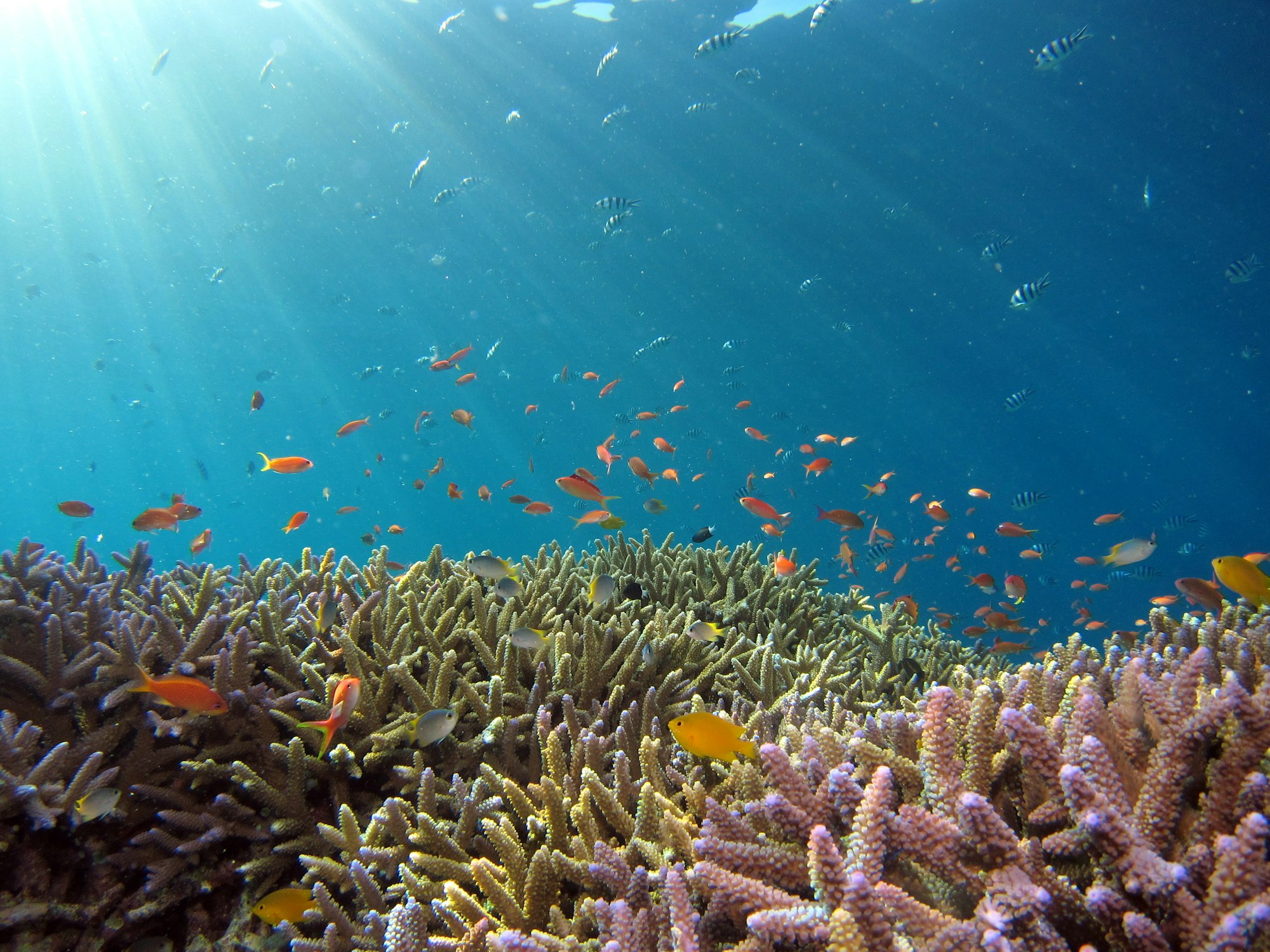
The cave passages shelter glass bigeye and soldierfish schools that congregate in the dimly-lit interior sections. Moray eels are resident in the cave wall crevices. The open reef sections of Ras Malah carry the northern Sinai reef assemblage: snappers, groupers, and chromis schools throughout. The cave entrance zones support crinoids and soft corals in the filtered light. Outside the cave, the headland reef flat and gentle slope hold turtles and reef sharks.
Dive Profile
Begin on the open reef adjacent to the headland, exploring the upper reef flat at 5–10 metres. Locate the cave entrance at 8–15 metres and proceed into the cavern section with both your torch active and natural light visible from the entrance — maintain the light zone standard throughout. The cave exploration takes 10–15 minutes before returning to the open reef for the remainder of the dive. Safety stop at 5 metres on the open reef.
Entry and Exit
Boat from Aqaba, Eilat, or Sharm el-Sheikh depending on itinerary. Advanced Open Water certification minimum; Cavern Diver training is strongly recommended before entering the cave passages. Giant stride entry. SMB deployment before ascending.
Tips and Recommendations
- Never enter the cave unless natural light is visible from inside — this is the fundamental cavern diving safety standard
- Bring a primary torch and a backup — cave diving without two light sources is not acceptable
- The open reef sections of Ras Malah are fully worthwhile if cave conditions are not suitable on the day
- Advanced certification minimum; cavern specialty training is the appropriate qualification for this site
Safety Considerations
Cave diving requires specific training and equipment beyond standard open-water certification. The fundamental rule: if you cannot see natural light from the entry point, do not proceed further. Ensure both primary and backup torches are fully charged and functioning before entry. Buoyancy control in cave passages must be precise to avoid silting up the visibility. Never exceed available air limits in the overhead environment.
Photography
Cave passage photography with torch-assisted lighting and the cave entry silhouetted against natural light is the primary photographic technique at Ras Malah. The contrast between the dark interior and the light entry point creates natural framing for wide-angle shots. Glass bigeye schools in the cave interior reward a torch-on-school wide-angle approach.
Sources: Divezone - Red Sea, Dive the World - Egypt Red Sea, Red Sea Scuba Diving, PADI - Diving in Egypt. Last updated 2026-04-04.
Sea-surface temperature and wave height from Open-Meteo Marine (ERA5 reanalysis, monthly averages).
239 verified species observations (193 species) logged within ~11 km of this site between 1969 and 2008, from the Ocean Biodiversity Information System.
- Trimma barralli
- Canthigaster janthinoptera
- Lucilina sueziensis
- Nerita sanguinolenta
- Tegulaplax hululensis
- Graphicomassa ligula
- Acanthopleura vaillantii
- Cerithium nodulosum · Giant Nodulose Creeper
- Casmaria ponderosa
- Sepia · Cuttlefish
- Notocochlis gualteriana
- Nerita albicilla
Scientific survey records skew toward sampled taxa (molluscs, corals) and do not reflect what you are guaranteed to see on a dive.
Source: OBIS (obis.org), aggregated Darwin Core occurrence records.
Conditions change with the tide and the season. If you have dived this site, share what it was actually like — date, visibility, current, and what you saw. Real, recent reports from divers are exactly what this guide is built to collect.
Send a conditions report ›