Ras Umm Sid
27.8473°N 34.3165°E · reef
Ras Umm Sid
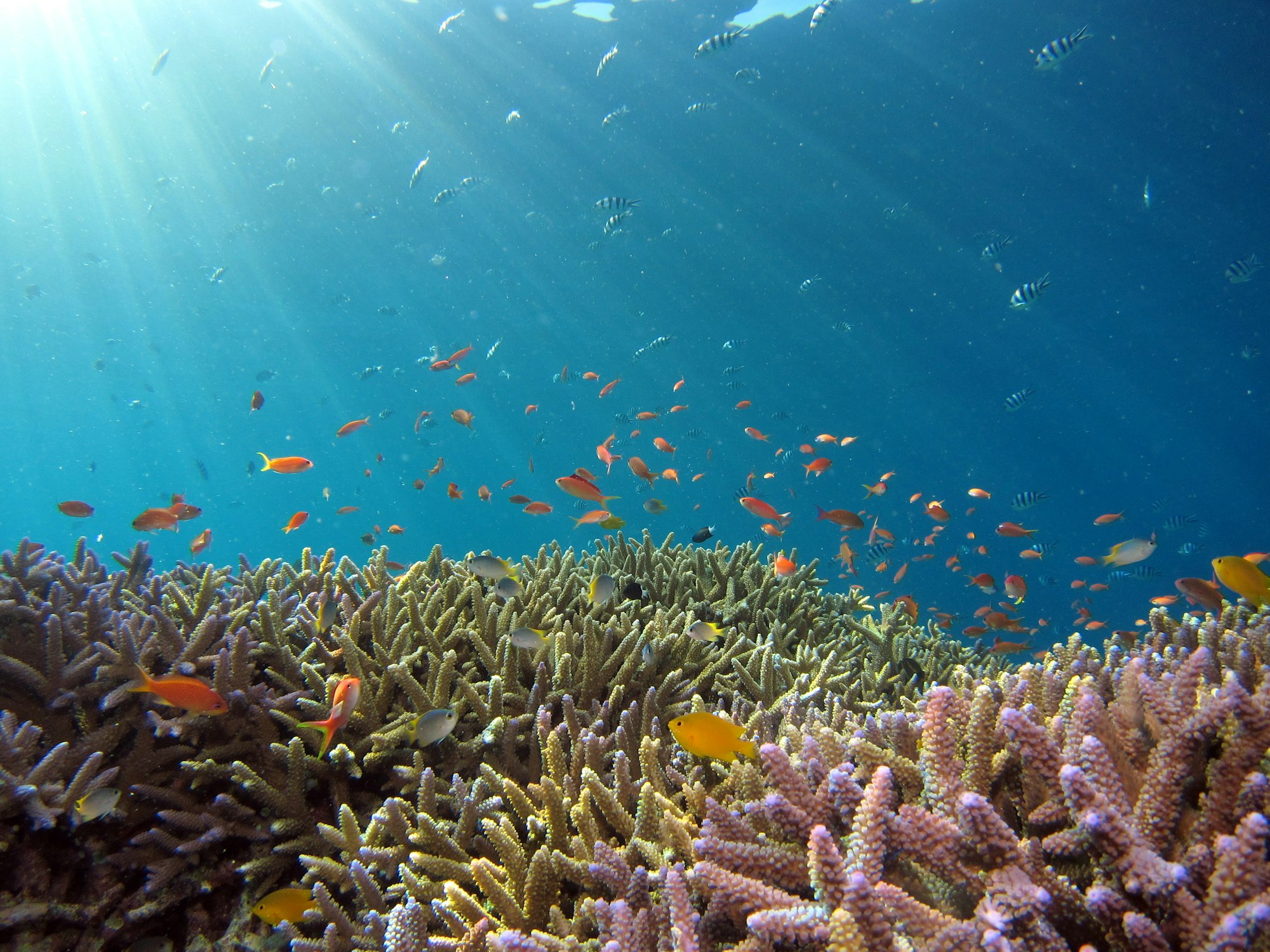
A spectacular gorgonian fan garden and coral pillar landscape south of Naama Bay, offering one of the finest collections of sea fans in the northern Red Sea alongside resident potato groupers and prowling barracuda schools.
Overview
Ras Umm Sid is located on the southern Sharm el-Sheikh coastline, adjacent to the Temple dive site, in the Hadaba district — the area considered best for shore and boat diving on the Sharm el-Sheikh coast. The site is defined by a vertical wall from the surface to 18 metres, opening onto a plateau that extends 50 metres before dropping into deeper water. The outstanding feature is the column of gorgonian sea fans growing from 14 metres to 28 metres on the outer wall — one of the most photographed fan garden concentrations in the northern Red Sea. On the plateau, a cluster of coral pinnacles rises from 20 metres, resembling columns of a temple when viewed at the right angle (the adjacent site takes its name from this formation). Potato groupers occupy permanent stations in the canyon sections. Schools of barracuda are characteristic residents, especially at the eastern corners where currents funnel through.
Site Information
- Location: Hadaba, southern Sharm el-Sheikh, Sinai, Egypt
- Entry Type: Boat dive
- Site Type: Reef
- Difficulty Level: Intermediate
- Maximum Depth: 20 meters
- Typical Visibility: 20–30 meters
- Current: Mild to strong at the corners; drift recommended when running
- Best Time: Year-round; September to May optimal
Marine Life
The gorgonian fan garden at 14–28 metres is the signature feature — massive individual fans covering the outer wall in a continuous vertical garden. Schools of barracuda are characteristic residents and reliably sighted at the corner sections where current converges. Potato groupers of substantial size hold territory in the deeper sections of the canyon. Blue-spotted stingrays rest on the plateau sandy areas. Hawksbill turtles patrol the shallow reef sections. Scorpionfish are well camouflaged on the pinnacle surfaces — look carefully before placing hands. Night dives reveal free-swimming moray eels, Spanish dancers, and octopuses. In summer, whale sharks and hammerhead sharks have been reported at the site.
Dive Profile
Enter from the boat and descend to the wall top at 5–8 metres, then follow the wall to the plateau at 18 metres. The pinnacles on the plateau are worth exploring for their resident scorpionfish and groupers. Navigate to the outer wall and follow the fan garden downward to 20+ metres. Return along the outer reef in the direction of the current toward the canyon section where barracuda concentrate. Drift option: enter up-current and float with the flow toward the canyon. Safety stop on the plateau at 5 metres over the coral gardens.
Entry and Exit
Boat or shore access from Hadaba, southern Sharm el-Sheikh. The Hadaba coast is well served by local dive operators. Shore entry requires a short walk to the water’s edge at the Hadaba cliffs section. Boat access is easier for multiple dives. Deploy an SMB before ascending in drift conditions.
Tips and Recommendations
- The gorgonian fan garden is best appreciated during a slow descent along the wall — rushing past it misses the scale and detail
- Look inside every canyon crevice for hiding potato groupers — they are large, approachable, and photogenic
- Night dives here are productive: free-swimming morays, octopuses, and Spanish dancers are consistently found
- In summer, the eastern corners in current are the best bet for barracuda schooling
- Pair with the adjacent Temple site for a two-site day trip
Safety Considerations
Current at the corners can be significant and builds quickly. Monitor your position when rounding the reef points. The wall drops beyond 30 metres — depth discipline is important when following the fan garden downward. Scorpionfish on the plateau pinnacles are a contact hazard for inattentive divers — look before touching or kneeling. Fire coral on the upper reef sections. Standard safety precautions apply: SMB deployment before all ascents.
Photography
The gorgonian fan garden is a world-class wide-angle photography subject. Shooting upward from below 20 metres toward the fans with natural light filtering from above creates dramatic silhouettes. Individual fans at 14–18 metres are accessible for close-focus wide-angle shots with strobe fill. The fan garden combined with the reef wall and blue water background is the signature composition. Scorpionfish portraits and moray eel encounters on night dives provide excellent macro subjects.
Sources: Divezone - Red Sea, Dive the World - Egypt Red Sea, Red Sea Scuba Diving, PADI - Diving in Egypt. Last updated 2026-04-04.
Sea-surface temperature and wave height from Open-Meteo Marine (ERA5 reanalysis, monthly averages).
624 verified species observations (340 species) logged within ~11 km of this site between 1828 and 2018, from the Ocean Biodiversity Information System.
- Rhincodon typus · Whale Shark
- Grampus griseus · Risso's dolphin
- Stenella attenuata · Pantropical spotted dolphin
- Pempheris tominagai
- Vinciguerria mabahiss
- Sargocentron caudimaculatum · Tailspot Squirrelfish
- Stenella · Spinner dolphins
- Epinephelus fasciatus · Black-tipped Cod
- Tursiops truncatus · Common bottlenose dolphin
- Priolepis cincta
- Ecsenius frontalis
- Plagiotremus
Scientific survey records skew toward sampled taxa (molluscs, corals) and do not reflect what you are guaranteed to see on a dive.
Source: OBIS (obis.org), aggregated Darwin Core occurrence records.
Conditions change with the tide and the season. If you have dived this site, share what it was actually like — date, visibility, current, and what you saw. Real, recent reports from divers are exactly what this guide is built to collect.
Send a conditions report ›