Ras Za'atar
27.7644°N 34.2557°E · reef
Ras Za’atar
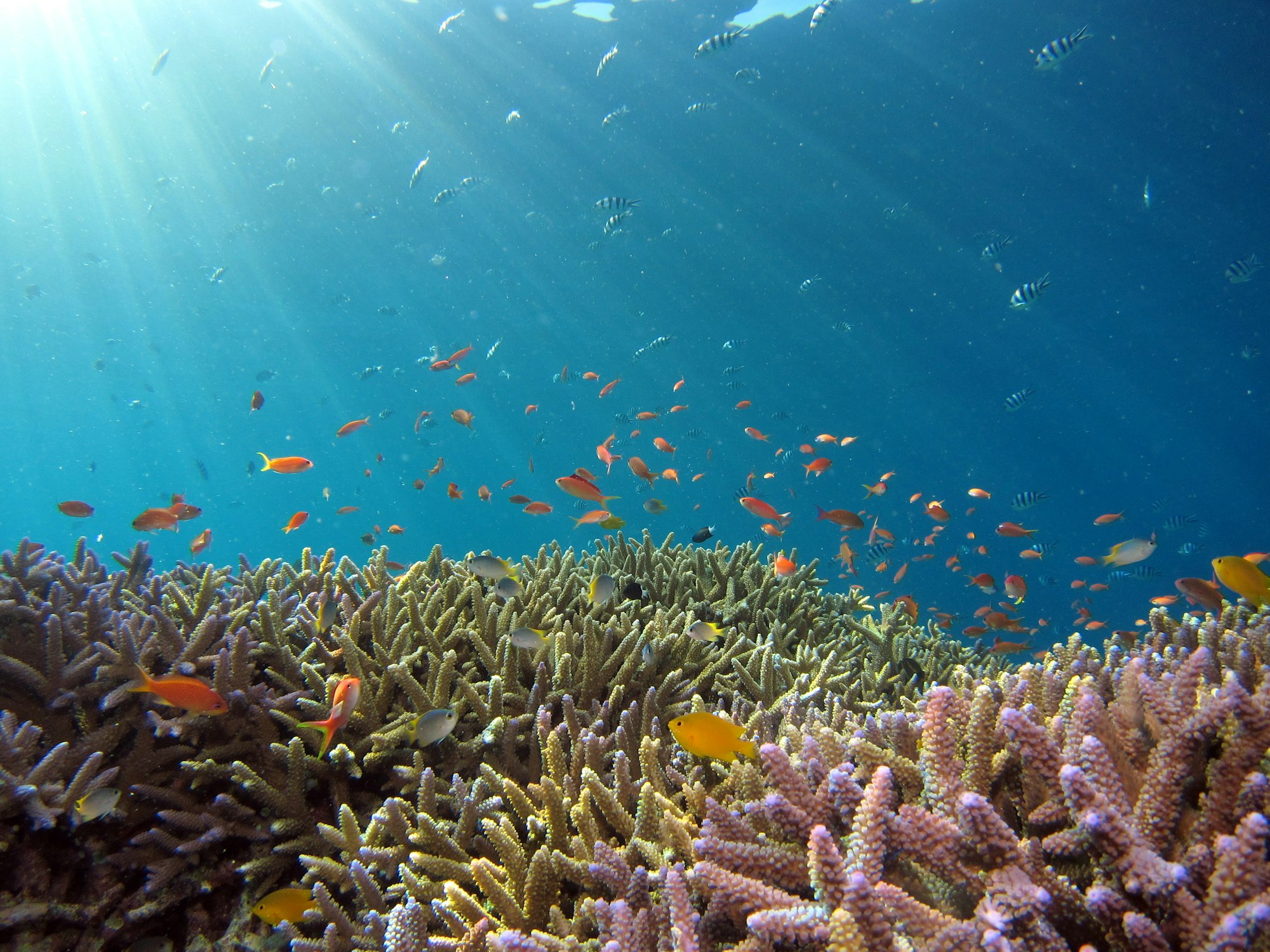
A thyme-named headland reef on the Sinai southwestern coast with a colourful wall, gorgonian growth in the deeper sections, and an accessible dive profile in a stretch of coast between Sharm el-Sheikh and Ras Mohammed.
Overview
Ras Za’atar (“headland of thyme” in Arabic) is located at approximately 27.76°N, 34.26°E on the Sinai Peninsula’s southwestern coast — south of Sharm el-Sheikh and in the coastal zone approaching Ras Mohammed National Park. The headland creates the typical current acceleration at its tip, and the reef structure follows the standard Sinai pattern: a shallow reef crest at 2–5 metres dropping to a slope and outer wall. Za’atar is positioned near Ras Ghozlani, and the two sites are often combined on the same day boat itinerary as representative southern Sinai coastal dives.
Site Information
- Location: Sinai Peninsula southwestern coast, south of Sharm el-Sheikh (~27.76°N, 34.26°E)
- Entry Type: Boat dive
- Site Type: Reef
- Difficulty Level: Intermediate
- Maximum Depth: 20 meters
- Typical Visibility: 15–25 meters
- Current: Moderate at the headland tip
- Best Time: Year-round; October to May optimal
Marine Life
Gorgonian fans at 15–18 metres on the outer wall carry dense anthias populations. Schools of fusiliers sweep the wall face when current is running. Moray eels and groupers occupy the reef crevices at all depths. Cleaning stations in the 8–12 metre zone attract resident fish. Turtles are sighted on the upper reef regularly. The sandy bottom transition at the base of the headland slope holds blue-spotted stingrays.
Dive Profile
Enter on the sheltered side and work around the headland tip at 10–15 metres. The outer wall section at 15–18 metres holds the gorgonians. Return along the lee side at 8–12 metres for the cleaning stations. Safety stop at 5 metres on the upper reef.
Entry and Exit
Day boat from Sharm el-Sheikh (40–60 minutes). Giant stride entry. Pair with Ras Ghozlani for a two-dive southern Sinai day. SMB deployment before ascending.
Tips and Recommendations
- Za’atar and Ghozlani make a natural pairing — dive the more exposed site first when fresh and the sheltered site second
- Gorgonian fans at 15–18 metres warrant a wide-angle lens setup for the outer wall section
- Current at the headland tip can be managed by staying close to the reef structure
Safety Considerations
Current at the tip can be moderate to strong on tidal changes. Maintain the reef as a reference. Fire coral on the upper crest. SMB before ascending.
Photography
Gorgonian fan portraits at 15–18 metres in natural light are the signature subjects. Fusilier school shots on the wall face in current reward ambient wide-angle technique.
Sources: Divezone - Red Sea, Dive the World - Egypt Red Sea, Red Sea Scuba Diving, PADI - Diving in Egypt. Last updated 2026-04-04.
Sea-surface temperature and wave height from Open-Meteo Marine (ERA5 reanalysis, monthly averages).
686 verified species observations (354 species) logged within ~11 km of this site between 1828 and 2018, from the Ocean Biodiversity Information System.
- Rhincodon typus · Whale Shark
- Stenella attenuata · Pantropical spotted dolphin
- Tursiops truncatus · Common bottlenose dolphin
- Grampus griseus · Risso's dolphin
- Pempheris tominagai
- Tursiops · Bottlenose dolphins
- Sargocentron caudimaculatum · Tailspot Squirrelfish
- Priolepis cincta · Banded Reef Goby
- Epinephelus fasciatus · Black-tipped Cod
- Tursiops aduncus · Indian ocean bottlenose dolphin
- Vinciguerria mabahiss
- Stenella longirostris · Spinner dolphin
Scientific survey records skew toward sampled taxa (molluscs, corals) and do not reflect what you are guaranteed to see on a dive.
Source: OBIS (obis.org), aggregated Darwin Core occurrence records.
Conditions change with the tide and the season. If you have dived this site, share what it was actually like — date, visibility, current, and what you saw. Real, recent reports from divers are exactly what this guide is built to collect.
Send a conditions report ›