Rocky East
23.5644°N 36.2493°E · reef
Rocky East
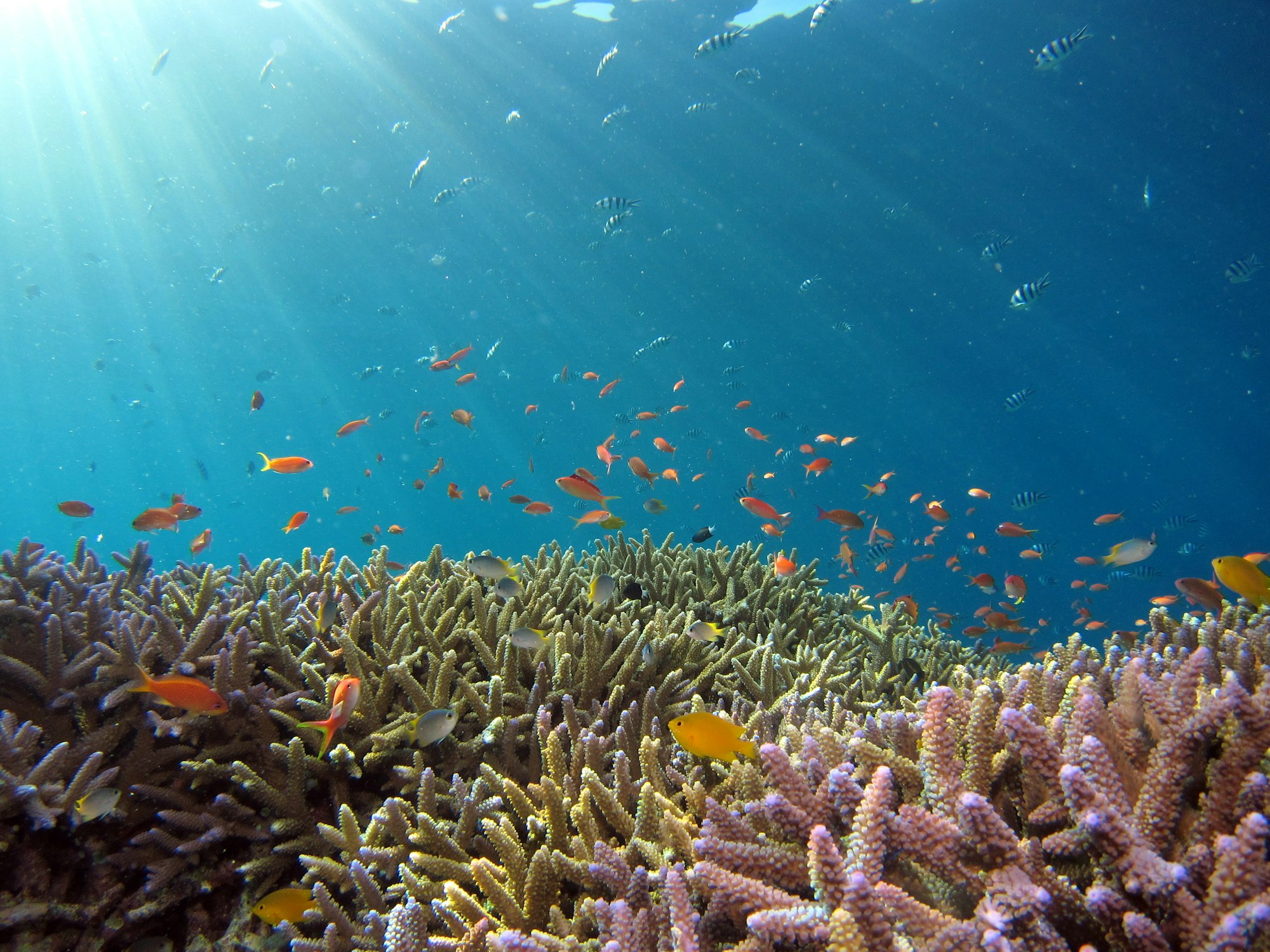
The eastern face of the Rocky Island reef system in the Fury Shoals — a current-exposed wall with large gorgonian fans, passing pelagics, and the raw, open-ocean character that defines diving at this latitude.
Overview
Rocky East is the eastern-facing dive site on Rocky Island, part of the Fury Shoals reef complex at approximately 23.56°N, 36.25°E in the southern Egyptian Red Sea. This is deep offshore territory, accessible only by liveaboard, where the reef faces the open Red Sea to the east. The eastern exposure means stronger current and open-ocean influence — a wall that drops to significant depth and receives passing pelagics that don’t visit the sheltered western faces of the same island. Rocky Island sits within one of the less-dived sections of the Fury Shoals system, making the eastern face one of the most pristine wall dives in the region. Large gorgonian fans occupy the wall below 15 metres.
Site Information
- Location: Eastern face, Rocky Island, Fury Shoals, southern Egyptian Red Sea (~23.56°N)
- Entry Type: Boat dive
- Site Type: Reef
- Difficulty Level: Intermediate
- Maximum Depth: 20 meters
- Typical Visibility: 20–35 meters
- Current: Moderate to strong on the exposed eastern face
- Best Time: October to May
Marine Life
The eastern wall receives passing pelagic traffic: grey reef sharks cruise the wall edge, and hammerhead sightings are possible in early morning dives during spring months. Large gorgonian fans at 15–20 metres are in excellent condition due to the site’s undisturbed status. Schools of barracuda and trevally patrol in open water off the wall. Anthias and chromis schools cover every surface of the coral wall. Moray eels are common in the wall crevices. The sandy ledges at 18–20 metres hold resting whitetip reef sharks. Turtles pass along the wall mid-water.
Dive Profile
Descend directly to the gorgonian zone at 15–18 metres on the wall face and assess current direction. Work along the wall with the current, covering the richest coral and shark sections at depth. After 20–25 minutes at depth, ascend the wall to 8–12 metres and continue along the shallower reef section. The dive transitions naturally from the exposed wall to a slightly more sheltered upper reef zone. Safety stop at 5 metres on the upper reef.
Entry and Exit
Liveaboard access on Fury Shoals itineraries — typically combined with Rocky North and other Fury Shoals sites over a multi-day stay. No permanent moorings on the eastern face. Giant stride entry from the tender with the boat positioning for the current direction. SMB deployment mandatory before ascending.
Tips and Recommendations
- Dive the eastern face in the morning when current is often more predictable — afternoon conditions can be challenging
- Position at 15–18 metres near the gorgonians and allow the current to carry you slowly along the wall
- If current is too strong for comfortable diving, shift to the sheltered Rocky North site for the same dive
- Carry a torch for the wall crevices — moray eels and lobsters occupy every deep cavity
Safety Considerations
Current on the eastern face can be strong and variable. Assess conditions from the boat before entry — if surface conditions appear rough, abort the eastern face and dive Rocky North instead. The wall drops beyond 20 metres — discipline is required on depth limits. Deploy SMB before ascending; current will carry divers away from the reef quickly. Stay in buddy visual contact throughout.
Photography
The eastern wall provides classic wall photography: gorgonian fans at 15–18 metres with natural blue-water background, wide-angle shots of the anthias-covered wall face, and shark portraits at the reef edge. The undisturbed state of the reef and high visibility create ideal conditions for ambient wide-angle without flash for the upper wall in morning light.
Sources: Divezone - Red Sea, Dive the World - Egypt Red Sea, Red Sea Scuba Diving, PADI - Diving in Egypt. Last updated 2026-04-04.
Sea-surface temperature and wave height from Open-Meteo Marine (ERA5 reanalysis, monthly averages).
9 verified species observations (3 species) logged within ~11 km of this site between 2004 and 2013, from the Ocean Biodiversity Information System.
- Stenella longirostris · Spinner dolphin
- Pseudorca crassidens · False killer whale
- Tursiops · Bottlenose dolphins
Scientific survey records skew toward sampled taxa (molluscs, corals) and do not reflect what you are guaranteed to see on a dive.
Source: OBIS (obis.org), aggregated Darwin Core occurrence records.
Conditions change with the tide and the season. If you have dived this site, share what it was actually like — date, visibility, current, and what you saw. Real, recent reports from divers are exactly what this guide is built to collect.
Send a conditions report ›