Rocky North
23.5658°N 36.2455°E · reef
Rocky North
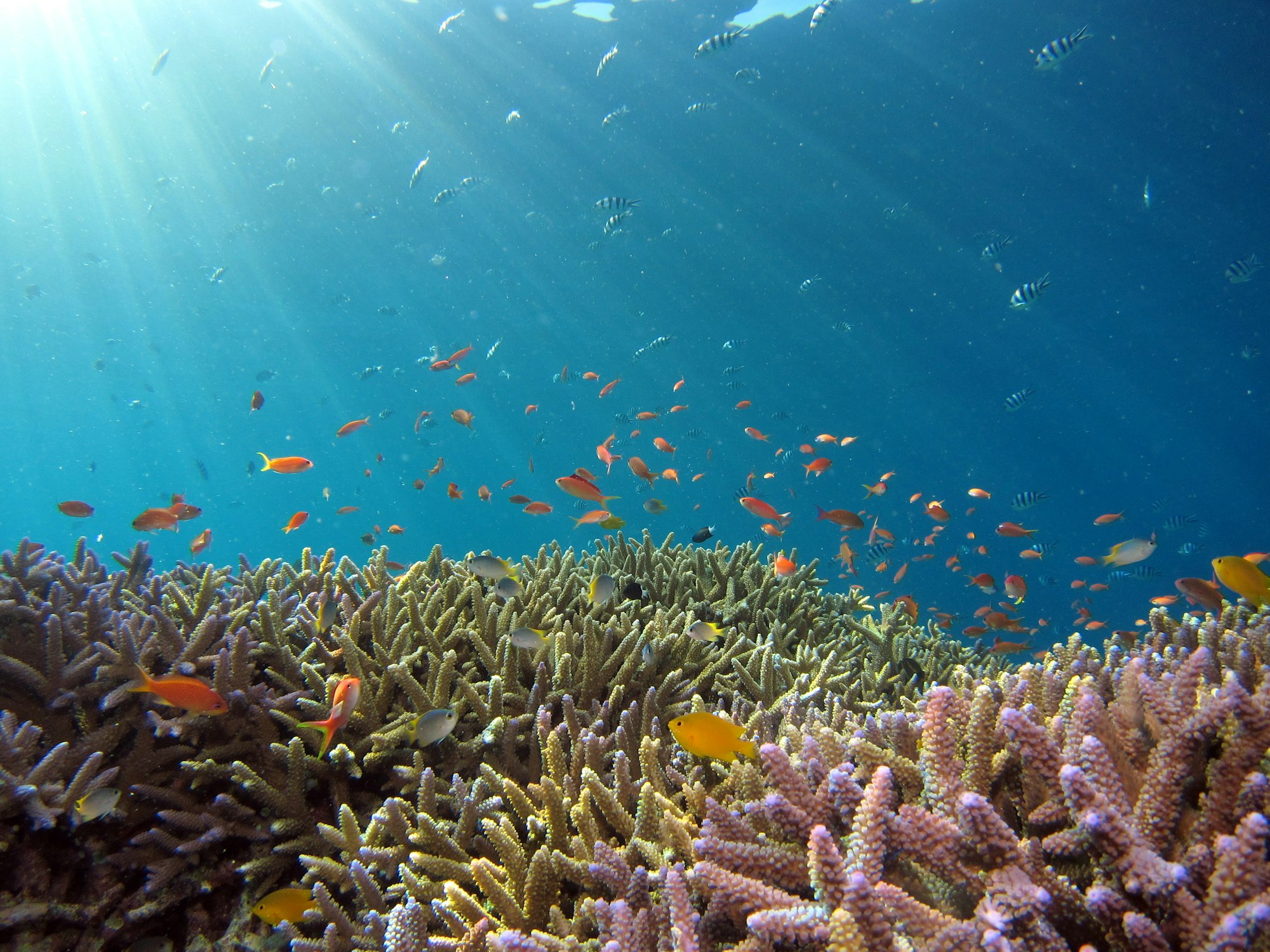
The northern tip of Rocky Island in the Fury Shoals — a rounded reef point where currents from the east and west faces converge, producing dense fish aggregations, resident sharks, and classic pinnacle diving on one of the Fury Shoals’ most diverse reefs.
Overview
Rocky North describes the northern tip of Rocky Island at approximately 23.57°N, 36.25°E in the Fury Shoals complex of the southern Egyptian Red Sea. The northern point is a natural convergence zone: currents sweeping around both the eastern and western faces of the island meet here, concentrating planktonic food and driving aggregations of reef fish. The reef structure at the north point is characteristically rounded, with coral pinnacles emerging from the main reef at 8–15 metres and a gradual sandy slope extending northward. It is typically the most accessible section of the Rocky Island system and serves as the default dive when eastern face conditions are too demanding. This is a liveaboard-only destination on Fury Shoals itineraries.
Site Information
- Location: Northern tip, Rocky Island, Fury Shoals, southern Egyptian Red Sea (~23.57°N)
- Entry Type: Boat dive
- Site Type: Reef
- Difficulty Level: Intermediate
- Maximum Depth: 20 meters
- Typical Visibility: 20–30 meters
- Current: Variable; converging currents at the point can be moderate
- Best Time: October to May
Marine Life
The current convergence at the northern tip drives dense fish aggregations: large schools of snapper, fusiliers, and goatfish pack the reef at the point. Grey reef sharks are resident and visible patrolling the outer reef edge. Cleaning stations on the northern face attract groupers and humphead wrasse. Eagle rays cross the sandy slope north of the point. Moray eels are abundant in the reef crevices. The coral pinnacles in 10–15 metres hold glassfish schools with hunting groupers. Turtles are frequently encountered resting on the upper reef or in the mid-water at the point.
Dive Profile
Enter at the northern tip and descend directly to the convergence zone at 10–15 metres. The reef point structure allows a circumnavigation of the northern tip in a single dive — start on the east side at 12–15 metres, round the point, and return along the west side at 8–12 metres. The north-facing aspect provides good natural light throughout the dive. Safety stop at 5 metres over the reef top near the pinnacles.
Entry and Exit
Liveaboard tender drop and pick-up. Rocky North is the most commonly dived section of Rocky Island due to its comparative accessibility and calmer conditions. Giant stride entry adjacent to the reef point. SMB mandatory before ascending — convergent current at the point requires the boat to track diver positions from the surface marker.
Tips and Recommendations
- The reef point at 10–12 metres is the most productive observation post — station yourself with the reef at your back and watch both sides simultaneously for sharks and rays
- If the eastern face of Rocky Island has too much current, Rocky North provides a high-quality alternative with similar marine life
- Cleaning stations on the northern face reward patient, stationary observation at 2–3 metres distance
- Pair Rocky North with Rocky East (dived first while conditions are best) for a comprehensive Rocky Island experience
Safety Considerations
Converging currents at the reef point can be disorienting — maintain depth and compass awareness throughout. In strong current conditions, stay close to the reef structure rather than drifting into open water at the point. SMB deployment is essential before ascending. Remote location means all standard liveaboard safety protocols apply.
Photography
The northern tip produces diverse photographic conditions in a single dive: wide-angle shark portraits at the outer reef edge, fish aggregation shots at the convergence zone, and cleaning station portraits on the calmer northern face. The natural light on the north-facing aspect is even and shadowless for much of the dive — good conditions for ambient reef photography.
Sources: Divezone - Red Sea, Dive the World - Egypt Red Sea, Red Sea Scuba Diving, PADI - Diving in Egypt. Last updated 2026-04-04.
Sea-surface temperature and wave height from Open-Meteo Marine (ERA5 reanalysis, monthly averages).
9 verified species observations (3 species) logged within ~11 km of this site between 2004 and 2013, from the Ocean Biodiversity Information System.
- Stenella longirostris · Spinner dolphin
- Pseudorca crassidens · False killer whale
- Tursiops · Bottlenose dolphins
Scientific survey records skew toward sampled taxa (molluscs, corals) and do not reflect what you are guaranteed to see on a dive.
Source: OBIS (obis.org), aggregated Darwin Core occurrence records.
Conditions change with the tide and the season. If you have dived this site, share what it was actually like — date, visibility, current, and what you saw. Real, recent reports from divers are exactly what this guide is built to collect.
Send a conditions report ›