Salem Express
26.6397°N 34.0616°E · wreck
The Salem Express is one of the most emotionally significant and historically important wreck dives in the Red Sea. The ro-ro passenger ferry struck Hyndman Reef near Safaga on the night of December 14–15, 1991, sinking in approximately 20 minutes while en route from Jeddah, Saudi Arabia, to Safaga, Egypt. The official death toll stands at 464–470, though the Egyptian Navy recovered approximately 850 bodies, and some accounts suggest the ferry was overcrowded beyond its 1,256-passenger capacity. The majority of those aboard were Moroccan-French pilgrims returning from Mecca. The wreck lies at a maximum depth of approximately 27 metres, with upper deck structures accessible from around 15 metres. The ship measured 115 metres in length and 4,771 gross tons.
Overview
The Salem Express rests on her starboard side on a sandy slope adjacent to Hyndman Reef. She is relatively intact, which makes for a haunting and atmospheric dive. Coral growth has been colonizing the hull steadily since 1991, and the wreck now hosts a significant reef ecosystem. Many divers treat this site with particular solemnity given the loss of life associated with the sinking. Penetration of the interior is possible but should be undertaken only by wreck-qualified divers — the interior is silty, and the wreck still contains the personal effects of those who perished. Many operators and dive guides ask that visitors refrain from penetrating the passenger areas out of respect for the dead.
Site Information
- Location: Hyndman Reef, Safaga, Red Sea, Egypt
- Entry Type: Boat dive
- Site Type: Wreck dive
- Difficulty Level: Advanced
- Maximum Depth: 27 meters
- Typical Visibility: 15-30 meters (50-100 feet)
- Current: Moderate
- Best Time: October to May
Marine Life
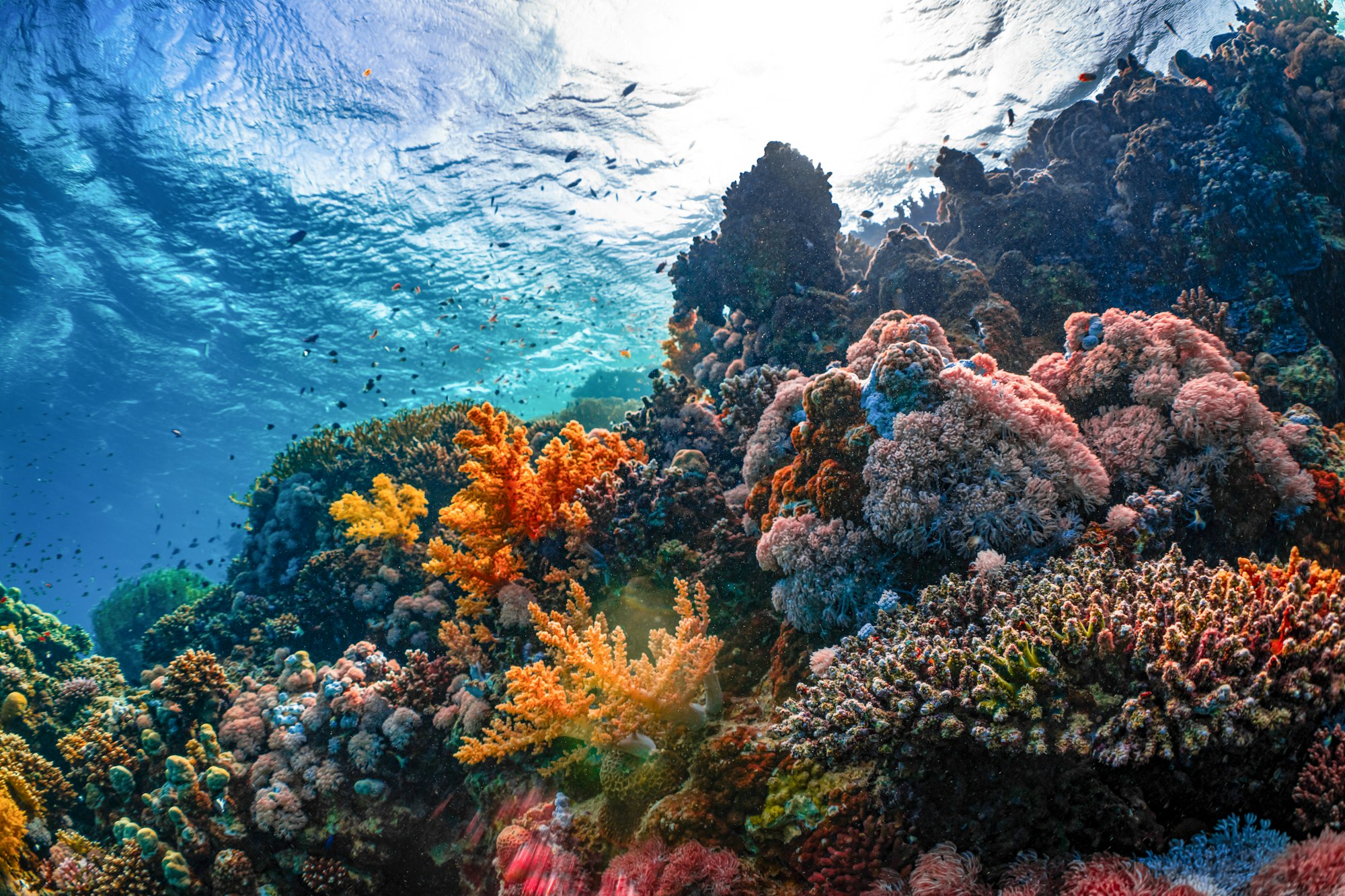
The wreck superstructure supports a rich reef community. Dense schools of glassfish hover around railings and over open deck areas, pursued by hunting trevally. Giant moray eels occupy larger crevices in the hull, while lionfish patrol ledges and companionways. Groupers have taken up residence in sheltered sections. The hull is encrusted with soft corals, tunicates, and sponge growth that increases with each passing year. Turtles and occasionally dolphins are sighted in the water column above the wreck.
Dive Profile
Descend the mooring line to the upper hull at approximately 15 meters. From here, work along the exterior — the bow, bridge section, stern ramp, and lifeboat davits are all distinctive features. The deepest accessible point is around 27 meters at the sandy bottom beside the starboard side. Penetration divers with wreck certification can enter the vehicle deck through the stern ramp. Bottom time is limited at depth; plan a conservative dive with plenty of time for a safety stop and the ascent.
Entry and Exit
Access is by liveaboard or day boat from Safaga harbor. A mooring buoy is typically attached to the wreck. Entry via giant stride. Descend directly to the wreck on the mooring line. Ascend on the line or do a blue-water ascent deploying an SMB at 5 meters.
Tips and Recommendations
- Treat this as a memorial dive — avoid disturbing the interior passenger areas
- Wreck penetration requires proper training and a powerful dive torch
- Silt inside the wreck disturbs easily; maintain excellent buoyancy control
- Book with an operator who provides a proper briefing on the site’s history and safety protocols
- An SMB and dive computer are essential for this site
Safety Considerations
The interior of the wreck contains significant silt and disorientation risks — only trained wreck penetration divers should enter. Strong currents can develop near the reef edge. The stern ramp has sharp metal edges. Always ascend on the mooring line or deploy an SMB if ascending in open water. Carry redundant lighting if penetrating. This is an emotionally demanding dive for many divers; be prepared.
Photography
The scale of the wreck makes wide-angle and fisheye lenses ideal. The encrusted railings and davits photographed against blue water are iconic images. The schools of glassfish hovering over open deck areas are a compelling mid-water subject. Inside the vehicle deck, a wide-angle torch-lit shot can capture the otherworldly atmosphere. Macro subjects are found on every colonized surface of the hull.
Sources: MV Salem Express Wikipedia, InDEPTH Magazine, Divernet, Dive the World. Last updated 2026-05-25.
Sea-surface temperature and wave height from Open-Meteo Marine (ERA5 reanalysis, monthly averages).
256 verified species observations (245 species) logged within ~11 km of this site between 1936 and 2016, from the Ocean Biodiversity Information System.
- Tursiops aduncus · Indian ocean bottlenose dolphin
- Stenella longirostris · Spinner dolphin
- Tursiops · Bottlenose dolphins
- Pseudorca crassidens · False killer whale
- Nerita sanguinolenta
- Littoraria scabra
- Montipora gracilis
- Lensia subtiloides
- Alveopora daedalea
- Lobophyllia hemprichii
- Tetrachthamalus
- Chthamalus
Scientific survey records skew toward sampled taxa (molluscs, corals) and do not reflect what you are guaranteed to see on a dive.
Source: OBIS (obis.org), aggregated Darwin Core occurrence records.
Conditions change with the tide and the season. If you have dived this site, share what it was actually like — date, visibility, current, and what you saw. Real, recent reports from divers are exactly what this guide is built to collect.
Send a conditions report ›