SHAAB ALI
27.7895°N 33.9062°E · reef
Sha’ab Ali is a large shallow reef complex in the Strait of Gubal, best known as the location of the SS Thistlegorm — one of the world’s most famous wreck dives — on its eastern side.
Overview
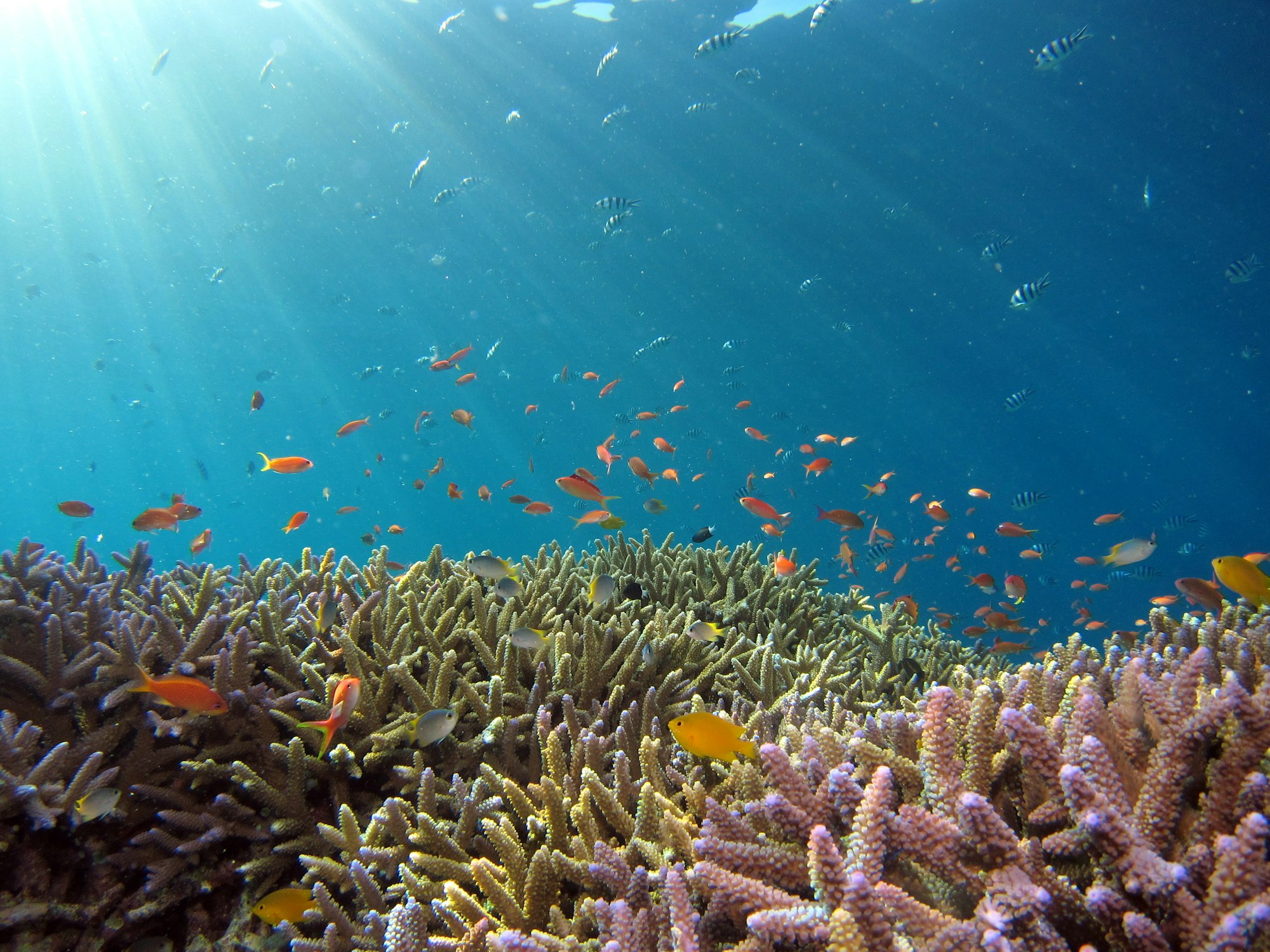
The reef surrounds an interior lagoon with depths of 7–10 m, providing sheltered anchorage for safari and liveaboard boats. The outer reef edges offer coral walls and slope diving with a resident community of reef fish. Sha’ab Ali lies in the middle of the Strait of Gubal, the channel connecting the Gulf of Suez to the northern Red Sea.
While the reef itself is a pleasant dive with healthy coral gardens, most visitors make the journey specifically for the Thistlegorm wreck (a British military transport ship sunk by German bombers in October 1941) located on the reef’s eastern flank. The wreck is a separate dive site.
Reef Diving
The reef edge slopes from the surface to around 20–25 m and supports crocodile fish, scorpionfish, napoleon wrasse (humphead wrasse), two resident turtles commonly reported, snappers, nudibranchs, and blue-spotted ribbontail rays. Visibility ranges from 15–25 m. Currents in the strait can be moderate.
Marine Life
Crocodile fish and scorpionfish rest camouflaged on the reef. Turtles frequently rest at the lagoon edges. Sharks and dolphins are occasionally encountered in the open water around the reef.
Tips
- The primary reason to visit Sha’ab Ali is the SS Thistlegorm; the reef dive is secondary
- Currents in the Strait of Gubal can be significant — check the tidal cycle before diving
- The inner lagoon provides calm anchoring conditions even when external conditions are choppy
Sources: Zentacle — Sha’ab Ali, redsea-diving.com — Strait of Gubal. Last updated 2026-05-17.
Sea-surface temperature and wave height from Open-Meteo Marine (ERA5 reanalysis, monthly averages).
57 verified species observations (4 species) logged within ~11 km of this site between 1965 and 2014, from the Ocean Biodiversity Information System.
- Tursiops aduncus · Indian ocean bottlenose dolphin
- Tursiops · Bottlenose dolphins
- Tursiops truncatus · Common bottlenose dolphin
- Clausocalanus farrani
Scientific survey records skew toward sampled taxa (molluscs, corals) and do not reflect what you are guaranteed to see on a dive.
Source: OBIS (obis.org), aggregated Darwin Core occurrence records.
Conditions change with the tide and the season. If you have dived this site, share what it was actually like — date, visibility, current, and what you saw. Real, recent reports from divers are exactly what this guide is built to collect.
Send a conditions report ›