Shaab Bohar Kebir Ost
24.2951°N 35.5349°E · reef
Shaab Bohar Kebir Ost (meaning “Big Reef Bohar East” in Arabic-German-OSM naming convention) is the eastern section of Shaab Abu Ramada Kebir in the southern Red Sea near Marsa Alam and Ras Banas. Coordinates place this site at approximately 24.3°N, 35.5°E, in the Fury Shoals region — one of the Egyptian Red Sea’s most productive offshore reef systems. The “Ost” suffix (German for “East”) reflects the naming style used by German-speaking liveaboard operators who heavily pioneered exploration of these southern reefs.
Overview
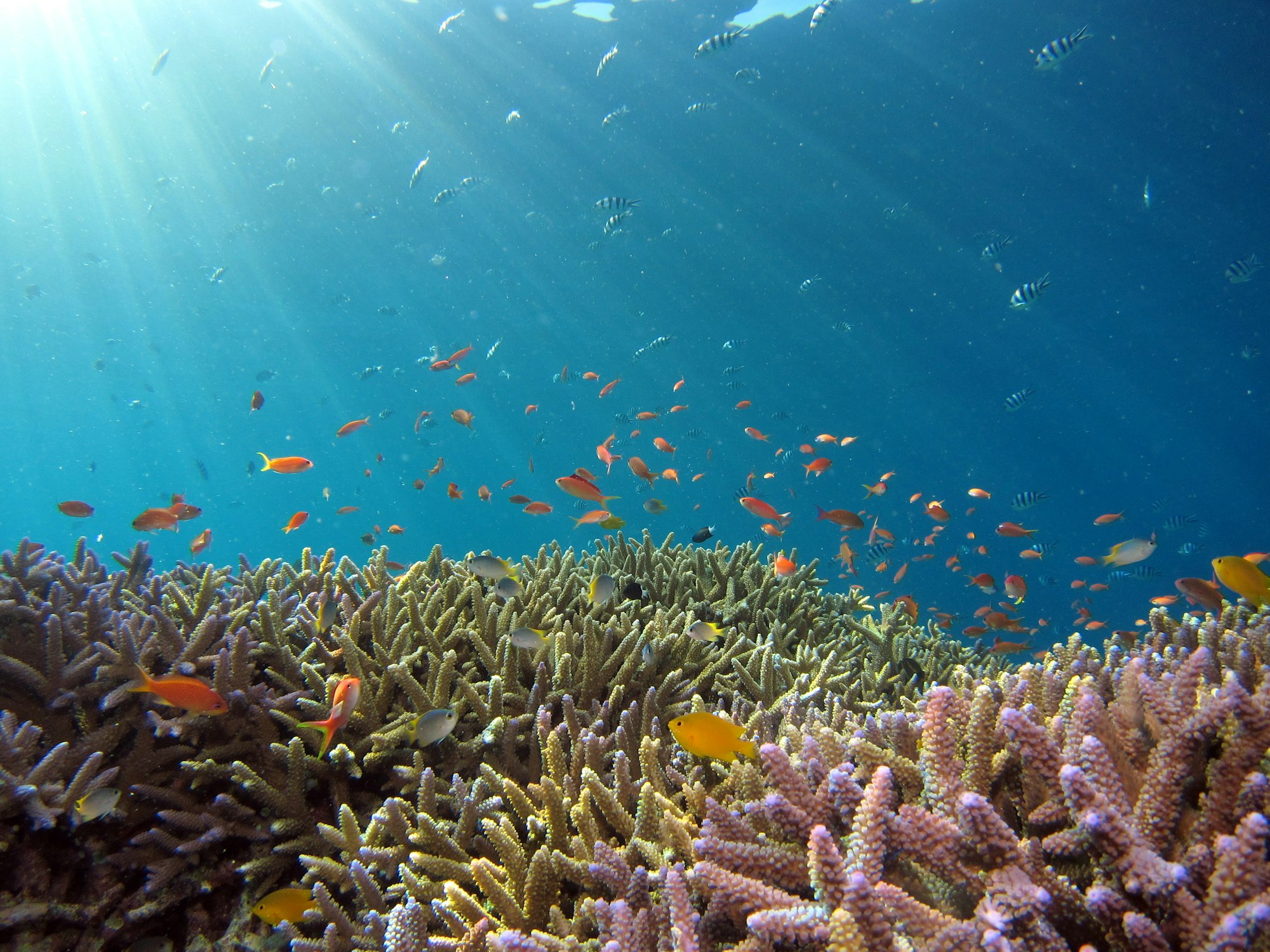
Shaab Bohar Kebir Ost is a substantial reef structure with a long east-facing wall and slope that bears the brunt of prevailing currents in the area. The eastern exposure of large Fury Shoals reefs is generally characterized by harder, more exposed coral growth, current-swept walls with sea fans and soft corals, and better pelagic action than the sheltered western sides. The reef drops from a shallow crest to approximately 20 meters before transitioning to deeper water and sand. The Fury Shoals are one of the most biologically diverse reef systems in the Egyptian Red Sea.
Site Information
- Location: Fury Shoals, southern Red Sea, Egypt (near Ras Banas)
- Entry Type: Boat dive
- Site Type: Reef
- Difficulty Level: Intermediate
- Maximum Depth: 20 meters
- Typical Visibility: 20-35 meters (65-115 feet)
- Current: Moderate to strong
- Best Time: October to May
Marine Life
The eastern walls of Fury Shoals reefs are prime territory for grey reef sharks, which patrol in small groups along the reef edge. humphead wrasse are resident on this type of large reef structure. Schools of barracuda, snapper, and fusiliers populate the mid-water zone, and eagle rays occasionally pass over the reef top. The wall supports gorgonian sea fans and whip corals in the deeper sections, with hard coral formations dominating the shallower zones. Moray eels and lionfish are common on the reef face.
Dive Profile
Entry and descent to the eastern reef edge, orienting to the current on arrival. Follow the reef face in a drift, maintaining depth between 10 and 20 meters where the terrain is most productive. The wall features occasional ledges and overhangs worth checking for resting turtles and moray eels. Ascend gradually back toward the shallower crest section, completing the dive with a safety stop in the 3–5 meter zone before surfacing for boat pickup.
Entry and Exit
Access is exclusively by liveaboard on extended Fury Shoals or southern Red Sea itineraries. Dive skiff entry via giant stride. The current direction on the day determines the exact entry point and drift direction — follow your guide’s briefing. Ascend and deploy an SMB for boat pickup in open water if the drift has carried you well down the reef.
Tips and Recommendations
- Drift dives work best at this site — go with the current rather than fighting it
- Scan the blue water on the seaward side of the reef for pelagic species
- The Fury Shoals are remote; this is primarily a liveaboard destination
- Winter is best for shark encounters and cooler, clearer water
- Look for lionfish and scorpionfish tucked under ledges on the wall
Safety Considerations
Current can be significant on the eastern face of large Fury Shoals reefs. Always be prepared for open-water ascents and carry a deployed SMB. The remoteness means emergency assistance takes time; dive within limits. Fire coral on the wall can cause skin irritation — maintain a slight standoff from the reef surface.
Photography
Wide-angle drifts along the wall with sea fans in the foreground and blue water behind are the signature shot at this type of site. Schools of fish over the reef crest in good visibility make for dramatic wide-angle images. Macro opportunities on the deeper wall sections include nudibranchs on soft coral and small reef fish in crevices.
Sources: Divezone - Red Sea, Dive the World - Egypt Red Sea, Red Sea Scuba Diving, PADI - Diving in Egypt. Last updated 2026-04-04.
Sea-surface temperature and wave height from Open-Meteo Marine (ERA5 reanalysis, monthly averages).
13 verified species observations (6 species) logged within ~11 km of this site between 2003 and 2012, from the Ocean Biodiversity Information System.
- Tursiops truncatus · Common bottlenose dolphin
- Stenella longirostris · Spinner dolphin
- Stenella attenuata · Pantropical spotted dolphin
- Tursiops aduncus · Indian ocean bottlenose dolphin
- Pseudorca crassidens · False killer whale
- Balaenoptera · Baleen whales
Scientific survey records skew toward sampled taxa (molluscs, corals) and do not reflect what you are guaranteed to see on a dive.
Source: OBIS (obis.org), aggregated Darwin Core occurrence records.
Conditions change with the tide and the season. If you have dived this site, share what it was actually like — date, visibility, current, and what you saw. Real, recent reports from divers are exactly what this guide is built to collect.
Send a conditions report ›