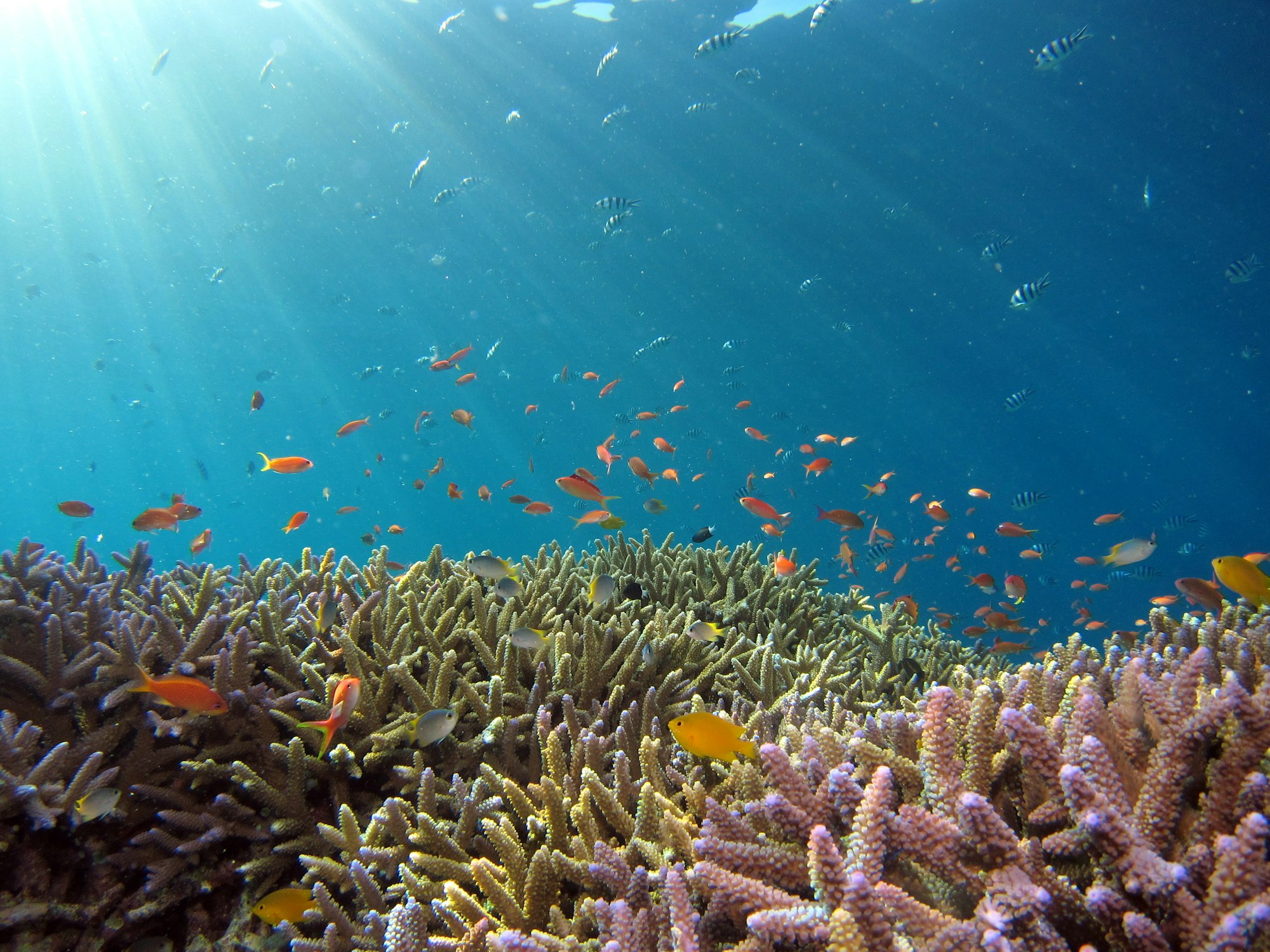
Shaab Maksour South
24.2388°N 35.6542°E · reef
Shaab Maksour South
The sheltered southern section of Shaab Maksour in the Fury Shoals — a calmer face with sandy lagoon transitions, cleaning stations on the mid-reef, and macro photography opportunities that contrast with the exposed northern tip’s pelagic character.
Overview
Shaab Maksour South occupies the sheltered, south-facing portion of the Shaab Maksour reef at approximately 24.24°N, 35.65°E in the Fury Shoals. Where the northern section of this reef offers exposure and pelagics, the southern face is calmer and more protected — a characteristic shared by the sheltered sides of most offshore reefs in this zone. The southern face typically features a shallower reef crest, sandy transition zones, and the resident fish communities that concentrate in sheltered reef environments. It is dived as the second dive of a Shaab Maksour day after the more demanding northern section, or as the only dive in conditions where the north tip is uncomfortable.
Site Information
- Location: Southern Shaab Maksour, Fury Shoals, southern Egyptian Red Sea (~24.24°N)
- Entry Type: Boat dive
- Site Type: Reef
- Difficulty Level: Intermediate
- Maximum Depth: 20 meters
- Typical Visibility: 20–30 meters
- Current: Mild on the sheltered southern face
- Best Time: October to May
Marine Life
The sheltered southern face supports cleaning station activity in the 8–12 metre zone — resident groupers and moray eels use the established stations regularly. Blue-spotted stingrays rest on the sandy transition at 15–18 metres. Crocodilefish are found camouflaged on the sandy floor and coral rubble areas — the southern face’s calmer conditions make patient searching practical. Lionfish occupy the coral overhangs on the deeper sections. Hawksbill turtles rest on the reef platform. The typical Fury Shoals reef fish assemblage — anthias, butterflyfish, and chromis — covers the reef crest.
Dive Profile
Enter on the southern face and descend to the sandy transition at 15–18 metres. Search the sand for stingrays and crocodilefish before ascending to the cleaning station zone at 8–12 metres. Spend time at cleaning stations before ascending to the shallow reef crest for the final section of the dive and safety stop at 5 metres.
Entry and Exit
Day boat from Marsa Alam or liveaboard. Often the second dive of a Shaab Maksour two-dive day, after the northern tip is dived first. Giant stride entry. Calmer entry than the northern section in most conditions. SMB deployment before ascending.
Tips and Recommendations
- Search the sandy sections at 15–18 metres carefully for crocodilefish — they are camouflaged against coral rubble and sand and extremely easy to miss
- The cleaning stations reward stationary observation at 2–3 metres — move to the station slowly and stop completely before the cleaning activity begins
- This is the more relaxed, macro-oriented dive of the Shaab Maksour pair — plan more time per metre of reef than on the northern tip
- Night dives on the southern face produce good octopus and moray eel activity
Safety Considerations
Conditions are generally mild on the southern face. Monitor current at the transition zones where the sheltered face meets the eastern and western flanks. Scorpionfish and lionfish in the overhangs require visual awareness. SMB before ascending.
Photography
Crocodilefish portraits on the sandy floor require a macro lens, patient approach from a prone position, and natural light — available in good quality on the well-lit southern face. Cleaning station portraits at 8–12 metres reward patience and a telephoto/zoom approach. Stingray portraits on the sandy transition suit macro technique.
Sources: Divezone - Red Sea, Dive the World - Egypt Red Sea, Red Sea Scuba Diving, PADI - Diving in Egypt. Last updated 2026-04-04.
Sea-surface temperature and wave height from Open-Meteo Marine (ERA5 reanalysis, monthly averages).
30 verified species observations (5 species) logged within ~11 km of this site between 2003 and 2014, from the Ocean Biodiversity Information System.
- Tursiops aduncus · Indian ocean bottlenose dolphin
- Tursiops truncatus · Common bottlenose dolphin
- Stenella longirostris · Spinner dolphin
- Stenella attenuata · Pantropical spotted dolphin
- Balaenoptera · Baleen whales
Scientific survey records skew toward sampled taxa (molluscs, corals) and do not reflect what you are guaranteed to see on a dive.
Source: OBIS (obis.org), aggregated Darwin Core occurrence records.
Conditions change with the tide and the season. If you have dived this site, share what it was actually like — date, visibility, current, and what you saw. Real, recent reports from divers are exactly what this guide is built to collect.
Send a conditions report ›