Shaab Pinky
27.2648°N 33.9194°E · reef
Shaab Pinky
A deeper offshore reef in the Hurghada zone extending to 30 metres — an outer wall with large gorgonian fans, grey reef shark patrol circuits, and a depth range that suits Advanced divers looking for more than the shallow reef tops offer.
Overview
Shaab Pinky sits at approximately 27.26°N, 33.92°E in the Hurghada offshore zone and is notable among the local reef sites for its greater maximum depth of 30 metres — most Hurghada day sites max out at 18–20 metres. The extra depth allows the outer wall to carry large gorgonian fans and supports different fish communities than the shallow reef tops. The name “Pinky” follows the local tradition of assigning informal English names to sites — possibly derived from the pink/red colouration of the soft corals on the reef’s sheltered sections. It is accessible as a day-boat site from Hurghada operators and is positioned for intermediate-to-advanced divers who can manage the deeper profile.
Site Information
- Location: Offshore Hurghada, central Egyptian Red Sea (~27.26°N, 33.92°E)
- Entry Type: Boat dive
- Site Type: Reef
- Difficulty Level: Intermediate
- Maximum Depth: 30 meters
- Typical Visibility: 15–25 meters
- Current: Mild to moderate
- Best Time: Year-round; October to May optimal
Marine Life
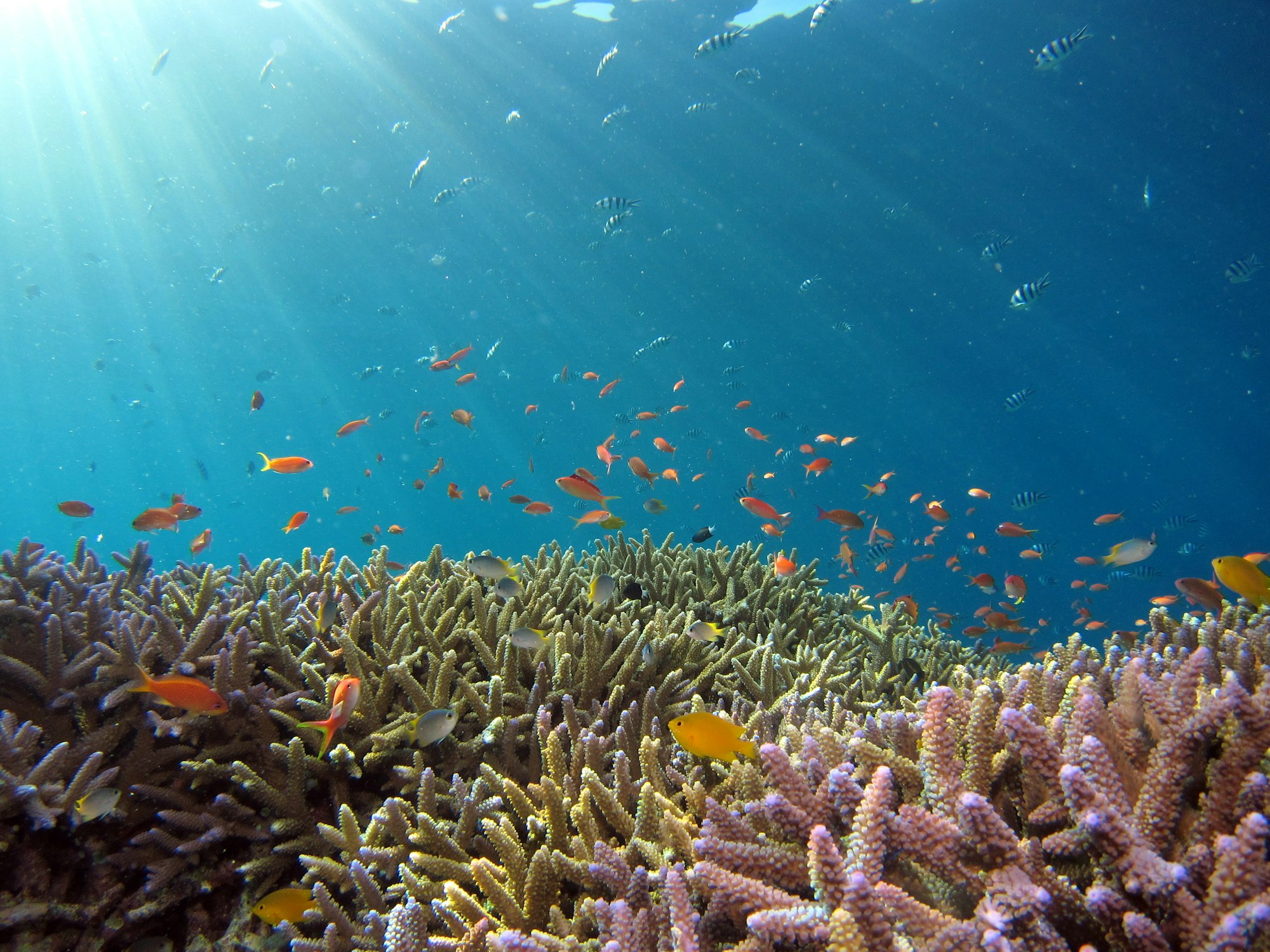
Grey reef sharks use the outer wall at 20–25 metres as a patrol corridor — they are visible from the reef edge in the late afternoon. Large gorgonian fans at 20–28 metres are the site’s signature feature. The deeper sections of the wall support soft coral and crinoid assemblages that don’t occur on the shallow sites. Moray eels and groupers occupy the wall crevices at depth. Schools of barracuda patrol in open water off the reef tip. Trevally hunt cooperatively around the reef edge. The shallower sections at 5–12 metres carry the standard Hurghada reef assemblage: anthias, chromis, butterflyfish.
Dive Profile
Descend the outer wall to 25–28 metres to visit the gorgonian fans — spend 10 minutes at depth observing the deep coral and shark patrol activity. Ascend the wall progressively through 20 metres, 15 metres, 10 metres, working along the reef face and visiting different coral zones. The safety stop at 5 metres is made over the shallow reef top in good ambient light.
Entry and Exit
Day boat from Hurghada (30–50 minutes). Advanced Open Water certification recommended due to the 30-metre profile. Giant stride entry. Pair with nearby Hurghada offshore sites for a two-dive day. SMB deployment before ascending.
Tips and Recommendations
- Plan the dive carefully: begin at 25–28 metres for the gorgonian fans and shark activity, then ascend progressively — don’t save depth for the second half
- Stay on the wall face at depth rather than drifting away from the reef — the wall provides orientation and the most interesting marine life at depth
- Afternoon dives at 20–25 metres produce the best grey reef shark activity
Safety Considerations
The 30-metre maximum depth requires careful air management — begin ascent at no less than 70 bar. No-decompression limits should be respected strictly. Ascending too slowly at depth wastes bottom time — use the multi-level profile to maximise time underwater. Scorpionfish and fire coral on the wall. SMB before ascending.
Photography
The large gorgonian fans at 20–28 metres in natural light are the signature subjects — wide-angle portraits of the full fan structure with the blue water background. Grey reef shark portraits at the wall edge require a patient wait at depth with pre-positioned camera settings. The visual impact of the deep wall in good visibility justifies a wide-angle setup throughout the dive.
Sources: Divezone - Red Sea, Dive the World - Egypt Red Sea, Red Sea Scuba Diving, PADI - Diving in Egypt. Last updated 2026-04-04.
Sea-surface temperature and wave height from Open-Meteo Marine (ERA5 reanalysis, monthly averages).
484 verified species observations (325 species) logged within ~11 km of this site between 1758 and 2025, from the Ocean Biodiversity Information System.
- Tursiops aduncus · Indian ocean bottlenose dolphin
- Sousa chinensis · Chinese white dolphin
- Gymnothorax flavimarginatus
- Megaptera novaeangliae · Humpback whale
- Lethrinus nebulosus
- Lethrinus microdon
- Amblygobius albimaculatus
- Amphiprion bicinctus
- Hipposcarus harid
- Lethrinus xanthochilus
- Tursiops truncatus · Common bottlenose dolphin
- Scarus psittacus
Scientific survey records skew toward sampled taxa (molluscs, corals) and do not reflect what you are guaranteed to see on a dive.
Source: OBIS (obis.org), aggregated Darwin Core occurrence records.
Conditions change with the tide and the season. If you have dived this site, share what it was actually like — date, visibility, current, and what you saw. Real, recent reports from divers are exactly what this guide is built to collect.
Send a conditions report ›