Shaab Rumi, Precontinent 2
19.9390°N 37.4042°E · reef
Shaab Rumi is one of Sudan’s most celebrated dive sites, famous not only for its spectacular coral walls and shark aggregations but also as the location of Jacques-Yves Cousteau’s historic Precontinent II underwater habitat experiment in 1963.
Overview
Shaab Rumi — “Roman Reef” in Arabic — is a large circular reef in Sudanese waters roughly 60 kilometres north of Port Sudan. It is one of the premier liveaboard destinations in the entire Red Sea, combining dramatic underwater geography with extraordinary marine life density. The Precontinent 2 site marks the location where Cousteau’s team deployed an experimental underwater village in 1963, allowing oceanauts to live and work on the reef for a month. Remnants of the experiment remain underwater — including a distinctive shark cage and the circular base structure of the main habitat — making this one of the most historically significant dive sites in the world. The site lies at the southern end of Shaab Rumi’s interior lagoon and drops into deep water where grey reef sharks and hammerheads are regularly sighted. Visibility frequently exceeds 30 metres, and the reef’s remote location means minimal diver pressure.
Site Information
- Location: Shaab Rumi, Sudan (Southern Red Sea)
- Entry Type: Boat dive
- Site Type: Reef
- Difficulty Level: Intermediate
- Maximum Depth: 20 meters
- Typical Visibility: 25-40 meters (80-130 feet)
- Current: Light to moderate inside lagoon; stronger on outer wall
- Best Time: October to May
Marine Life
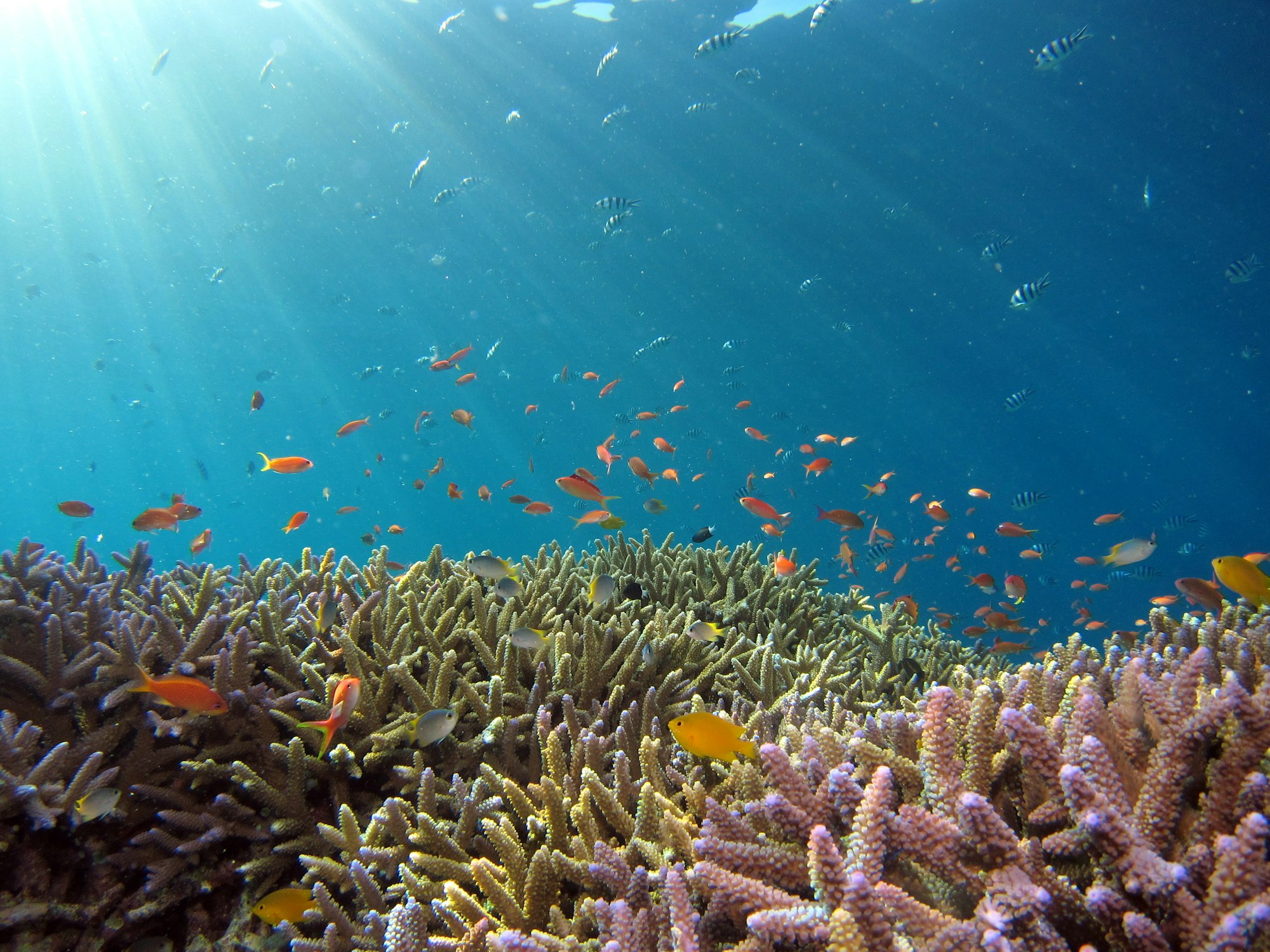
Shaab Rumi’s southern plateau area hosts dense schools of barracuda, jacks, and fusiliers. Grey reef sharks and whitetip reef sharks are resident, and hammerhead sharks are reliably sighted on early morning dives near the outer wall. humphead wrasse are a common and approachable feature. The reef structure around the Precontinent 2 remains has been colonised by hard and soft corals over the decades, with glassfish, lionfish, and moray eels occupying the metalwork. Guitarfish rest on the sandy bottom nearby, and green turtles appear throughout the lagoon.
Dive Profile
The Precontinent 2 artefacts lie in roughly 10–16 metres at the southern edge of the lagoon, making it an accessible dive even for intermediate divers. The dive typically begins with a descent to the Cousteau habitat platform, where divers can explore the remaining structure and shark cage. The sandy bottom areas around the base hold guitarfish and rays. Ascent follows the reef slope back toward shallower terrain, with a safety stop at 5 metres. To combine this with shark observation, an early morning arrival with a deeper outer-reef drift is recommended as an additional dive.
Entry and Exit
Shaab Rumi is exclusively accessed by liveaboard from Port Sudan. Boats moor inside the protected lagoon, and entry to the Precontinent 2 site is by giant stride from the zodiac. Currents inside the lagoon are generally mild, simplifying navigation back to the dive tender. Always surface with an SMB deployed.
Tips and Recommendations
- Dive the site early morning for the best hammerhead and grey reef shark activity on the outer plateau
- Bring a wide-angle lens to capture both the Cousteau artefacts and the surrounding marine life in context
- Do not disturb or touch the Precontinent 2 structures — they are historically significant and increasingly fragile
- A torch helps illuminate the interior sections of the habitat base
- Combine this site with Shaab Rumi’s northern wall for a full-day diving experience
Safety Considerations
The dive on the Precontinent 2 plateau itself is within easy intermediate limits, but the outer wall and deeper passes carry stronger currents and pelagic encounters that warrant experience. Always conduct early morning dives conservatively regarding no-decompression limits. Boat traffic is minimal given the remote location, but SMB use is mandatory on every ascent. No shore access exists — all logistics are through the liveaboard operator.
Photography
This site offers exceptional opportunities for historically contextual underwater photography. The rusting Cousteau shark cage framed against a coral-encrusted backdrop is one of the Red Sea’s most iconic images. Wide-angle is essential. For fish school shots, the southern plateau produces superb barracuda and jack school compositions in the early morning light. Macro subjects are plentiful on the encrusted metalwork.
Sources: Divezone - Red Sea, Dive the World - Egypt Red Sea, Red Sea Scuba Diving, PADI - Diving in Egypt. Last updated 2026-04-04.
Sea-surface temperature and wave height from Open-Meteo Marine (ERA5 reanalysis, monthly averages).
14 verified species observations (8 species) logged within ~11 km of this site between 1983 and 2011, from the Ocean Biodiversity Information System.
- Trimmatom nanus
- Gobiodon prolixus
- Rhincodon typus · Whale Shark
- Gobiidae
- Nembrotha megalocera
- Tibia insulaechorab
- Chromodoris
- Oxynaspididae
Scientific survey records skew toward sampled taxa (molluscs, corals) and do not reflect what you are guaranteed to see on a dive.
Source: OBIS (obis.org), aggregated Darwin Core occurrence records.
Conditions change with the tide and the season. If you have dived this site, share what it was actually like — date, visibility, current, and what you saw. Real, recent reports from divers are exactly what this guide is built to collect.
Send a conditions report ›