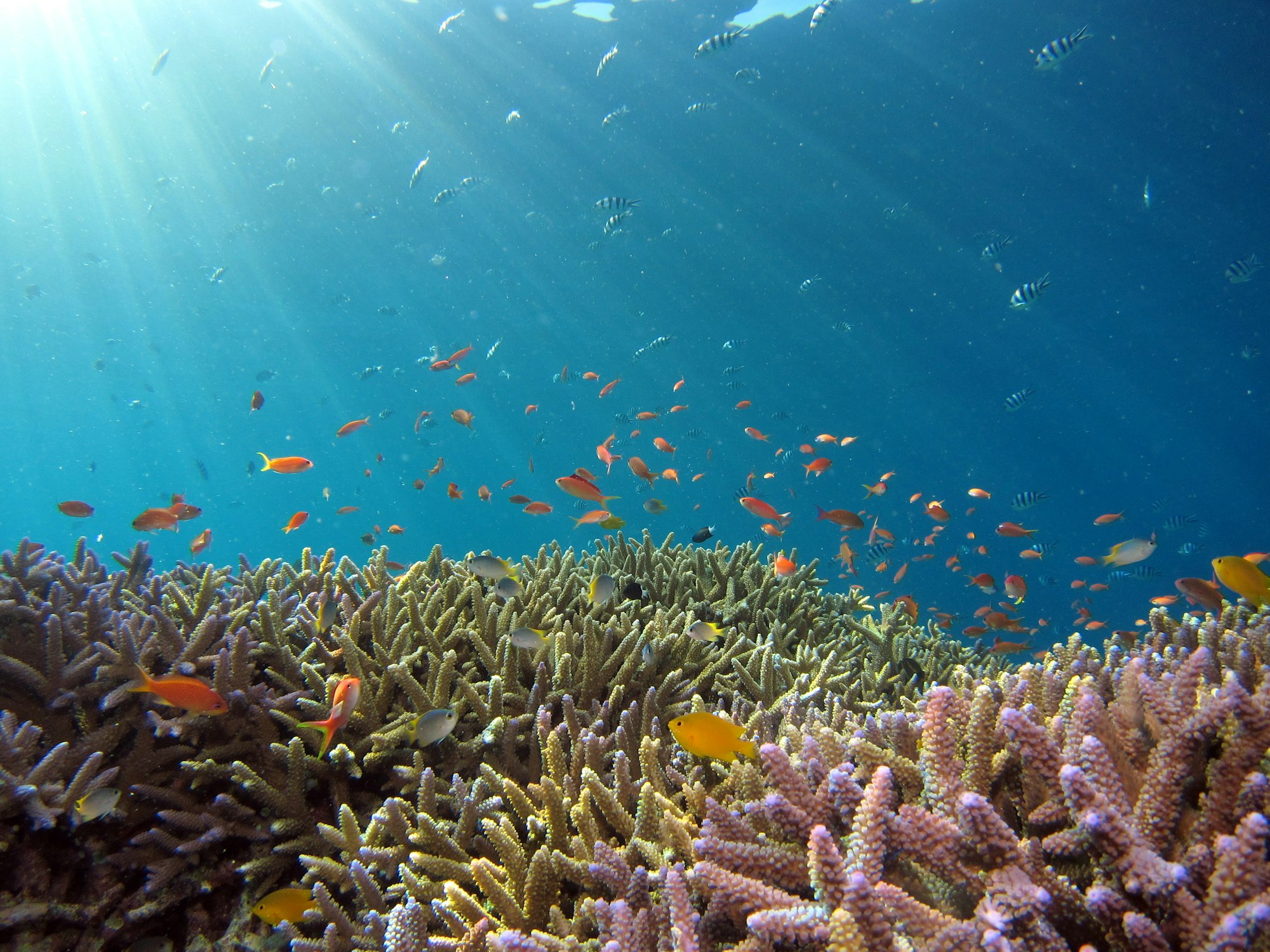
Shaab Said South
24.2624°N 35.5162°E · reef
Shaab Said South is the southern tip of the Shaab Said reef complex on the outer Egyptian Red Sea shelf, offering gently sloping coral terrain with reliable sightings of turtles and reef sharks in clear, open-ocean water east of Marsa Alam.
Overview
The southern section of Shaab Said presents a slightly more sheltered face compared to the exposed northern tips, with a broad reef slope that descends gradually from a shallow platform to a sandy base. This part of the reef benefits from the same outstanding water clarity that characterises the full Shaab Said complex, regularly exceeding 25 metres and often reaching 30 metres on calm days. The southern orientation means that current direction differs from the northern sites, making Shaab Said South a useful alternative when northerly winds create challenging conditions elsewhere. The reef supports mature coral formations, with a mix of table, branching, and massive corals representing decades of undisturbed growth.
Site Information
- Location: Outer Red Sea, Egypt (east of Marsa Alam, lat 24.26°N)
- Entry Type: Boat dive
- Site Type: Reef
- Difficulty Level: Intermediate
- Maximum Depth: 20 meters
- Typical Visibility: 25-35 meters (80-115 feet)
- Current: Light to moderate
- Best Time: October to May
Marine Life
The southern reef face at Shaab Said attracts sea turtles regularly, with green turtles in particular feeding on algae and sponges on the reef platform. Schooling snapper and fusiliers are abundant, and their presence draws grey reef sharks and trevally as hunting companions. The deeper reef sections near the base have soft coral growth that harbours nudibranchs and flatworms. Moray eels and lionfish are common throughout the reef, and cleaning stations on prominent coral heads are active with cleaner wrasse activity.
Dive Profile
Typical dives at Shaab Said South follow the slope from the reef crest at 5–8 metres down to the sandy base at around 18–20 metres. Unlike the northern sections of the reef where current can develop rapidly, the southern face tends to allow more leisurely exploration of the slope. The base of the slope is worth spending time on, as stingrays and small sharks often rest in the sand against the reef foot. Ascend the reef slope for the safety stop, finishing the dive at the platform crest in the shallows.
Entry and Exit
Access is by dive boat or liveaboard from Marsa Alam operators. Entry is by giant stride or back roll. Coordinate carefully with boat crew given the offshore location — SMB deployment is essential on every ascent.
Tips and Recommendations
- The south face is often more sheltered than north-facing sites in winter when northerly winds pick up
- Look for turtle feeding activity on the shallow platform before descending
- Bring a macro lens for the soft coral sections — nudibranchs and flatworms are present
- Combine with Shaab Said North for a full outer-reef day in calm conditions
Safety Considerations
The offshore location of Shaab Said South requires attentive boat-dive protocol. Although currents on this face are generally lighter, the remote position means divers must be self-sufficient with SMBs and dive computers. Fire coral is present on the reef crest. Always ensure the boat is anchored or attended before entering the water.
Photography
The south face’s typically lighter currents provide stable conditions for photography. Wide-angle reef landscape shots benefit from the consistent clarity. Turtle encounters near the platform make for ideal natural-light portrait photography in the 5–10 metre range.
Sources: Divezone - Red Sea, Dive the World - Egypt Red Sea, Red Sea Scuba Diving, PADI - Diving in Egypt. Last updated 2026-04-04.
Sea-surface temperature and wave height from Open-Meteo Marine (ERA5 reanalysis, monthly averages).
25 verified species observations (21 species) logged within ~11 km of this site between 1994 and 2012, from the Ocean Biodiversity Information System.
- Tursiops truncatus · Common bottlenose dolphin
- Fowleria isostigma
- Tursiops aduncus · Indian ocean bottlenose dolphin
- Stenella attenuata · Pantropical spotted dolphin
- Fowleria variegata
- Stenella longirostris · Spinner dolphin
- Helcogramma obtusirostris
- Pseudorca crassidens · False killer whale
- Balaenoptera · Baleen whales
- Enneapterygius obscurus
- Nerita sanguinolenta
- Gibberulus albus
Scientific survey records skew toward sampled taxa (molluscs, corals) and do not reflect what you are guaranteed to see on a dive.
Source: OBIS (obis.org), aggregated Darwin Core occurrence records.
Conditions change with the tide and the season. If you have dived this site, share what it was actually like — date, visibility, current, and what you saw. Real, recent reports from divers are exactly what this guide is built to collect.
Send a conditions report ›