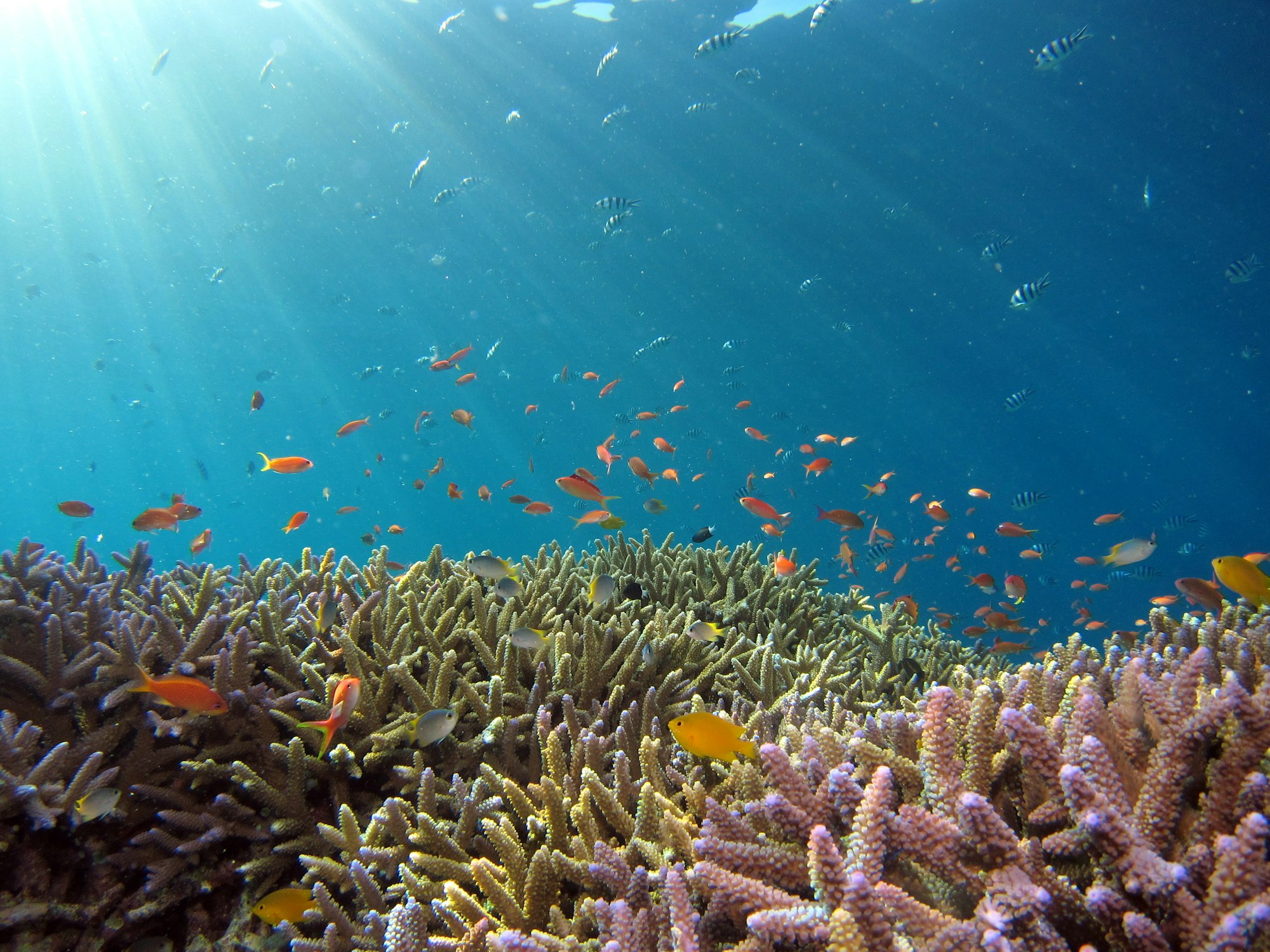
Shab Rumi, Plateau S
19.9292°N 37.4121°E · reef
Shab Rumi, Plateau S
The southern plateau of Sudan’s most celebrated reef — historically significant as Cousteau’s Precontinent II site, with resident barracuda schools, hammerhead patrols, and some of the clearest water in the Red Sea.
Overview
Shab Rumi (also spelled Shaab Rumi — “Roman Reef” in Arabic) is a large circular reef in Sudanese waters approximately 60 kilometres north of Port Sudan. The southern plateau is one of the primary diving sections of this historically significant reef, sitting adjacent to the location of Jacques-Yves Cousteau’s famous Precontinent II underwater habitat experiment of 1963. The southern plateau descends to 15–20 metres before the reef edge drops into deeper water. Remnants of the Cousteau experiment — including the rust-encrusted shark cage and habitat base structure — lie at the southern end of the lagoon at around 10–16 metres, making this section a pilgrimage destination for historically minded divers. The plateau itself supports an extraordinary fish biomass, with dense barracuda schools, grey reef sharks, and the early-morning hammerhead patrols for which Shab Rumi is internationally known.
Site Information
- Location: Shab Rumi, Sudan (approximately 60 km north of Port Sudan, liveaboard only)
- Entry Type: Boat dive
- Site Type: Reef
- Difficulty Level: Intermediate
- Maximum Depth: 20 meters
- Typical Visibility: 25–40 meters
- Current: Light to moderate on the plateau; stronger on the outer wall
- Best Time: October to May
Marine Life
Dense schools of chevron barracuda are a defining feature of the southern plateau, often forming large wall-like formations at mid-water. Grey reef sharks and whitetip reef sharks are resident in numbers. Scalloped hammerhead sharks patrol the outer edge of the southern plateau in the early morning — sightings are reliable at dawn during the season. Green and hawksbill turtles rest on the coral platform. The Cousteau habitat structure is now colonised by hard and soft corals and hosts glassfish, moray eels, and lionfish in the metalwork. Guitarfish rest on the sandy bottom adjacent to the structure. Humphead wrasse cruise the plateau’s outer edge. The exceptional visibility of Sudanese waters at this site regularly exceeds 30 metres.
Dive Profile
Morning dives on the southern plateau begin with descent to the outer edge at 15–20 metres for hammerhead shark observation at dawn. Move then to the Cousteau Precontinent II structure at 10–16 metres at the lagoon side of the plateau to explore the historical remains. The coral platform between the two sections provides a mid-water transition zone. Safety stop at 5 metres over the plateau. For maximum fish biomass — particularly the barracuda schools — mid-morning dives on the inner plateau are productive after the early-morning hammerhead window.
Entry and Exit
Liveaboard only from Port Sudan. Boats moor in the protected lagoon. Entry by zodiac tender and giant stride. Currents inside the lagoon are mild and navigation back to the tender is straightforward. Outer reef sections carry stronger current. Always surface with a deployed SMB.
Tips and Recommendations
- Dive the southern plateau outer edge at dawn specifically for hammerhead sharks — their presence is strongly correlated with first light
- Do not touch the Cousteau Precontinent II structures — they are historically significant and fragile
- A torch is essential to illuminate the interior sections of the habitat base and the colonised metalwork
- Combine the southern plateau with the outer wall for a complete Shab Rumi experience
- Visibility here regularly exceeds 30 metres — plan for wide-angle photography in outstanding conditions
Safety Considerations
The plateau section is appropriate for intermediate divers. The outer wall beyond the plateau drop-off introduces depth and current considerations for advanced divers. No shore access exists — all logistics are through the liveaboard. Emergency evacuation from Sudan takes significantly longer than from Egyptian sites — dive conservatively. SMB use is mandatory on every ascent. The Cousteau metalwork contains sharp edges — appropriate clearance is needed when swimming past.
Photography
The rusting Cousteau shark cage against a soft coral-covered backdrop is one of the Red Sea’s most iconic dive photographs — wide-angle is essential to include the scale of the structure. Dawn barracuda school photography with first light filtering from the surface rewards patience and precise positioning. Hammerhead silhouettes in the open water at the plateau edge against the blue water background are outstanding subjects. The exceptional visibility makes panoramic reef compositions viable that would not be achievable at most other sites.
Sources: Divezone - Red Sea, Dive the World - Egypt Red Sea, Red Sea Scuba Diving, PADI - Diving in Egypt. Last updated 2026-04-04.
Sea-surface temperature and wave height from Open-Meteo Marine (ERA5 reanalysis, monthly averages).
14 verified species observations (8 species) logged within ~11 km of this site between 1983 and 2011, from the Ocean Biodiversity Information System.
- Trimmatom nanus
- Gobiodon prolixus
- Rhincodon typus · Whale Shark
- Gobiidae
- Nembrotha megalocera
- Tibia insulaechorab
- Chromodoris
- Oxynaspididae
Scientific survey records skew toward sampled taxa (molluscs, corals) and do not reflect what you are guaranteed to see on a dive.
Source: OBIS (obis.org), aggregated Darwin Core occurrence records.
Conditions change with the tide and the season. If you have dived this site, share what it was actually like — date, visibility, current, and what you saw. Real, recent reports from divers are exactly what this guide is built to collect.
Send a conditions report ›