Shark Observatory
27.7311°N 34.2598°E · reef
Shark Observatory
A named dive site south of Sharm el-Sheikh where the topography creates a natural observation point for reef sharks and the current-driven fish assemblages that make this section of the Sinai coast productive for pelagic encounters.
Overview
Shark Observatory is located at approximately 27.73°N, 34.26°E on the Sinai Peninsula’s southwestern coast — south of Sharm el-Sheikh in the direction of Ras Mohammed National Park. The name indicates the site’s primary characteristic: the reef topography creates an elevated observation position — a shallow coral platform or headland from which the open water beyond the reef edge can be monitored for shark and pelagic activity. This section of the Sinai coast experiences tidal current from the Gulf of Suez and the northern Red Sea, creating the conditions that bring sharks to reef edges. The site is dived as a day-boat option from Sharm el-Sheikh operators and sits on the southern Sinai coastal dive axis.
Site Information
- Location: Sinai Peninsula southwestern coast, south of Sharm el-Sheikh (~27.73°N, 34.26°E)
- Entry Type: Boat dive
- Site Type: Reef
- Difficulty Level: Intermediate
- Maximum Depth: 20 meters
- Typical Visibility: 15–25 meters
- Current: Moderate; tidal flow creates the conditions for shark activity
- Best Time: Year-round; October to May optimal
Marine Life
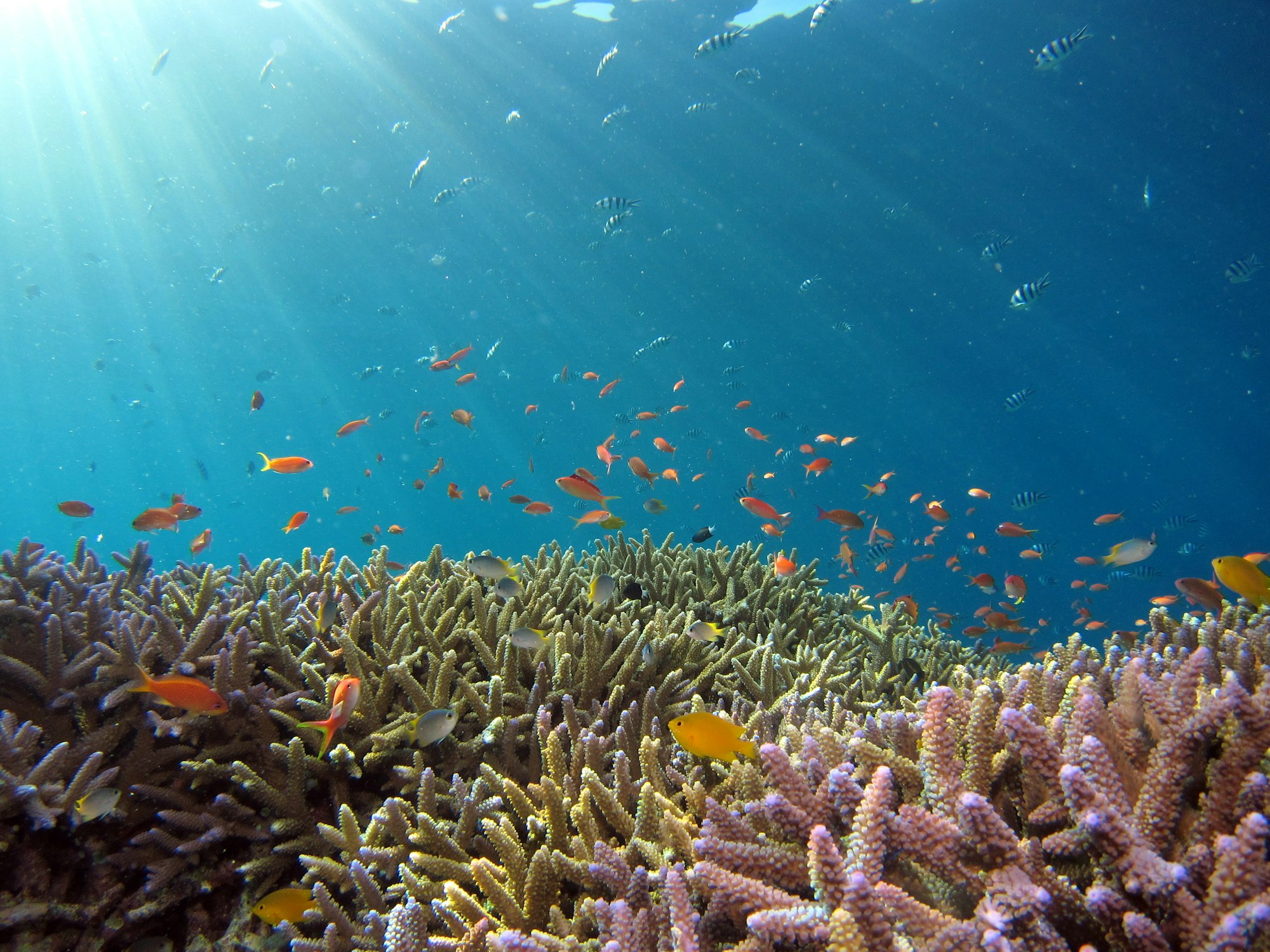
Grey reef sharks are the primary attraction — the site name reflects their consistent presence at the reef edge in current. Schooling barracuda patrol in open water off the headland. The upper reef carries the dense anthias and fusilier populations typical of current-swept southern Sinai reefs. Moray eels in the crevices. Gorgonian fans at 15–18 metres on the outer wall. The sandy sections adjacent to the reef base hold blue-spotted stingrays. Groupers patrol the outer reef face.
Dive Profile
Descend to the reef edge at 15–18 metres and station at the outer observation point. Scan the open water to the west for grey reef sharks patrolling in the current. After 10–15 minutes at the observation position, work along the outer wall toward either the northern or southern end depending on current direction. The upper reef at 5–10 metres is explored in the final section of the dive. Safety stop at 5 metres over the reef flat.
Entry and Exit
Day boat from Sharm el-Sheikh (40–60 minutes). Giant stride entry. Pair with Ras Ghozlani or Ras Za’atar for a southern Sinai coastal day. SMB deployment before ascending.
Tips and Recommendations
- Station at the reef edge at 15–18 metres on descent and hold position — sharks patrol predictable circuits around the headland
- Current-running conditions produce the best shark activity — don’t be discouraged by initial absence if current is present
- Afternoon dives typically have stronger current and better shark activity than morning dives
Safety Considerations
Current at the reef edge can be strong — stay close to the reef structure rather than drifting into open water. SMB before ascending. Monitor position relative to the reef throughout the dive.
Photography
Grey reef shark portraits at the reef edge in current suit a wide-angle approach with the diver positioned below the shark’s eye level. Barracuda school shots in open water off the headland reward ambient wide-angle technique with natural backlight.
Sources: Divezone - Red Sea, Dive the World - Egypt Red Sea, Red Sea Scuba Diving, PADI - Diving in Egypt. Last updated 2026-04-04.
Sea-surface temperature and wave height from Open-Meteo Marine (ERA5 reanalysis, monthly averages).
387 verified species observations (280 species) logged within ~11 km of this site between 1828 and 2018, from the Ocean Biodiversity Information System.
- Rhincodon typus · Whale Shark
- Stenella attenuata · Pantropical spotted dolphin
- Grampus griseus · Risso's dolphin
- Tursiops · Bottlenose dolphins
- Tursiops truncatus · Common bottlenose dolphin
- Vinciguerria mabahiss
- Priolepis cincta · Banded Reef Goby
- Tursiops aduncus · Indian ocean bottlenose dolphin
- Pseudorca crassidens · False killer whale
- Stenella longirostris · Spinner dolphin
- Grammistes sexlineatus
- Ecsenius frontalis
Scientific survey records skew toward sampled taxa (molluscs, corals) and do not reflect what you are guaranteed to see on a dive.
Source: OBIS (obis.org), aggregated Darwin Core occurrence records.
Conditions change with the tide and the season. If you have dived this site, share what it was actually like — date, visibility, current, and what you saw. Real, recent reports from divers are exactly what this guide is built to collect.
Send a conditions report ›