Sirnaka Island
23.8292°N 35.8087°E · wreck
Sirnaka Island
A remote southern Red Sea island site near the St. John’s reef complex — primarily a fringing reef with a distinctive crack and tunnel system, combined with the associated El Kamash wreck (a sunken fishing trawler at 30–50m depth on the southwestern side).
Overview
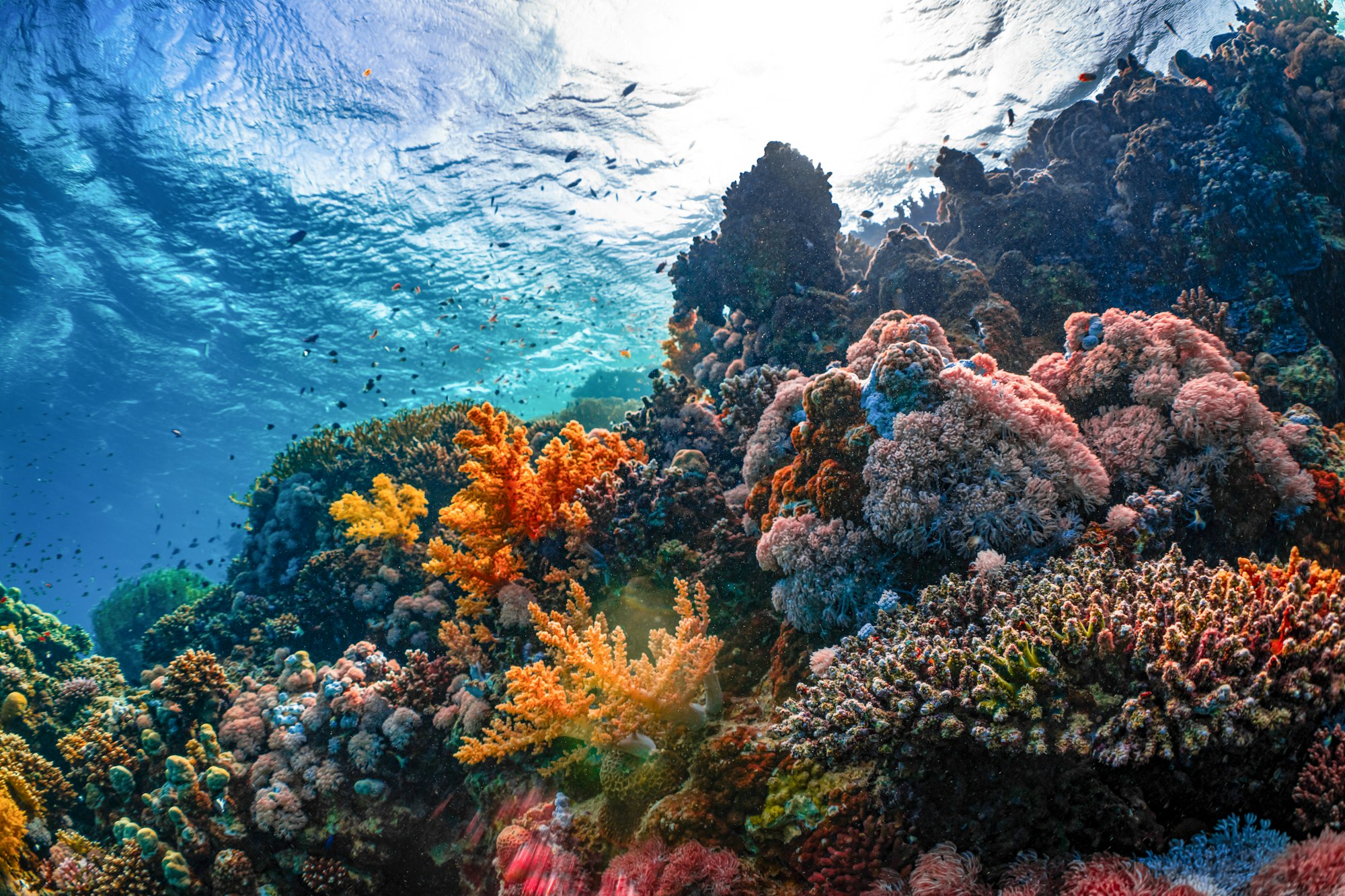
Sirnaka Island (also spelled Sernaka) lies at approximately 23.83°N, 35.81°E in the southern Egyptian Red Sea, within the St. John’s reef complex area. The primary diving attraction is the fringing reef surrounding the island: a crack and tunnel system where tunnels are lit by sunlight, coral gardens with large porites formations, and vase-shaped hard coral turrets at depths of 5–20 metres. The reef is suitable for night dives. Sea eagles nest on the island. On the southwestern side of the island, the El Kamash — a sunken fishing trawler — lies at 30–50 metres depth (one source reports 25–52 metres). The wreck is a secondary feature at significant depth with occasional strong currents; penetration is not recommended. The area sees very low diver traffic, accessible only by extended liveaboard from Hamata or Marsa Alam.
Site Information
- Location: Southern Red Sea, Egypt (St. John’s reef area, approximately 23.83°N, 35.81°E)
- Entry Type: Boat dive
- Site Type: Wreck dive
- Difficulty Level: Intermediate
- Maximum Depth: 20 meters
- Typical Visibility: 25–35 meters
- Current: Occasional strong currents, particularly on the wreck side
- Best Time: October to May
Marine Life
Confirmed species at the reef: Napoleon wrasse, batfish, tree corals, anemonefish, masked pufferfish, clearfin lionfish, moray eels, and barracuda.
Entry and Exit
Liveaboard access only from Hamata or Marsa Alam on extended itineraries. Giant stride entry from the zodiac tender. Full self-sufficiency is required given the remote location. SMB deployment is mandatory for all ascents.
Tips and Recommendations
- The reef crack and tunnel system lit by sunlight is the main attraction — plan the dive around exploring this at 5–20 metres
- The El Kamash wreck on the SW side reaches 30–50 metres — plan gas accordingly; assess current before descending
- The reef at 5–20 metres makes an excellent night dive
- Sea eagles nest on the island — observable between dives
- The St. John’s area rewards multi-day liveaboard exploration
Safety Considerations
Remote location with multi-hour emergency response times — dive conservatively. The El Kamash wreck at 30–50 metres requires careful gas planning; currents on the wreck side can be strong. Always carry a fully rigged SMB.
Sources: redsea-diving.com, 4eversea.com, omneia.de. Last updated 2026-06-27.
Sea-surface temperature and wave height from Open-Meteo Marine (ERA5 reanalysis, monthly averages).
18 verified species observations (4 species) logged within ~11 km of this site between 1950 and 2012, from the Ocean Biodiversity Information System.
- Stenella longirostris · Spinner dolphin
- Stenella attenuata · Pantropical spotted dolphin
- Tursiops truncatus · Common bottlenose dolphin
- Tridacna maxima
Scientific survey records skew toward sampled taxa (molluscs, corals) and do not reflect what you are guaranteed to see on a dive.
Source: OBIS (obis.org), aggregated Darwin Core occurrence records.
Conditions change with the tide and the season. If you have dived this site, share what it was actually like — date, visibility, current, and what you saw. Real, recent reports from divers are exactly what this guide is built to collect.
Send a conditions report ›